Tuesday, August 30, 2016

On power and charging

IMG_1684-001

Over the last decade there has been a massive societal change.

Back in 2006, most of us didn’t have smartphones (the first iPhone was released in June 2007). We had mobile phones that we used to make calls on. The batteries used to last for ages. A couple of days? Three?

Now we live our lives on mobile devices. Their batteries don’t even last a full day of use. So suddenly, access to power is a major issue. Managing battery life is a vital skill in the modern world.

Suddenly, plug sockets are a major commodity. The battery icon, showing how much power is left on my laptop or phone, has great emotional significance – almost as much as the icon indicating wifi availability/strength.

I travel a lot, and even with a MacBook Air which boasts some 10 h battery life (what luxury! How did I live without it?), I’m often on the look out for a power socket. Especially at airports, because sockets in airports are still a rare commodity, even though 95% of passengers are looking for one. One of the joys of lounge access is the plentiful power sockets (in addition to bad food, poor coffee and low quality wine).

It’s an amazing feeling knowing that you have more than enough battery life on your phone and laptop. It’s a big warm emotional kick. Conversely, knowing you are running out and trying to nurse your battery through the day is so frustrating. It makes a huge difference if you are on a night out and you have enough battery, because getting home – whatever the hour – is so much easier with a smartphone and GPS signal.

And talking of power, one of the most frustrating thing about travelling is how few accessible plug sockets most hotel rooms have. It is just bonkers. You often find yourself reaching behind furniture or moving the bed, or unplugging lights or TVs just to charge your phone. Sensible hotels offer a USB power supply next to the bed. There are so few sensible hotels.

Happiness for the modern traveller is full charge on all devices.


from jamie goode’s wine blog http://www.wineanorak.com:/wineblog/uncategorized/on-power-and-charging

For Fine Wine Investment opportunities check out Twelve by Seventy Five: http://www.twelve-by-seventy-five.com/

from
http://twelvebyseventyfive.tumblr.com/post/149716305817

Sunday, August 28, 2016

A tasting of organic wines from the Rheinhessen, Germany

OLYMPUS DIGITAL CAMERA

The Rheinhessen is Germany’s largest wine region. With more than 26 000 hectares under vine, it’s responsible for more than a quarter of the country’s vineyard area, although the Pfalz actually makes more wine.

It’s bordered by the Rhine to the north and west as it loops through 90 degrees. To the east there’s the Nahe river, and to the south the Hardt mountains. The best sites have traditionally been those along the Rhine.

It’s a region that in the past hasn’t been associated with high quality wine production, but this is changing. As with so many of Europe’s wine regions, the younger generation are well travelled, and when they bring back new ideas and fresh ways of thinking to their family domains, things begin to change. Also, there’s now a market for more interesting, terroir driven wines from Germany that simply wasn’t there before: if you have a decent patch of land, then the investment required to make high quality wine has a chance of paying off.

Interesting fact: this is where Pinot first landed in Germany. Charlemagne brought the three Pinot varieties to Ingelheim where he had a residence in the 9th century. These vines were first planted in selected sites in the neighbouring Rheingau where people saw that the snow had melted first.

Part of the revolution in the Rheinhessen has been a move towards organics. This tasting, held in the Vinotek in Bingen, was really interesting, because it was looking at a range of wines from organic producers in the region.

One of the stars of this tasting was the Silvaner variety. 9% of the region is planted to Silvaner these days, and it’s currently the fourth-most planted variety. Some 50 years ago half of the region was planted with Silvaner, but this has steadily been replaced, first of all by the likes of Huxelrebe and other high-producing varieties, and then in the 1990s there was a red wine boom where a lot of Dornfelder was planted (currently the third-most planted variety after Riesling and Müller-Thurgau). There are lots of interesting old Silvaner vineyards left in the region and it does really well here. Many wines are labelled Grüner Silvaner (for green, as opposed to the much rarer blue variant). Some spell it Sylvaner, as it is spelled in Alsace. Silvaner is easy in the vineyard but difficult in the cellar, winegrowers say. If a vinter is able to make good Silvaner you can trust the rest of their range. It can’t be a Grosses Gewachs in the VDP system, which in Rheinhessen only allow Riesling and Pinot Noir.

OLYMPUS DIGITAL CAMERA

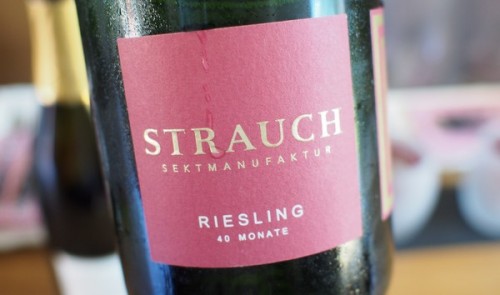
Kurfürst von Dalberg Sektmanufaktur Riesling Sekt Extra Brut 2012 Rheinhessen, Germany
Started just five years ago. Traditional method with long ageing on the lees. Lively, aromatic and focused. Citrussy and intense with good acidity and purity. Has citrussy precision here: lovely detailed, fresh style. 91/100

Sekthaus Raumland Blanc de Noir Prestige Brut 2007 Rheinhessen, Germany
Distinctive herb, cabbage and citrus nose. Some sweet pear notes, too. Powerfu cherry, pear and fig fruity characters. Lovely depth of flavour here with real depth and keen acidity. Some toasty notes, too. Rich. 89/100

Kroenenhof Grüner Silvaner Trocken 2015 Rheinhessen, Germany
Very tight, lemony and fruity with precise citrus and pear fruit. Very clean and fruity with nice acidity and a stony edge to the fruit. It’s not massively fruity but has a concentration of stone and herb characters. Has a lovely finish. 90/100

OLYMPUS DIGITAL CAMERA

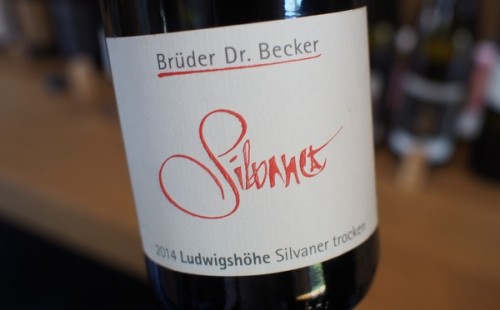
Gebrüder Dr Becker Ludwigshöhe Silvaner Trocken 2014 Rheinhessen, Germany
Dr Becker is one of the pioneers of organic winegrowing in the region. Mineral and stony but also lovely richness with sweet pear, melon and apple fruit. Very textural but still has this lively stony edge and nice mineral core, but this has quite low acidity. 91/100

OLYMPUS DIGITAL CAMERA

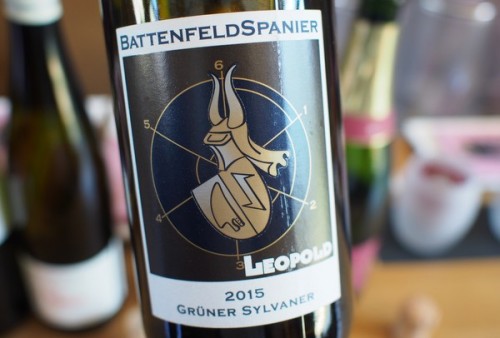
Battenfeld-Spanier Leopold Grüner Sylvaner 2015 Rheinhessen, Germany
Some limestone with some red stones too. Beautiful wine that’s appley, stony and grapey with some citrus notes. Very lively with good acidity and a hint of sweetness. Some smoky, mineral notes, and a lovely finish. Lovely acidity on the finish. Delicious wine. 92/100

Weingut Julius Silvaner Trocken 2015 Rheinhessen, Germany
From the south of the region close to Worms, from a loam/loess soil. Lively and fresh with lovely textured pear and lemon fruit. Has a bit of richness here, with lovely dense, pure fruit and some nice subtle herby notes, as well as some stoniness. Fruity and delightful. 89/100

OLYMPUS DIGITAL CAMERA

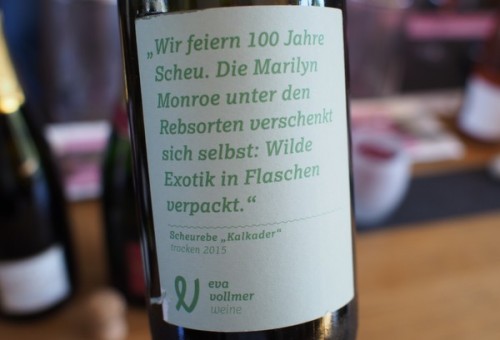
Dr Eva Vollmer Scheurebe Kalkader Trocken 2015 Rheinhessen, Germany
Today 725 ha in Rheinhessen. Became popular because of its resistance for chlorosis in limestone soils. Popular in restaurants. Lively, spritzy, talcum-edged citrus fruit with some spiciness. Linear and dry with a lovely bright fruity quality. Juicy with a bit of fruit sweetness. Very approachable. 88/100

Weinreich Stein Weissburgunder Trocken 2014 Rheinhessen, Germany
Textured and broad with lovely richness and melon and pear with some spiciness. Richly textured and generous with broad fruit flavours. Nice wine. 89/100

OLYMPUS DIGITAL CAMERA

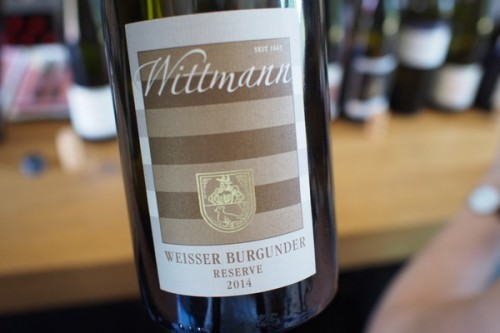
Wittmann Weisserburgunder Trocken Reserve 2014 Rheinhessen, Germany
Lovely citrus and pear fruit here with some marmalade and spice. Has some melony richness countered by nice citrussy acidity. A bit creamy with lovely depth and some grape character. Serious Pinot Blanc. 92/100

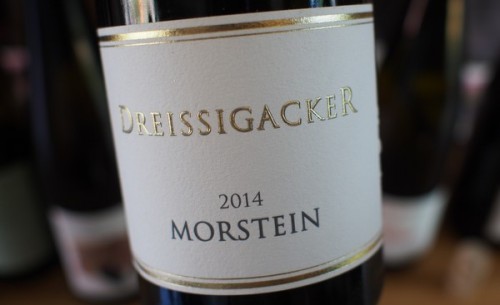
Dreissigacker Morstein Riesling Trocken 2014 Rheinhessen, Germany
13% alcohol, bone dry. Has 30% cask fermentation, plus some skin contact. Pure limestone here. Lively, textured citrus fruit with some ripe apple and pear. Complex and intense with a lovely mineral character and fine spiciness. So pure and intense with some real complexity and good acidity. 94/100

Gysler Riesling Klangwerk Vum Helle Trocken 2014 Rheinhessen, Germany
Red sandstone soil. 8 g/l residual sugar and acidity. Amazing acidity here – precise and pure with lovely citrus fruits but also a bit of melon and honey detail and richness. Some marmalade notes, too. Very fine and expressive with real complexity. 93/100

Sander Riesling Mettenheimer Schlossberg Trocken 2014 Rheinhessen, Germany
A pioneer of organic winegrowing in Germany. Loess soils, which tend to make fruitier wines for earlier drinking. Powerful and rounded with lovely baked apple and lemon fruit. Textured and generous with some acidity but also broad pear and apple with a hint of nuts and fennel. 89/100

OLYMPUS DIGITAL CAMERA

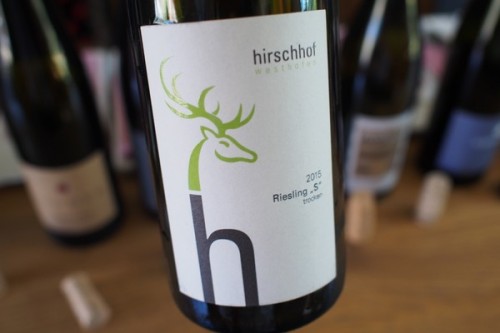
Hirschoff Riesling ‘S’ Westhofener Aulerde Trocken 2015 Rheinhessen, Germany
Clay soils. There’s a hint of bacon savouriness with nicely rounded pear and citrus fruit, as well as a bit of sweetness on the finish. There’s an attractive acid core to this wine, which finishes quite mineral. Lovely long acidic finish. 91/100

Arndt F Werner Blauer Spätburgunder Ingelheimer Burgberg Trocken 2013 Rheinhessen, Germany
Cherries and herbs with a hint of cola and some green-tinged undergrowth notes. Lively, tangy acidity here. Warm, spicy and a bit jammy with very sweet fruit. 86/100

Runkel Spätburgunder Trocken 2011 Rheinhessen, Germany
From the south of the region. Aromatic with spices, cherries and herbs. Nice rich texture with some herbiness and a bit of tang on the finish. Vivid, spicy and quite herby with supple sweet cherry and strawberry fruit. 88/100

 Find these wines with wine-searcher.com


from jamie goode’s wine blog http://www.wineanorak.com:/wineblog/riesling/a-tasting-of-organic-wines-from-the-rheinhessen-germany

For Fine Wine Investment opportunities check out Twelve by Seventy Five: http://www.twelve-by-seventy-five.com/

from
http://twelvebyseventyfive.tumblr.com/post/149640437787

Saturday, August 27, 2016

In Germany, pursuing organic wine, day 1

OLYMPUS DIGITAL CAMERA

I’m in Germany. On a press trip focusing on organic German wines. As of 2013, the most recent figures I have, Germany has 7800 hectares of certified organically farmed vineyards, which represents 7.6% of its total vineyard area (figures from Helga Willer’s 2015 report titled Organic Viticulture Worldwide). And the trend has pretty closely tracked global growth in organics (back in 2004, for example, Germany had around 2300 hectares organically farmed).

Over the next few days we’ll be visiting organic growers in the Rheinhessen, Pfalz and Rheingau, as well as focusing a bit on Sekt and attending the VdP tastings. So it’s a varied program, and complements my earlier visit to Germany this summer pretty well.

Andreas, Stefan and Simone Rings enjoying being papped by the group

Andreas, Stefan and Simone Rings enjoying being papped by the group

Yesterday began with a visit to Weingut Rings in Freinsheim. This is a relatively new producer from a village not previously associated with quality wine. Sister and brothers Simone, Andreas and Steffan Rings run things here, and make some really impressive dry Rieslings.

OLYMPUS DIGITAL CAMERA

They also have a love for Pinot Noir, and the results are distinctive. The Pinots are harvested early with high acidity (pH 3 resulting in wines around pH 3.2 after malolactic), which emphasises the bright fruit. This is so they can safely use a low sulphur dioxide regime in the winery. I found the Pinots difficult to love, although I admired their purity and focus. But I really liked the Rieslings, especially the Steinacker 2015 and Weilberg 2014.

OLYMPUS DIGITAL CAMERA

Then we went to lunch at Bistro 1718 with Bassermann-Jordan, a historic producer in Deidesheim, which is a very pretty town in the Pfalz. They have 50 hectares farmed organically. Two Rieslings impressed particularly here (it’s their main focus by far).

bassermann jordan

The 2015 Hoheberg Erste Lage was lively, precise and pure with an almost saline quality, and the 2012 Hohenmorgen Grosses Gewaches was all spicy, nutty, waxy intensity along with ripe citrus fruit, and had the richness to match even red meats.

Volker Raumland, Sekt star

Volker Raumland, Sekt star

The afternoon began with a focus on Sekt, Germany’s sparkling wine. A lot of Sekt is made, and most of it isn’t great. Just a small proportion is of the more ambitious traditional method style, and we looked at wines from Sekthaus Raumland, Schloss Vaux and Wilhelmshof, in a detailed, well organized tasting at Wilhelmshof. There were a variety of styles, but I found a lot to like. Pictured above is Volker Raumland, whose wines I liked a great deal.

Pinot Noir

Pinot Noir

Pinot Gris

Pinot Gris

Pinot Blanc

Pinot Blanc

We had a stroll through some vineyards after the tasting. The 2016 vintage has been very difficult for mildew in the Pfalz, and many organic growers have struggled containing it. Some have lost a good portion of their crop to downy mildew.

Riesling that's been hammered by downy mildew: very few grapes made it

Riesling that’s been hammered by downy mildew: very few grapes made it

This is the side of organics little discussed: the very real risk of losing money in a tricky year because of the limited disease control options.

OLYMPUS DIGITAL CAMERA

The evening was spent at Benzinger, in Kirchheim. Over a lovely dinner we tasted through their range, including three very distinctive orange wines, made from Pinot Blanc, Sylvaner, and a blend of the two. These are made without any added sulphites, and they are quite distinctive. They’ve proved very popular with customers, and are currently only made in tiny quantities. Surprisingly food compatible, it’s good to see wines like this emerging.


from jamie goode’s wine blog http://www.wineanorak.com:/wineblog/germany/in-germany-pursuing-organic-wine-day-1

For Fine Wine Investment opportunities check out Twelve by Seventy Five: http://www.twelve-by-seventy-five.com/

from
http://twelvebyseventyfive.tumblr.com/post/149589664542

Thursday, August 25, 2016

Grower Champagne Focus: Léclapart, Charlot-Tanneux, Emmanuel Brochet, Chevreaux-Bournazel

DSC_0113

I had these lovely grower Champagnes in a wine bar in Reims (the excellent Au Bon Manger, 7 Rue Courmeaux). Anyone who thinks of Champagne merely in terms of the Grand Marques needs to think again. Anyone who doesn’t think Champagne is a terroir wine needs to think again. I need to go back, soon.

Champagne Emmanuel Brochet Le Mont Benoit NV France
40% Pinot Meunier, 40% Chardonnay, 20% Pinot Noir. Salty, tangy and intense with lovely citrus and herb notes. Finesse here with a lovely lemony finish. 93/100

Champagne Charlot-Tanneux Blanc de Blancs Cuvée Elia NV France
From Mardeuil, this is 12.7% alcohol and has 7 g/l dosage. It’s based on the 2006 harvest ad is from a premier cru vineyard, selection massale vines, fermented with wild yeast in small oak, no malolactic. 1900 bottles made, disgorged January 2015. Very pure and fine with some sweetness to the citrus fruit, with depth. Quite linear, though. Fine acidity and a lovely mellow crystalline core. Slightly honeyed, but quite mineral too. 93/100

DSC_0114

Champagne David Léclapart l’Amateur 1er Cru Blanc de Blancs Pas Dosé NV France
Very fine, fresh, textured and mineral with fine pear and citrus fruit. So pure and linear with notes of anise and a nice savoury edge. Focused and poised. 94/100

Champagne Augustin Cuvée CCC1 Element Feu Cuvée 301 1er Cru NV France
Disgorged 17/05/15. 8.6 g/l dosage, 12% alcohol. Bold, rich and toasty. Very smooth and intense with lovely richness. Great depth here with sweet toasty notes dominating. Rich pear and peach fruit. Powerful and appealing. 90/100

DSC_0115

Champagne Chevreux-Bournazel La Parcelle NV France
This spends 11 months in oak, 11.7% alcohol. This has an interesting story. A couple used to work in a steeply sloped vineyard and the owner decided to sell it. He asked them if they wanted to buy it but they had no money. They went to Vincent Charlot-Tanneaux, and he helped them. They now make 650 bottles from this plot. It’s very tight and fresh, linear and mineral, with fresh citrus and pear fruit, lovely lemony acidity and nice spiciness. 92/100

Find these wines with wine-searcher.com

GROWER CHAMPAGNE:


from jamie goode’s wine blog http://www.wineanorak.com:/wineblog/champagne/grower-champagne-focus-leclepart-charlot-tanneux-emmanuel-brochet-chevreaux-bournazel

For Fine Wine Investment opportunities check out Twelve by Seventy Five: http://www.twelve-by-seventy-five.com/

from
http://twelvebyseventyfive.tumblr.com/post/149498661582

The Bee-Side Grenache from Domaine of the Bee

domaine of the bee bee-side

Justin Howard-Sneyd’s Domaine of the Bee is based on three small plots of old bush vines in Cathar country, deep in the south of France near the village of Maury. Normally, the wines are made in a rich, bold, opulent style, but with this new release, a Grenache, they’ve opted to aim for a more elegant style, because that’s what the vintage was giving them naturally. I really like it, and I love the label.

Grenache is the Pinot Noir of the south, and I think it works best made in a less extracted style like this.

Domaine of the Bee The Bee-Side Grenache 2014 IGP Côtes Catalans, France
14% alcohol. From the Coume de Roy and Bac de Genievres vineyards. Beautifully aromatic sweet black cherry and raspberry fruit nose with some heroines. The palate is silky and quite elegant with fruit sweetness but also a stony, mineral core. Ripe, with good concentration, but also restraint. A lovely example of Grenache. 91/100 (£18 direct sales from www.domaineofthebee.com; £14.40 for wine club members)


from jamie goode’s wine blog http://www.wineanorak.com:/wineblog/grenache/the-bee-side-grenache-from-domaine-of-the-bee

For Fine Wine Investment opportunities check out Twelve by Seventy Five: http://www.twelve-by-seventy-five.com/

from
http://twelvebyseventyfive.tumblr.com/post/149457060327

Wednesday, August 24, 2016

In the Alentejo, Portugal, for just a day

alentejocabernet

I’m just on the way home from Lisbon. I’ve spent today consulting for a major Alentejo winery that changed hands a while back. The new owner is smart enough to seek outside opinions before making changes, and through his new winemaker made an approach to me.

alentejovineyard

So I visited, looked around the vineyards, had a look at the winery, and spent some time tasting through the existing range of wines. What did I think of the style of the wines? What about the composition of the range? How’s the packaging? In the vineyard, is the varietal mix right? Irrigated or dry grown? What about picking decisions? We considered these sorts of questions.

The owner spent some time talking through their own thoughts on how to move things forwards. I shared my views.

Alicante Bouschet, a teinturier (red fleshed) variety that's popular in the Alentejo

Alicante Bouschet, a teinturier (red fleshed) variety that’s popular in the Alentejo

I know it isn’t normal for journalists to act as consultants to wineries. It also creates some ethical issues if the relationship is any more than just a one-off session: for example, if there were an ongoing gig this would have to be declared at every mention of the winery, and it wouldn’t be possible to review the wines in the normal journalistic fashion.

But I’ve begun to realize that after several years of travelling the wine world, visiting wine regions and wineries, and asking lots of questions – coupled with a good grounding in technical aspects of winegrowing – that I have quite a bit of valuable experience. Pair this with good judgement, and an understanding of the various segments of the marketplace, and it makes sense to do some consulting from time to time. It’s also work that I enjoy a lot.

alentejoleaf

One of the main things that travelling extensively through the wine world has taught me is that there is no recipe. Steps that lead to success in one region or country, or one segment of the marketplace, might be a mistake in others. It’s not an exact science, and you have to spend time considering the specific needs of any one project before you give suggestions. And there’s another thing: good consultants empower their clients, while bad ones keep them in dependency.

Cabernet Sauvignon can do pretty well in the region

Cabernet Sauvignon can do pretty well in the region

It was lovely to be in the vineyards today, in the Alentejo – a region I have a lot of time for. It was hot, close to 40 C, but it’s a dry heat. The vintage here is starting in a few days for the whites, while the reds will begin coming in in a couple of weeks. Cabernet Sauvignon was looking very good, Aragonez a little less so, and Alicante Bouschet, the red fleshed teinturier, was looking pretty smart. It’s always nice to be in the vineyard right before harvest, seeing the grapes on the vines. Soon they will be transformed by the action of microbes into wine. It’s an exciting time of year.


from jamie goode’s wine blog http://www.wineanorak.com:/wineblog/portugal/in-the-alentejo-portugal-for-just-a-day

For Fine Wine Investment opportunities check out Twelve by Seventy Five: http://www.twelve-by-seventy-five.com/

from
http://twelvebyseventyfive.tumblr.com/post/149413103092

Tuesday, August 23, 2016

Wines with Winerackd: Meinklang Konkret and Thörle Hölle

meinklang konkret

Popped over to spend a very pleasant evening with Daniel Primack, who among other things established Zalto in the UK, to the eternal debt of serious wine lovers across the nation. We had a few lovely wines, including this pair. The Meinklang is a beautiful wine: not perfect, but with immense charm and an astonishing texture. And the Thörle was drinking at its peak. We had it with very good fish and chips, and watched music videos.

Meinklang Konkret Rot 2012 Burgenland, Austria
13% alcohol. This is a varietal Saint Laurent, fermented and aged in 900 litre concrete eggs for 12 months. It’s aromatic and floral with lifted raspberry and cranberry fruit. So floral and focused, with a little bit of sweetness from the subtly elevated volatile acidity. The palate has amazing texture and concentration of smooth, sweet black cherry and blackberry fruit. Concentrated and quite profound, with purity and texture, and a grainy, mineral, slightly chalky edge. 95/100

IMG_1613

Thörle Saulheimer Hölle Riesling Trocken 2011 Rheinhessen, Germany
13.5% alcohol. I’ve tasted this single-vineyard Riesling before and loved it. This time, it didn’t disappoint. Rich, powerful, spicy and delicious with some marmalade, melon, lemon and tangerine notes. Powerful and complex with a touch of apricot on the finish, as well as some crystalline fruits. Nice acidity. 94/100

Find these wines with wine-searcher.com


from jamie goode’s wine blog http://www.wineanorak.com:/wineblog/austria/wines-with-winerackd-meinklang-konkret-and-thorle-holle

For Fine Wine Investment opportunities check out Twelve by Seventy Five: http://www.twelve-by-seventy-five.com/

from
http://twelvebyseventyfive.tumblr.com/post/149359317382

Monday, August 22, 2016

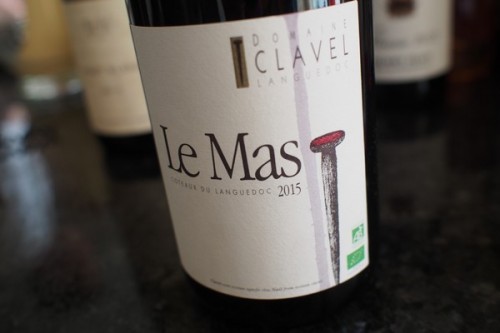
Domaine Clavel Le Mas: excellent value from the Languedoc

OLYMPUS DIGITAL CAMERA

Not to be confused with the Côtes du Rhône domaine of the same name, Domaine Clavel has vineyards in four different Languedoc terroirs: Pic St Loup, Grès de Montpellier, La Méjanelle and Saint Christol, with 33 hectares in all. The farming is organic.

This, their entry level red, is really smart. It’s from Grès de Montpellier, and comes from sandstone pebbles over a clay/limestone base. It’s remarkable value for money. A blend of Carignan/Syrah/Mourvèdre/Grenache fermented and aged in concrete tanks with no oak.

Domaine Clavel Le Mas 2015 Coteaux du Languedoc, France
13.5% alcohol. This organic southern red has a lovely floral black cherry nose with some peppery hints, and some wet stones. The palate is juicy and bright but has lovely depth of cherry fruit with a touch of meatiness and some gravelly grip. Satisfying and delicious. 91/100 (£9.50 Tanners)


from jamie goode’s wine blog http://www.wineanorak.com:/wineblog/france/domaine-clavel-le-mas-excellent-value-from-the-languedoc

For Fine Wine Investment opportunities check out Twelve by Seventy Five: http://www.twelve-by-seventy-five.com/

from
http://twelvebyseventyfive.tumblr.com/post/149313719247

Sunday, August 21, 2016

Holus Bolus Blanc Roussanne 2014 Santa Maria Valley, California

holus bolus roussanne

This is a lovely Roussanne from California’s Santa Maria Valley.

It’s made by Peter Hunken and Amy Christine, the duo behind Black Sheep Finds, based in Lompoc’s famous wine ghetto. Peter was previously with Stolpman Vineyards, working with winemaker Sashi Moorman. Along with Sashi, he started Piedrasassi and Holus Bolus, in 2003. In 2008 Sashi and Peter parted company, and Peter took Holus Bolus and Sashi Piedrasassi. In the meantime, Peter had started Black Sheep Finds with Amy in 2005, and so Holus Bolus was incorporated into that winery project.

The couple now have a 30 year lease on five acres of the Hayes Ranch in the Santa Rita Hills, so soon they will be part estate/part negociant. Peter is now full time on this project, while Amy, who in 2013 became and MW, still works for Kermit Lynch, and also does a bit of sommelier work.

This is their fourth vintage of the Roussanne, and this time the grapes were sourced from the Bien Nacido vineyard. The wine is made from a small block, just under an acre, that’s biodynamically farmed, and it’s fermented and matured in seasoned 300 litre barrels, with partial malolactic.

Black Sheep Finds Holus Bolus Blanc Roussanne 2014 Santa Maria Valley, California
13.5% alcohol. Lively and bright but with some richness. Slightly pithy and lemony with white peach fruit and some fine almond and spice notes. This has some white Rhône-like richness and texture but it is beautifully balanced with a spicy, lively, citrussy finish. Depth allied to freshness, this is a restrained, detailed New World take on Roussanne. 92/100

Find this wine with wine-searcher.com


from jamie goode’s wine blog http://www.wineanorak.com:/wineblog/california/holus-bolus-blanc-roussanne-2014-santa-maria-valley-california

For Fine Wine Investment opportunities check out Twelve by Seventy Five: http://www.twelve-by-seventy-five.com/

from
http://twelvebyseventyfive.tumblr.com/post/149265051212

Saturday, August 20, 2016

On running and wine

IMG_1584

A couple of weeks ago I was chatting with my twin sister, Anne. I don’t remember exactly what we were talking about, but the conversation came on to the subject of being healthy at our advanced age.

‘Well, at least I’m not fat,’ I said.

There was a pause. Quite a long pause. This wasn’t good.

‘But you have a belly,’ she responded eventually. I was gutted. It was true!

You see, these things don’t just happen. You don’t go to bed one night and wake up in the morning with a fat belly. You get fat in increments so small that you hardly notice it. And you deny it whenever you see yourself in the mirror. I lost quite a bit of weight a few years back, dropped down a waist size, and have hovered around the same weight since, until fairly recently, it seems.

Travel has done it. When you travel in my job you eat more and exercise less. Also: I love food. I love wine. I hate the thought of dieting. So exercise is important. I ran the Marathon du Medoc in 2013 and 2014. But since then, without the focus of training for a long run, I have been exercising less. So the dreadful realisation of my belly has prompted me to decided that I need to get back to running properly. Maybe I need to do another long run?

Back in 2013, I really loved the whole experience of taking up running, with a goal in mind. And although I have done sporadic runs of late, I’ve not been running long enough distances. So it’s like starting again. At first it seems too hard: the body isn’t used to being punished this way. But it gets better. The big difference about coming back to running is that I know I can do long distances. And running is very psychological. It’s about deciding to keep going even if it would be far nicer to walk.

Even when I was running marathons, though, I was a little lazy. I ran the second marathon a bit overweight and a bit under-trained. I took it really easy. I would love to get to the stage where I’m running at a good pace, like my buddy Greg Sherwood. We’ve run together quite a bit, but he’s just that much faster than me. It probably helps that he runs most days, something I’ve not been able to commit to.

It made a big difference to me to run the first marathon. It showed me that I could be self-disciplined enough to train, and brave and strong enough to get round the 42 km course only 14 weeks after starting running. It showed me I had the potential to do better than I’d have imagined at something I’d always believed myself to be poor at (at school, I used to loath cross country runs, and would be one of the stragglers at the back of the pack).

In my job, at my age, it takes quite a lot of discipline not to become fat. I guess it’s biology. I’m grateful, though, to my sister for her honesty. Having a belly is a big risk factor for blokes my age, and I have lots of plans, there’s lot’s to see and explore, and I want to be around for a while. So I shall be running regularly.

If you are thinking about running, I’d recommend either downloading a running app to your phone (I use Runkeeper, and a shift to the iPhone SE which is smaller has helped make strapping the phone to my arm easier), or buying a GPS running watch (I had a Garmin that was pretty good). Keeping track of your distance and pace is a good motivator.

And if you see me packing on the pounds, help me out of my denial by pointing it out. But do it gently, please.


from jamie goode’s wine blog http://www.wineanorak.com:/wineblog/uncategorized/on-running-and-wine

For Fine Wine Investment opportunities check out Twelve by Seventy Five: http://www.twelve-by-seventy-five.com/

from
http://twelvebyseventyfive.tumblr.com/post/149222577017

Friday, August 19, 2016

Folium: interesting dry-grown wines from New Zealand’s Marlborough region

folium pinot noir

Takaki Okada came to New Zealand’s Marlborough region in 2003, and began working with Clos Henri. In 2010, he bought an 8.5 hectare vineyard that had been established by Fromm in the Brancott Valley. He began making his own wines.

Marlborough is extremely dry, and irrigation is normal. But Takaki did something brave, believing that the clay content of the soils in this part of Marlborough have good water-holding capacity, he switched off the irrigation in 2011. Since then, he had dry-grown all his vines, except for the young ones, and also reserving the right to water in very dry seasons. For example, he did 8 h or irrigation in 2016, which had a very dry start to the year.

foilum

The picture above shows the difference between the vines at harvest time in 2011 (first year of dry growing) and in 2016 (the sixth year). The vineyard looks completely different. Growing season rainfall was 358 ml in 2011 and 256 ml in 2016 (plus the tiny bit of irrigation earlier in the season).

‘Sauvignon Blanc is from riverbed Soil,’ says Takaki. ‘There is a small creek which dries up in the summer time, which is located at the bottom terrace of our vineyard. Reserve Sauvignon Blanc is from clay-based soil which is located on the top terrace.’

Both block have not been receiving irrigation since 2011. ‘We have tested Leaf water potential just before the harvest this year,’ he explains. ‘Vine on the clay area suffers from water stress, and is not doing photosynthesis anymore. However, the vine on the stony soil is still active. I believe these vines are now reaching to the water table.’ He also points out that the vineyard has a high density of 4200 vines/ha, and he controls yields so as not to exceed 60 hl/ha, which is about 2.2kg of fruit per plant. ‘By having these conditions we could manage to operate dry farming.’

These are really interesting wines, and show that Marlborough isn’t just a one-trick pony as a wine region.

Folium Sauvignon Blanc 2015 Marlborough, New Zealand
14% alcohol. Concentrated and dense with lovely textured quince and citrus fruit. There’s some grassy greenness in the background, but this is a ripe, concentrated style with richness and texture. Very bold and intense. Mineral, pure and linear, showing real finesse and purity. 92/100

Folium Reserve Sauvignon Blanc 2015 Marlborough, New Zealand
13.5% alcohol, sealed with DIAM. Smoky, spicy, mineral edge to the citrus and pear fruit nose. Intense, concentrated, mineral and textural with ripe citrus and pear fruit. There’s a lovely lemony spiciness here and good acidity, with a hint of tangerine. 93/100

Here’s a video of me tasting the Pinot Reserve 2013:

Folium Pinot Noir Reserve 2013 Marlborough, New Zealand
Cork-sealed. Really elegant stuff with a brooding black cherry nose and hints of spice and herbs. This is beautifully floral and opens out with time in the glass. The palate is elegant with black cherries, plums and fine grained structure. There’s a subtle hint of meatiness here. Really expressive with lots of potential for future development. 94/100

Find these wines with wine-searcher.com


from jamie goode’s wine blog http://www.wineanorak.com:/wineblog/videos/folium-interesting-dry-grown-wines-from-new-zealands-marlborough-region

For Fine Wine Investment opportunities check out Twelve by Seventy Five: http://www.twelve-by-seventy-five.com/

from
http://twelvebyseventyfive.tumblr.com/post/149177899547

Wednesday, August 17, 2016

Sylvain Pataille, master of Marsannay

sylvain bataille marsannay

Over the last 15 years Sylvain Pataille has built up his domaine from scratch. He first made wine in 1999, while he was still employed in an enology laboratory in Beaune, but he released his debut vintage in 2001. His domaine is now 15 hectares, all located within Marsannay, which is at the top of the Côte d’Or, near Dijon. He farms using biodynamics (certified organic), and works naturally in the winery. I was really impressed with these wines.

Sylvain Pataille Bourgogne Aligoté 2014 Burgundy, France
Very fine, full flavoured toast, grapefruit pith and pear fruit. Lovely core of bright fruit with texture and nuttiness: not terribly Aligoté. Real finesse. 91/100

Sylvain Pataille Marsannay Blanc 2014 Burgundy, France
Aromatic with toast, spice and pear fruit. Pristine, concentrated fruit here, showing herb-tinged pear and white peach fruit. Lovely. 93/100

Sylvain Pataille Marsannay Rouge 2014 Burgundy, France
Lovely expressive bright red cherries and herbs on the nose. Juicy and bright on the palate with herbs, cherries and plums. Lovely precision. 92/100

Sylvain Pataille Marsannay Rouge Clos du Roy 2014 Burgundy, France
Expressive and fresh with lovely complex herbs, spice and minerals alongside the lovely fruit. Detailed and expressive with lovely purity, and very minerally. 93/100

Find these wines with wine-searcher.com


from jamie goode’s wine blog http://www.wineanorak.com:/wineblog/pinot-noir/sylvain-pataille-master-of-marsannay

For Fine Wine Investment opportunities check out Twelve by Seventy Five: http://www.twelve-by-seventy-five.com/

from
http://twelvebyseventyfive.tumblr.com/post/149094466457

Tuesday, August 16, 2016

A Chenin Blanc seminar at Texsom

chenin blanc

Patrick Cappiello and Pascaline Lepeltier presented this Chenin tasting at Texsom.

‘I deeply believe that Chenin is the best white grape in the world,’ says Pascaline, a very highly regarded sommelier. She’s been working in New York for the last eight years, but she grew up in the Loire, and is a keen evangelist for Loire Valley wines.

‘Loire is where you can understand the diversity of the grape better than anywhere else,’ she says. ‘The grape has an amazing potential and we should drink more Chenin.’

In New York, Chenin is becoming more popular. ‘In 2001 in wine lists in NYC there was virtually no Chenin Blanc,’ says Patrick. ‘Baumard and Huet were the only two you could get. When I started buying wines myself a lot of these producers weren’t even available. Pascaline has got everyone excited about it.’

But this masks a global decline in the plantings of Chenin. It’s really a grape that’s experiencing a tough time. In the Loire it’s really experienced a lot of problems. In the past, Loire Chenin was mostly sweet, and the increasing mechanization and industrialization of wine that took place in the 1950s-1970s resulted in lots of poor quality Loire Chenin, which in turn let to a decline in its fortunes.

Back in 1990 there were 65 000 hectares of Chenin, worldwide, but by 2014 this had fallen to 37000 ha. The current breakdown is 17933 ha in South Africa, 9728 ha in France (95% in Loire), 2630 ha in the USA and 2320 ha in Argentina.

Pascaline gave us a brief background to the variety. It was first mentioned by Rabelais in Gargantua in 1534, and its name is said to come from the monastery of Mont-Chenin, near Comery in Touraine. One of its parents is Savagnin. It is easy to grow and gives good yields. There were early migrations to the south west, Holland and South Africa, but it hasn’t spread all that much since then.

You can make every style of wine with this grape: very few grapes can manage this spectrum. High level bubbles, dry, off dry, sweet, very sweet. Riesling is the only other variety that can do this sort of variety.

Chenin produces great sweet wines because it takes botrytis well, and that’s one of the reasons it thrived and persisted. The history of Chenin in the Loire is mostly one of making sweet wines, and dry wines are a relatively recent development.

The Loire is cool climate, but the grape migrated to warm climates such as South Africa is warm climate. Chenin is good because it can keep its acidity, but it was popular because it could make large quantities of wine and keep its acid. It can be a solid workhorse. It can deliver heroic yields. 45-60 hl/ha would be a typical range for quality dry wines, but this can go up to 150 hl/ha for table wines. You can do 400 hl/ha for Chenin if you want, such as in brandy production! There is no mystery about good Chenin: you need to control yields. If you go too high you can’t have a terroir-driven Chenin.

Chenin gets a lot of its character in the last two weeks before harvest in the Loire. It can be quite neutral when it’s not ripe, but it picks up a lot of aromatics late in its cycle. You have to wait, and botrytis is therefore a big risk.

It buds really early and so there’s a risk of frost: this is why you rarely see it in cooler climates outside the Loire.

‘Germany should kick out Riesling and plant Chenin,’ suggested Pascaline, but I don’t think she was completely serious. Maybe, though…

She described the aromas of Chenin:

  • Fruit
    Bittersweet citrus, heirloom apples, rhubarb, quince, orchard skin and pith, tart
  • Floral
    Herbal, vegetal, acacia, honeysuckle, linden, chamomile, hay
  • Spices
    Ginger, cinnamon, celery salt, oatmeal, marmalade
  • Others
    Honey, candlewax, flint, wool, lanolin

IMG_1487

We looked at a range of wines:

Domaine Huet H Brut Vouvray Petillant 2012 Loire, France
Rich with ripe apples and pears, and a hint of nut and honey as well as subtle waxy notes. Has nice weight with a bit of fizziness. Lovely fruit here: it’s ripe and quite full. 90/100

Sadie Family Skurfberg 2014 Olifants River, South Africa
Lovely taut, fresh ripe apple and lemon fruit with nice concentration. Shows restraint with a touch of pithiness and good acidity. Very pure and linear with lovely precision. So much potential for development here. 93/100

Domaine Guiberteau Saumur 2014 Loire, France
Open and appley with lovely ripe citrus and red apple characters. Some cherry even and a bit of rhubarb. Dry with high acidity underpinning the fruit. Has some real intensity of flavour here. The acid is remarkable. 92/100

Domaine Vincent Carême Le Clos 2014 Vouvray, Loire, France
Linear, stony nose. Linear, tight citrussy palate with some green apple and keen acidity. Very linear and taut. Stony and mineral on the palate, with great precision. So bright, very dry, showing a lovely herb-tinged, grapefruit pith and lemon character. Potential for ageing here. 92/100

IMG_1486

Domaine de la Garrelière Marquis de C 2013 Loire, France
Stony and mineral with nice compact citrus fruits. Harmonious and focused with juicy fruit and a bit of lime, as well as subtle wax and nuts. Attractive but a little primary. Tastes quite ripe, but it’s dry. Has potential. 91/100

Nicolas Joly Les Vieux Clos 2013 Savennières, Loire, France
Deep yellow colour. Nose of ripe apple and some honey. Nutty and lively with nice lemony acidity keeping things lively. Long stony, mineral finish. Oxidative with some brightness. 90/100

Domaine Patrick Baudouin Les Bruandières 2004 Coteaux du Layon, Loire, France
Honeyed, appley, nutty nose. Very rich and grapey with sweet raisin and pear fruit. Concentrated and powerful with baked apple and spice. Rich and very sweet, but with nice acid. 92/100

Domaine Patrick Baudouin Les Zersilles 2011 Quarts de Chaume, Loire, France
Ripe, honeyed and spicy with intense baked apple and spice. Great concentration and depth with lovely richness. Very sweet but with nice acidity. 93/100

Chappellet ‘Molly Chappellet’ 2009 Napa, California
Very rich and intense with a creamy, dairy edge to the bold, smooth, ripe peachy fruit. Lots of ripe apple, too. Nutty and buttery. Unusual. 87/100

Find these wines with wine-searcher.com


from jamie goode’s wine blog http://www.wineanorak.com:/wineblog/loire/a-chenin-blanc-seminar-at-texsom

For Fine Wine Investment opportunities check out Twelve by Seventy Five: http://www.twelve-by-seventy-five.com/

from
http://twelvebyseventyfive.tumblr.com/post/149039133702

Sunday, August 14, 2016

Grower Champagne Focus: Selosse Initial

Selosse Initial

I really liked this Champagne. Selosse’s Initial. Thrilling.

Champagne Jacques Selosse Initial Grand Cru Blanc de Blancs NV France
This is the March 2013 disgorgement. It’s a thrillingly rich and complex Champagne with lovely toast, ripe apple and bright lemon fruit. Lovely complex spiciness here with concentration and depth and attractive grapefruit, pear and melon notes. Crystalline. 96/100

Find this wine with wine-searcher.com

GROWER CHAMPAGNE:


from jamie goode’s wine blog http://www.wineanorak.com:/wineblog/champagne/grower-champagne-focus-selosse-initial

For Fine Wine Investment opportunities check out Twelve by Seventy Five: http://www.twelve-by-seventy-five.com/

from
http://twelvebyseventyfive.tumblr.com/post/148949618487

The history of coffee: a seminar with Ian Picco

coffee

Coffee is interesting and I don’t know all that much about it. So it was really interesting to attend a seminar on the history of coffee at Texsom, presented by Ian Picco.

The Arabica coffee shrub, an evergreen, originates from the western islands of Ethiopia, and the first written account of coffee drinking dates back to the 9th century BC, although it’s likely that it was drunk for quite a while before this. A lot of the old ways of preparing and consuming coffee are still present.

The first use of coffee was medicinal, and it was used for the stimulant effect. People picked the cherries from the trees, mashed them up with ghee and made an old school energy bar. Different tribes had, and still have different preparation methods. One method was stewing unripe cherries over a number of days in butter. At this stage it was common to dry the coffee and steep it, producing a tea. Roasting and brewing didn’t come until much later.

The next step in the journey is Yemen in the 14th century. There are written accounts of the Sufi monks cultivating coffee for medicinal and spiritual use. The caffeine would probably help them stay awake through long hours of prayer. Their preparation method was to take cherries, dry them, then steep them in boiling water. This is still done today: an infusion of skin, leaves and seeds.

As trade routes were established through the next century people became familiarized with this beverage. Where Islam spread, so did coffee. It became the preferred drug of choice through the Arab world, which was against the consumption of alcohol.

Constantinople, 15th Century AD. Coffee shows up and the Turks are quick to make this beverage their own. Istanbul is the crossroads of the world at this time. The Turks’ word for this brewed beverage is Kahve. There are a few ways it is prepared here: there’s a tea infusion, then there is the brewing of roasted beans, and probably also some fermenting, turning it into alcoholic drink.

In 1615 coffee shows up in Venice. The Vatican were initially against it, and described it as the black bitter liquor of satan. But Pope Clement VIII was open to it. He ended up liking it so much he was quoted as saying it would be a pity to let the infidels to have exclusive consumption of this divine beverage. Why don’t we cheat satan and bless it ourselves? This opened the doors of the western world to coffee.

The next stage was that the Dutch were building up the East India company. Up to this point the Arabs had complete control of the trade. In 1616 the Dutch smuggled a plant out and propagated it. In 1690 they realized their long term plan, smuggled plants out and took them to their colonies in Java and planted them there.

By the mid 16th century coffee became popular in London with what were known as the ‘penny universities’ – for a penny you could get coffee and drink with influencers and thinkers. This was the beginning of the coffee shop.

In the late 16th Century Vienna became an important place for coffee. They were the first to filter the beverage. This improved the cleanliness and the body. They were also the first to add cream and sugar.

In 1717 the Dutch gave a plant to Louis XIV. The French then propogated it and planted it in Martinique.

In Brazil in 1720, Franciscode Meio Palheita was the first to plant coffee. This became a big thing. By 2007 Brazil accounted for 97% of the world’s coffee production (they reached 40% by middle of the 18th century, with the help of slave labour). They were pioneers in mechanical agriculture.

The first wave of coffee was helped by brazil’s ability to supply people on a global scale. The dawn of the industrial age and Brazil’s initiative helped commoditize coffee in the early 20th century.

So what about coffee in the USA? In 1773, the Boston tea party event solidified the American preference for coffee over tea, and drinking coffee became a patriotic act. The two great wars of the 20th century also had an impact on coffee drinking. The troops needed to be caffeinated, and when they got back to the states they were full-fledged addicts. Then there’s the diner culture. America preferred the lighter style brewed and filtered coffee.

In the 1960s the counter culture movement involved the rejection of everything from the past and the establishment. This included coffee. By the summer of 1969 the youth of America had a lot of other drugs to choose from, and in the 1970s there was a decline in coffee consumption in the USA.

At this time, there was a consolidation in the coffee market, and large roasters started cutting corners, which equated to bad coffee.

Meanwhile, a few people began planting the seeds for speciality coffee. In came the second wave of coffee. It began in the 1960s with Pete’s Coffee and Tea in Berkeley, California. Then Starbucks began in Seattle in the 1970s. These two companies introduced the idea of speciality coffee, and the European culture of coffee: espresso-based, served in coffee shops.

Then marketing became the main driving force with Starbucks opening a store every work day from 1987. They were marketing to the youth, generation X at the time. Once again coffee is a cool think and the coffee shop culture takes off.

The third wave is the turn of the millennium, reacting against bad coffee and Starbucks-style marketing. The big three here were Intelligentsia, Counter Culture and Stumptown, in Portland. The emphasis was on getting really good quality coffee direct from producer, with a focus on sustainability through direct rade. Factors such as transparency, fairness and education became cornerstones of this third wave.

The coffee industry is now starting to grow up, and coffee is now a culinary experience, with highly trained industry professionals. This type of professionalism was the result of industry education, which leads to consumer education. The only way that this can be done is by being inclusive, without pretence. The third wave was a rebellion against Starbucks, and that sometimes led to a pretence that alienates people. Now the industry has so much innovation, and it’s inclusive. There are multiple ways to brew a cup of coffee. The scene is now much more customized and the consumer has a lot of choices.

What does coffee taste like? There is now a coffee flavour wheel. It was developed using sensory panels who tasted all different kinds of coffees and came up with a lexicon of 1000 words, which was then whittled down to 99. UC Davis figured out how to structure it into a wheel.

The factors influencing flavour:

  • Cultivar (arabica and robusta; the former is more interesting but harder to grow)
  • Altitude (largest impact on quality: more soluble material in high altitude coffee)
  • Soil
  • Environment
  • Processing (has a huge effect)
  • Blending
  • Roasting
  • Brewing

We looked at six coffees, investigating the impact of processing and also the influence of roasting.

To look at the impact of post-harvesting processing, we tried three examples of the same coffee. It was red Bourbon, grown in El Salvador on volcanic soil at 1300 m

Cherry is picked from tree. For quality you pick only ripe fruit: every cherry ripens at individual rates, so you pick the average tree three to five times over a four month harvest period. Most coffees will end up at a station to be washed. This involves removing the skins. The seeds have a layer of mucilage around the parchment that surrounds the see.

For a washed coffee the seed is soaked in water for 12-36 h. Fermentation begins and this releases enzymes to metabolize the pectin. Then the coffee seed is then washed and dried. You want to achieve clean flavours from the seed, not the process. You lose sugars in the mucilage. It will be lighter, cleaner.

Washed: smoky, spicy, roasted notes. Nuts and caramels. Nice lemony acid.

For pulped coffee, the cherries are pulped but the mucilage is left on to dry onto the parchment, which can increase sweetness and body.

Pulped: richer, some sweet floral notes. Earth, spice, toffee and some appley acidity. More fruity.

Then there’s the natural process, also referred to as the dried process. The cherry is dried intact. You get more fruit, with more pronounced and complex acidic structure, with some acetic acid.

Natural: rich, some sweetness, nice acidity and some structure. There’s more fruit here with a hint of marzipan.

Then we looked at the effect of Roasting. In the raw bean there are more than 300 flavour compounds. When coffee is roasted it can create 650 new flavour molecules. This is primarily through Maillard reactions, hydrolysis, browning, caramelization and so on. You can develop flavours with roasting, and overdevelop them too. With low grade coffee dark roast is most common: burn out bad flavours or mould. Medium roast is the middle range: on the shelf, grocery store premium coffee.

We looked at three examples of the same coffee: Kenya, high altitude (>2000 m, black clay-like soil), pea berry coffee (only produce one seed per berry rather than the normal two). SL-28/34 and Riuri 11 varieties.

Light roasting. Third wave roasters like this, because it highlights the unique flavours of the coffee’s terroir.

Light roast: aromatic, roasted nose, lovely appley acidity. Complex and really fruity. Some grapefruit and a bit of structure. High acid.

Medium roast. as you continue to caramelize the sugars, you get more flavours from this process.

Medium roast: smoky, dark chocolate, roasted nose. Nutty and intense with rich flavours and some sweetness, and some astringency.

If you continue to roast you start burning things. In a dark roast, the flavours are more a result of charring. Aromas associated with dry distillation: spicy, resinous and burnt.

Dark roast: bonfire, spice, astringent, less fruity. Savoury and intense with lots of burnt aromatics and a bitter finish.


from jamie goode’s wine blog http://www.wineanorak.com:/wineblog/uncategorized/the-history-of-coffee-a-seminar-with-ian-picco

For Fine Wine Investment opportunities check out Twelve by Seventy Five: http://www.twelve-by-seventy-five.com/

from
http://twelvebyseventyfive.tumblr.com/post/148944617382

Saturday, August 13, 2016

In Texas, for Texsom

IMG_1378

I’m in Texas. First time for me. I’m here for Texsom, which is a really important conference in the north American wine scene. I’m here to conduct a 3 hour tasting of aged South African wines, which will be taking place in just over an hour’s time. I’ve been up since 4 am working on my presentation, and now it’s time to get a bit of a feed and some coffee.

I flew in yesterday, but the weather here is weird. It’s like 100 degrees (100 always sounds better than the Centigrade equivalent, which I’m guessing is about 40?), yet it’s cloudy and stormy, and humid as hell (or would hell be dry heat, with all that burning sulfur?). As we approached Dallas, we were forced to divert by apocalyptic thunderstorms. We landed at Houston, then headed back to Dallas an hour later, only to circle and circle waiting for a gap in the BIG WEATHER. Eventually we landed. Too much drama.

Everything is big here. The weather. The cars. My room at the Four Seasons. Portion sizes.

I’m really looking forward to meeting lots of new people over the next few days. I’ve signed up for lots of seminars: tomorrow I have sparkling wines, the history of coffee, and comparing and contrasting Pfalz and Alsace. Then on Monday I go to sessions on Chenin Blanc, the lineage of the Pilsner (beer), and coastal qualities of Pinot Noir and Chardonnay. There will also be lunches and dinners.

I love that the organisers have made it clear to speakers that you are to mingle, muck in, and generally be super available to all attendees. Truth is, I’m going to get a lot more from this than any attendees will. I’m just a dude who loves wine, loves to travel, asks too many questions and is a bit geeky. I’m thrilled to be here.


from jamie goode’s wine blog http://www.wineanorak.com:/wineblog/from-the-road/in-texas-for-texsom

For Fine Wine Investment opportunities check out Twelve by Seventy Five: http://www.twelve-by-seventy-five.com/

from
http://twelvebyseventyfive.tumblr.com/post/148887358907

Rootstock (Sydney), a natural wine fair, focuses more on the vineyard in 2016

rootstock2015
Late last year I had a lovely time attending Rootsock Sydney. It’s a lovely not-for-profit wine fair focusing on natural wines. One of the very best.

I really enjoyed it, but I was a bit worried by the obsession with winemaking processes in defining ‘natural’, and in particular with the fixation on sulfur dioxide levels. In a blog post, I suggested it needed to return to he vineyard.

This year, they’ve shifted the emphasis. It’s now not just about what you do or don’t do to your wine. There’s a welcome emphasis on farming well, too. To quote from the guidelines to the producers:

In 2016, we are focusing more strongly than ever on the vineyard and fruit sources – this festival we will only admit wines coming from organic (as Australian Standard for Organic and Biodynamic Products, AS 6000-2009 or organic / biodynamic certification) farming – if you have mixed sources for farming, we understand, but wines to be shown must be from sustainably farmed vineyards.

For the sake of transparency, we will indicate producers using mixed sources (organic and other) as ‘in transition’, but only wines coming from organic fruit sources and 100% hand harvest only can be shown at RS16.

From 2019 RS will exclusively invite producers 100% natural farming (as Australian Standard for Organic and Biodynamic Products, AS 6000-2009 or organic / biodynamic certification).

This is a smart and sensible step. The natural wine movement should be focusing more on the vineyard. And good natural winemaking preserves the characters of the vineyards, capturing them somehow in the wine. Bad natural winemaking results in wines that taste more of the process: ‘natural’. Sometimes, effective use of SO2, particularly at bottling, can help with this.

These are the winemaking guidelines for participation at Rootstock:

Only indigenous yeasts on all production.
No additions such as enzymes, acids, sugars and tannins.
No heavy manipulation or winemaking technology (reverse osmosis, spinning cones, etc)
No fruit concentration, or raising alcohol levels
Minimal use of oak. No wood chips.
No clarification or fining through additions.
Filtration kept at minimal and must be noted.
We encourage producers to add as little sulphur as possible where no wines on show at RS2016 can be more than 50ppm total sulphur.

This looks like as sensible definition of natural wine that I have seen. It could be a model for other natural wine fairs to follow.


from jamie goode’s wine blog http://www.wineanorak.com:/wineblog/australia/rootstock-sydney-a-natural-wine-fair-focuses-more-on-the-vineyard-in-2016

For Fine Wine Investment opportunities check out Twelve by Seventy Five: http://www.twelve-by-seventy-five.com/

from
http://twelvebyseventyfive.tumblr.com/post/148879098717

Friday, August 12, 2016

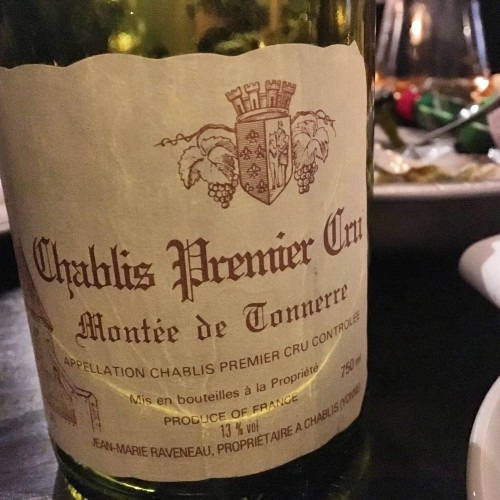
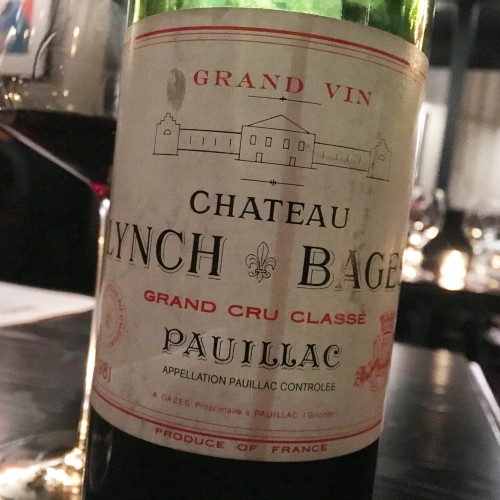
Dinner with Dan at Noble Rot: Raveneau, Lynch Bages and Dervieux Thaize

raven eau chablis

Had a lovely dinner with Dan Keeling at Noble Rot last night. The food was as good as ever, and the wines were just thrilling. I’ve rarely drunk as well, or as much.

Raveneau Chablis 1er Cru Montée de Tonnerre 1992 Burgundy, France
This is such a beautiful wine, although it faded a bit over the course of drinking it. It has a thrilling nose of toast, marmalade, lemon zest and nuts. The palate is pure, precise and lemony with a spicy edge to the citrus peel and hazelnut characters. Intense with a really long finish, and subtle waxy notes. 95/100

Dervieux Thaize Côte Rôtie La Vallière 1989 Northern Rhône, France
This was the last vintage of Albert Dervieux before he retired and leased all his vines to Rene Rostaing. This, his top cuvée, comes from the top of the Côte Brune, and it has aged beautifully. Long elevage in large old oak. Pristine and pure with lovely raspberry and cherry fruit, as well as some plumminess. Very expressive and detailed with lovely fruit expression and fine-grained tannins. There’s some pepper and even a hint of olive. So elegant: quite Burgundian in style. This is a really lovely wine. 95/100

lynch bages 1981

Château Lynch Bages 1981 Pauillac, Bordeaux, France
This is truly thrilling. Forget about 1982: on the evidence of this bottle I’m going to be seeking out 1981s Fresh, elegant and aromatic with lovely blackcurrant and black cherry fruit along with some pine and herb characters. Really elegant palate with supple, sappy black fruits. Such a fine wine, with floral black cherry notes and potential for further development. I love the hints of pine, and the slight saltiness on the palate. This is thrilling. 97/100


from jamie goode’s wine blog http://www.wineanorak.com:/wineblog/northern-rhone/dinner-with-dan-at-noble-rot-raveneau-lynch-bages-and-dervieux-thaize

For Fine Wine Investment opportunities check out Twelve by Seventy Five: http://www.twelve-by-seventy-five.com/

from
http://twelvebyseventyfive.tumblr.com/post/148831149122

Thursday, August 11, 2016

Wolf Blass Black Label Vertical, 1974-2012

Chris Hatcher, Wolf Blass winemaker

Chris Hatcher, Wolf Blass winemaker

This is the 50th year of Wolf Blass as a wine company, and it’s also the 40th vintage of the Wolf Blass Black Label. So winemaker Chris Hatcher was in town to present a vertical of this wine back to 1974.

Wolf made his first wine in 1967, when he produced his Grey Label Cabernet Shiraz from the Langhorne Creek. He later purchased wine to release the 1966 Yellow Label, but the 1967 was the first wine he made. The Black Label saw its debut in 1973. There are only two bottles of this left, so we started our vertical with the 1974. 1973, 1974 and 1975 all won the celebrated Jimmy Watson tropy, the only time this hattrick has been achieved.

OLYMPUS DIGITAL CAMERA

‘If you go back through the show records,’ says Hatcher, ‘you’ll say it’s the most awarded red wine in Australia. The 1994 is the only vintage not to win a gold medal, and it averages 7 gold medals a vintage.

This is a blended wine. It’s based around Cabernet Sauvignon and Shiraz, with a bit of Malbec, these days (since 2002). The proportion varies each year. Volumes also vary. ‘We can blend for consistency of style,’ says Hatcher. ‘There’s no recipe here. The terroirs make the wine. Each of the terroirs brings the quality to the components in the blend.’

The Wolf Blass house style is for a plush mid palate with soft tannins: the feeling is that a wine should be read to drink when it is sold. The wines today have more fruit character and less oak. ‘Back in the early 1970s Wolf used a lot of new American oak to get sweetness on the palate,’ explained Hatcher. ‘Today we get it from the fruit. There’s also a much higher use of French oak.’

Hatcher says that the big change through the years is in the shift in emphasis from the winery to the vineyard. ‘I came into the industry in 1974, and we didn’t know anything about viticulture. The biggest change in the industry is now we have professional viticulturists. We used to think we could fix everything in the vineyard.’

One other change was the shift from cork to screwcap. Wolf Blass used screwcap for the first time in 2001 for the Platinum Label. In 2002 they bottled half the Black Label with screwcap and half with cork, and the screwcap wine sold out fastest. Since 2003 it’s all been screwcap, with the exception of some cork used for the Chinese market, which isn’t ready for screwcaps on top red wines.

wolf class black label

Wolf Blass Black Label Cabernet Sauvignon Shiraz 1974 South Australia
There were two bottles of this opened. My note is from the fresher of the two. Some sweet cherries and plums on the nose. Quite rich with some cedar spiciness. Has a mellow maturity but still plenty of fruit. There’s a slight trace of mint with lovely soft tannins. Mellow and elegant. 92/100

Wolf Blass Black Label Cabernet Sauvignon Shiraz 1979 South Australia
Ripe, rich and broad. Mellow with sweet cherry and plum fruit. Really expressive and harmonious. Restrained and quite pure with hints of cedar and earth, and sleek ripe fruit. Elegant and mature but still has life to it. 94/100

Wolf Blass Black Label Cabernet Sauvignon Shiraz 1982 South Australia
Ripe, malty and quite porty with lush sweet tarry black fruits. Some fudge and toffee notes under the fruit. Mint and cedar, too. It’s slightly disjointed and fully mature and perhaps a bit tired. 88/100

Wolf Blass Black Label Cabernet Sauvignon Shiraz Merlot 1984 South Australia
Aromatic black fruits nose with herbs, earth and mint. Ripe, sweet palate still has plenty of stuffing, and there’s a rich, tarry, cedary core. Spicy and lively with a minty freshness. Developed and fully mature so drink now. 91/100

Wolf Blass Black Label Cabernet Sauvignon Shiraz 1992 South Australia
Sweet, ripe and a bit earthy with nice depth and richness. Soft, earthy, tarry herby notes under the fruit. A bit spicy and drying on the finish. Herbs, earth, spice and tar here. Grippy. 90/100

Wolf Blass Black Label Cabernet Sauvignon 1998 South Australia
89% Cabernet this vintage, the most ever. Pure, enticing, vivid blackcurrant and cedar nose. Very appealing. Dense and ripe. Structured and cedary on the palate with some tarry, gravelly notes. Has richness and lushness to the fruit. A big wine with real impact that has developed nicely. 93/100

Wolf Blass Black Label Shiraz Cabernet Sauvignon Malbec 2002 South Australia
The first vintage in screwcap. Minty blackcurrant fruit nose. Firm, grippy structure on the palate, under the sleek, sweet blackcurrant fruit. Quite firm and unyielding with a youthful personality and a bit of alcoholic heat. Finish is a touch bitter. Will this ever develop? 91/100

Wolf Blass Black Label Cabernet Sauvignon Shiraz Malbec 2004 South Australia
Pure, intense, lush black fruit here. Very youthful with some spiciness and good structure. Ripe but has freshness and a juicy edge to the slightly salty black fruits. Still very primary. Well made. 92/100

Wolf Blass Black Label Cabernet Sauvignon Shiraz 2010 South Australia
Pure, sweet floral blackcurrant and black cherry aromatics. Dense, sweet, supple palate is very ripe and polished, with a salty edge to the sweet primary black fruits. Pure with no rough edges. Satisfying stuff in a ripe, friendly style. 92/100

Wolf Blass Black Label Cabernet Sauvignon Shiraz Malbec 2012 South Australia
Aromatic, floral, pure blackcurrant and blackberry fruit nose. Ripe, sweet, lush black fruits to the fore with a hint of spiciness. Lush, pure and easy with nice density. This is a real crowd pleaser. Still very primary. 91/100

Find these wines with wine-searcher.com


from jamie goode’s wine blog http://www.wineanorak.com:/wineblog/australia/wolf-blass-black-label-vertical-1974-2012

For Fine Wine Investment opportunities check out Twelve by Seventy Five: http://www.twelve-by-seventy-five.com/

from
http://twelvebyseventyfive.tumblr.com/post/148790620852

Wednesday, August 10, 2016

Mother Rock and Force Majeure: brilliant wines from Stompie Meyer

Johan Meyer

Johan Meyer

Johan ‘Stompie’ Meyer is one of the most highly regarded of South Africa’s new wave winegrowers. He makes the wines for Mount Abora (as a consultant), and has his own project, JH Meyer Wines. And this is a new venture for him: Mother Rock/Force Majeure, a joint venture with his UK agent Indigo Wines.

OLYMPUS DIGITAL CAMERA

Mother Rock is a new label, with Force Majeure a more affordable pair of wines that have been made for a few years now. Meyer farms organically, and makes the wines naturally. ‘I make more natural wines, but I’m trying to be clean rather than funky,’ he explains. The only addition is a bit of SO2 at bottling. ‘I’ve been working the vines for a while now,’ he explains. ‘It takes a few years to get the vineyard into balance.’ Typically he will do three picks: one to get acid, and then two subsequent ones. He doesn’t acidify. ‘You have to be so clean in the cellars,’ he says.

‘I want to make honest, clean natural wines showing the terroir rather than a style,’ says Meyer. He’s succeeding very well.

OLYMPUS DIGITAL CAMERA

Force Majeure Chenin Blanc 2015 Swartland, South Africa
80% stainless steel, 20% barrel. Unirrigated bush vines from decomposed granite. Starts off oxidative and the juice goes brown before fermentation starts. Really bright and lively with citrus, pear, spice and tangerine. Very lively and focused with ripe apple and lemon characters. Mineral and intense. 92/100

OLYMPUS DIGITAL CAMERA

Mother Rock White 2015 Swartland, South Africa
61% Chenin Blanc, 16% Viognier, 11% Grenache Blanc, 8% Semillon, 4% Harslevelu. The idea here is to take an overview of the Swartland with different varieties and different soils. Lovely fresh citrus, pear, apricot and tangerine notes, with some ripe apple. Fresh, detailed and fine with nice precision. 94/100

OLYMPUS DIGITAL CAMERA

Mother Rock Liquid Skin 2015 Swartland, South Africa
This spends 9 weeks on skins, whole bunch, with pigeage once a day until fermentation finishes. It’s from a dry grown bush vine vineyard planted in 1975 on decomposed granite. Yellow/orange in colour it has a lovely perfume and fine texture on the palate, showing quince and apricot with real finesse. Grippy but not aggressive, it is so expressive. 94/100

Force Majeure Rosé 2015 Swartland, South Africa
This is a Cinsault from kofeeklip soils. Pale pink in colour, it was picked at 18 Brix when some of the grapes were still green, and already had a pH of 3.5. Very lively, fresh and quite textural with zippy, juicy cherry fruit and a hint of citrus and herb. 90/100

Force Majeure Red 2015 Swartland, South Africa
This is 70% Syrah made carbonically, combined with press juice from the other reds. Beautiful fresh, floral aromatics with some meaty notes. Lovely raspberry fruit. Juicy, focused and a bit gripp with nice vibrant red fruits and some peppery hints. 93/100

OLYMPUS DIGITAL CAMERA

Mother Rock Carignan Cinsault 2015 Swartland, South Africa
11.5% alcohol. An equal parts blend of Carignan from granite and Cinsault from koffeeklip soils, both old vine. 100% whole bunch, some crushed with the feet. Very fresh and vivid with lovely cherry and raspberry fruit. Pure, grippy and structured with nice acidity. Very lively with purity and vibrancy. 94/100

OLYMPUS DIGITAL CAMERA

Mother Rock Grenache 2015 Swartland, South Africa
11.8% alcohol. Decomposed granite with some Malmesbury shale. 100% whole bunch, 8 weeks on skins. Very fine, perfumed and expressive with a slightly herby nose or red cherries with tea leaf detail. Vibrant, juicy, pure red cherry fruit palate is so expressive. Complex, pure and beautiful. Haunting. 96/100

Mother Rock Syrah 2015 Swartland, South Africa
Granite with some shale, picked in three stages. Floral perfumed nose of raspberries and red cherries with subtle meatiness. Very pure, vital palate with fresh raspberry and cherry fruit. Juicy and linear with nice acidity. Real potential here. 94/100

Mother Rock Mourvèdre 2015 Swartland, South Africa
25 year old vines with sandy topsoil over granite. Expressive, perfumed, with a red apple edge to the fine tea, spice, tar and black cherry fruit. Grippy black fruits on the palate with some smooth cherry fruit. Unusual but nice. 92/100

UK agent: Indigo Wines

Find these wines with wine-searcher.com


from jamie goode’s wine blog http://www.wineanorak.com:/wineblog/south-africa/mother-rock-and-force-majeure-brilliant-wines-from-stompie-meyer

For Fine Wine Investment opportunities check out Twelve by Seventy Five: http://www.twelve-by-seventy-five.com/

from
http://twelvebyseventyfive.tumblr.com/post/148739847032