Tuesday, January 31, 2017

Pinot Noir 2017: the International Pinot Noir Tasting

pinot2017

This was the headline International Pinot Noir tasting at Pinot Noir 2017 in Wellington. In this session, rather than focus on New Zealand, it was time for the panellists to look further afield. Each of the four chose two wines that they felt represented greatness in Pinot Noir, and then explained their own views on greatness in wine. It was a meaty, intriguing session. We tasted them blind, knowing solely who had chosen the wines. These are my notes and scores as written blind. I didn’t try to guess where the wines were from, and instead tried to focus on what was in the glass.

pinot 2017 panel

This was a really interesting selection.

Chosen by Marcel Giesen

Marcel chose two of my favourite Californian producers. ‘To me, these wine exemplify balance and purity,’ says Marcel. I really liked both wines. ‘You can hear the voice of the land, but you have to listen,’ he observed. ‘Power isn’t size, it is like persistence, like wingrowers who don’t give up.’

Au Bon Climat Larmes de Grappe Pinot Noir 2005 Santa Rita Hills, California
Sweet, supple, lovely refined red cherry fruit. Has a little development and a core of sweet fruit with real finesse. Supple, elegant and very smooth with fine-grained tannins. 94/100

Domaine de La Côte Bloom’s Field Pinot Noir 2014 Santa Rita Hills, California
Fresh and detailed with fine, sappy red cherries and plums. Real elegance here with delicate, fine raspberry notes. Light and ethereal and really elegant. Lovely weight in the mouth. 95/100

OLYMPUS DIGITAL CAMERA

Chosen by Mike Bennie

Among other things, Mike talked about how fault finding is often at championship levels at Australian wine shows, yet in the evening the judges would drink classic European wines which displayed the sorts of faults that had been so soundly criticized during the day.

‘Quality is often a set of group-think principles,’ Mike says, ‘ignoring winemaker intent. I believe that there are some cannons that need re-assessing.’

Reputation and expectation both blinker assessments of quality. ‘I want my wine unbalanced,’ he added, pointing out that sometimes the edges in a wine provide interest.

He mentioned winemaker intent as an important attribute of the wine. ‘How the wine gets to bottle is more important than subjective assessment.’ Mike’s choices were thought provoking and smart.

Mythopia Illusion Pinot Noir 2013 Arbaz, Valais, Switzerland
Sweet, malty and a bit spicy with some earthy hints. Tastes quite natural with lively, slightly lifted acidity and some notes of tea leaves and herbs. Grippy tannins on the finish. Thought-provoking and natural, and flirting with funkiness. 91/100

Mount Pleasant Mother Vine Pinot Noir 2014 Hunter Valley, Australia
Distinctive with a Ribena edge to the sweet cherry and plum fruit. Grippy unresolved tannins. Very direct fruit with a fresh but sweet jammy finish. A bit strange and very tannic. 90/100

Chosen by Ken Ohashi

The view of Pinot Noir quality I am about to present may strike you as somewhat different from what you are familiar with,’ says Ken. He says that until recently Japan was quite a self-referential culture. Ken tried to explain the Japanese mindset. ‘Great Pinot Noir is transparent with the best qualities of premium water: it is smooth with a completely clear aroma and taste.’ According to Ken, transparency is the cornerstone of great Pinot Noir. ‘It means the wine has a pure aroma and palate, a finish suited to the focus of harmonious aroma and palate, and a silent and understated sensation.’ Ken’s choices demonstrated this.

Timo Meyer Dr Meyer Pinot Noir 2014 Yarra Valley, Australia
Fresh and juicy with bright, sappy red cherry fruit and some herbal overtones. There’s an elegance to this wine with a juicy, herb-tinged quality and some green tea in the background. Beguiling and delicious. 94/100

Meyer Näkel G Spätburgunder 2014 Ahr Valley, Germany
Forward, direct, fresh red cherry and raspberry notes here: lively and supple, with a bit of tannic grip as well as fresh, ethereal red fruits. Youthful and elegant with nice acidity, but also some tannic grip. Potential for development. 95/100

jancis robinson speaking

Chosen by Jancis Robinson

Jancis began by noting that had this conference taken place in the last century there’d be far more mention of Burgundy in a seminar like this. But the world of wine is a big one, and good Pinot is being made in many different locations these days. Some trivia: As a student Jancis drank a Chambolle Musigny Les Ameureuses 1959, and this was the wine that did it for her.

She pointed out that just 0.1% of the tasting notes on her website are on non-Burgundy Pinot Noirs that have scored over 18 (which is a very high JR score). This makes up 140 wines, of which 18 are from Oregon, 37 from Australia, 38 from California and 46 from New Zealand. Jancis’ choices were, as you’d expect, very good.

Mark Haisma Morey St Denis 1er Cru Les Chaffots 2013 Burgundy, France
Fresh and detailed with a bit of lift and some cedar spice under the fresh red fruits. Very pretty, sweet red fruits here with freshness and a savoury twist. 92/100

Tolpuddle Pinot Noir 2015 Coal River Valley, Tasmania
Green and sappy with a sweet red fruit core and a lush liqueur like quality. Sweet and green at the same time. Sappy and bright with nice focus and an easy-drinking quality. 93/100


from jamie goode’s wine blog http://www.wineanorak.com:/wineblog/pinot-noir/pinot-noir-2017-the-international-pinot-noir-tasting

For Fine Wine Investment opportunities check out Twelve by Seventy Five: http://www.twelve-by-seventy-five.com/

from
http://twelvebyseventyfive.tumblr.com/post/156641552347

Monday, January 30, 2017

Pinot Palooza: a great consumer Pinot event in Wellington

pinot palooza

Yesterday afternoon I popped into Pinot Palooza, a consumer Pinot Noir event that hails from Australia but which has been transplanted to New Zealand for the day before the Pinot 2017 event in Wellington. 117 producers from all over New Zealand were present, and it had a great vibe. I wandered around chatting to people and drinking some lovely Pinot Noir. It was a great way to begin this Pinot-focused week. Here are some pictures (credit: some were taken by Hannah Burns who stole my camera).

OLYMPUS DIGITAL CAMERA

Rosie Finn and Mel BrownOLYMPUS DIGITAL CAMERA

Dan Sims, right, organiser of Pinot Palooka

OLYMPUS DIGITAL CAMERA

Chatting to Nat, winemaker at Yealands

OLYMPUS DIGITAL CAMERA

Nick and Jo Mills, RipponOLYMPUS DIGITAL CAMERA

Angela Clifford with Lynette Hudson, Tongue in Groove- Clive Dougall photobombs

OLYMPUS DIGITAL CAMERA

With Tim Kerruish, Folding HillOLYMPUS DIGITAL CAMERA

OLYMPUS DIGITAL CAMERA

Clayton twice

OLYMPUS DIGITAL CAMERA

With Jo Mills, Rippon
OLYMPUS DIGITAL CAMERA

Chuck Hayward
OLYMPUS DIGITAL CAMERA

Angela Clifford, Tongue in GrooveOLYMPUS DIGITAL CAMERA

Hannah Burns with Rudi BauerOLYMPUS DIGITAL CAMERA

OLYMPUS DIGITAL CAMERA

OLYMPUS DIGITAL CAMERA

OLYMPUS DIGITAL CAMERA

Andrew Hedley, Framingham

OLYMPUS DIGITAL CAMERA

Theo Coles, Kalex and others


from jamie goode’s wine blog http://www.wineanorak.com:/wineblog/new-zealand/pinot-palooza-a-great-consumer-pinot-event-in-wellington

For Fine Wine Investment opportunities check out Twelve by Seventy Five: http://www.twelve-by-seventy-five.com/

from
http://twelvebyseventyfive.tumblr.com/post/156598687662

New Zealand Riesling masterclass, with Andrew Hedley

riesling masterclass

This masterclass focused on the variety that’s the darling of the trade but which is sadly not loved so much by consumers: Riesling. It was led by Andrew Hedley of Framingham (left), and Bob Campbell (right), leading Kiwi winewriter. Andrew is arguably New Zealand’s leading proponent of this grape variety, and he explained the sorts of winegrowing decisions that go into producing good examples of this variety.

There are 753 hectares of Riesling in New Zealand, with Marlborough (308 ha) and North Canterbury (285 ha) the key regions.

The ratio of acids in New Zealand are such that pH in the final wine can be very low, even if the total acidity is less extreme, and Andrew reckons that you can taste this. ‘You can feel pH in your mouth,’ he says, and this makes it problematic if you want to make dry Riesling: you want to avoid sweet and sour characters in the wine. So for making dry styles, which he thinks require a lot of attention to detail, dry extract and ripe phenolics are a good starting point. With German and Austrian Riesling, hang time gives a lot of the flavour, and the best wines benefit from dry extract from physiologically ripe grapes. Andrew points out that for vines, the canopy drives ripening and if you have a big canopy it drives ripening fast. So smaller canopies delay the ripening, and result in the balance being on the side of the fruit not the canopy. An alternative route to longer hang time is to load the vine up with more crop but this is risky. Another intervention that can be beneficial is leaf removal in the fruit zone, which helps manage the ripening of the phenolics. The timing of this is important.

In the winery, skin contact can help moderate high acidity. You can achieve a reduction of 1 g/l by 48 h skin contact, but the down side is that the phenolics also go into the juice. Sulfur dioxide use will also alter the extraction of the phenolics and how they are oxidised in the juice. Another winemaking decision is whether or not to clarify the juice. Fermentation with grape solids can be beneficial in developing flavour, but this is a personal preference. It can help develop mouthfeel.

Traditionally in New Zealand Riesling ferments have been inoculated in stainless steel, and this results in pure, fruity wines. But allowing grapes to ferment spontaneously can have a lovely effect on the overall mouthfeel and aroma. There are commercial non-saccharomyces yeast available now for those who want wild ferment character without risk. The use of residual sugar is a key decision, too, and sweetness is achieved by chilling the must as fermentation slows and/or adding SO2.

Then there’s the stabilization process, where interventions are made to get tartrate and protein stability. These can affect wine flavour. ‘In the new world we tend to over-stabilize our wines,’ says Andrew.

Then followed three flights of Riesling.

Dry

felton road riesling

Felton Road Dry Riesling 2016 Central Otago, New Zealand
Dry and linear with fresh citrus fruit. Stony and tart with some lime and lemon. Shows delicacy as well as intensity, with no rough edges. Refreshing, primary and juicy, with lots of potential. So lively and intense and nervous. 90/100

Seifried Estate Riesling 2016 Nelson, New Zealand
Very pretty with a bit of grapefruit and also some melony richness. Nice texture to the fruit: this is deliciously open and fruity, with moderate acidity. Such pretty aromatics. 90/100

black estate riesling

Black Estate Damsteep Riesling 2015 Waipara, North Canterbury, New Zealand
Nutty, appley edge to the nose, with a hint of honey. There’s ripe apple and citrus fruit on the palate with a deliciously stony, slightly oxidative character. This has substance, and is made in a distinctive style. Lovely texture. 92/100

Spy Valley Envoy Johnson Vineyard Riesling 2014 Marlborough, New Zealand
There’s real breadth and depth to this wine which shows rich, slightly nutty fruit. Ripe citrus and pear here with good depth. Made in a bold, fruit-forward style. Not as lemony as most. 89/100

Off-dry

Maude Mt Maude Vineyard Dry Riesling 2016 Central Otago
Fruity and appealing with a juicy grapefruit and lemon personality. It tastes dry but it’s got some sweetness countering the very high acidity. Juicy finish. Lots of flavour here. 89/100

Terrace Edge Classic Riesling 2016 Waipara, North Canterbury, New Zealand
Lovely texture here with some generosity to the lemony fruit. A bit of honey and some floral perfume, too. Lovely focus and generosity. Tastes dry but there’s some sweetness too. Harmonious. 91/100

Two Rivers of Marlborough Juliet Riesling 2016 Marlborough, New Zealand
This is very fruity and fine with a tangerine and melon richness. There’s lovely citrus fruit driving the flavour, with some sweetness building texture. Long finish: lovely fruit quality here. Off-dry. 91/100

Mahana Riesling 2015 Nelson, New Zealand
Just off-dry with a waxy, nutty edge to the honeyed citrus fruit. Quite lively and bright. Pithy on the finish. 88/100

Fruit Sweet

pegasus bay riesling

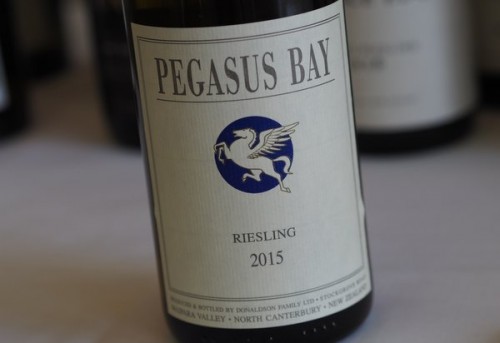
Pegasus Bay Riesling 2015 Waipara, North Canterbury, New Zealand
Very textural and fruity with bright citrus and pear fruit, and a bit of melony richness. Tastes quite dry even though there’s some sugar. Lovely pure fruit. Linear and with great potential for development. 92/100

Mt Difficulty Target Riesling 2015 Central Otago, New Zealand
Lovely fresh grapefruit with some melon and honey richness. High acidity is nicely countered by the sweetness. Lovely purity here: mouthwatering and juicy with nice weight. A hint of spiciness. Just off-dry, carrying 40 g/l sugar very well. 90/100

Giesen Riesling 2015 Marlborough, New Zealand
This is a large production wine that sells at a great price. So pretty and lively with lovely purity of fruit. Fresh and tangy with lovely purity of fruit. Bright and focused with some tangerine and grapefruit. So pretty. 89/100

framingham riesling

Framingham Select Riesling 2016 Marlborough, New Zealand
Honeyed, slightly marmalade-like edge to the lemony fruit. Detailed and pure with a bit of nuttiness and lovely ripe apple richness as well as some spicy notes. Delicious stuff. 91/100


from jamie goode’s wine blog http://www.wineanorak.com:/wineblog/new-zealand/new-zealand-riesling-masterclass-with-andrew-hedley

For Fine Wine Investment opportunities check out Twelve by Seventy Five: http://www.twelve-by-seventy-five.com/

from
http://twelvebyseventyfive.tumblr.com/post/156593578597

Saturday, January 28, 2017

Albariño: a new grape for New Zealand

OLYMPUS DIGITAL CAMERA

There’s a bit of buzz about Albariño in New Zealand. But it’s early days yet: there are currently just 27 hectares in the whole country. But on this trip so far I’ve tried some good ones. It’s a variety that seems to hold on to its varietal character even when it’s transplanted across the world. As an example, Marlborough producer Nautilus has just 1 hectare, and produces 300 cases, most of which are sold at cellar door. ‘It’s a vigorous variety, and we grow it in stony soils,’ says viticulturist Michael Collins. ‘I grow it like Pinot Noir. It’s the only variety I leaf pluck, trying to drop the acidity,’ he says. Their vines were planted in 2014. ‘It’s the weirdest variety I have grown in 20 years of viticulture.’

Todd Stevens, of Neudorf, says that they have half a hectare. ‘We had a spare bit of land, and thought it was time to look at other varieties,’ he says. ‘It has very good Riesling-esque acidity. It’s bullet proof. Riesling melts on the vine but this fellow stays clean. It seems like it has quite thick skins.’

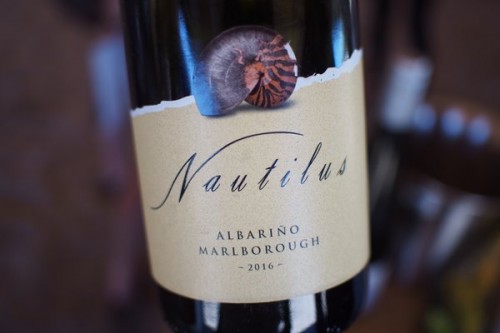
Nautilus Albariño 2016 Marlborough, New Zealand
Very fresh and linear with a bit of grape pith character. Bright with grapefruit and lemon notes, as well as some tangerine. High acidity. Juicy. 90/100

Waimea Estates Albariño 2016 Nelson, New Zealand
Lively, bright and very lemony with a bit of white peach and some pear notes. Some lemony brightness with a hint of marmalade and citrus pith. Distinctive. 91/100

OLYMPUS DIGITAL CAMERA

Neudorf Moutere Albariño 2016 Nelson, New Zealand
Very stony and linear with high acidity. Bright and lemony with lovely focus. Juicy, bright and fresh with a tart, limey finish. Focused wine. 90/100

albarino

Astrolabe Vineyards Sleepers Vineyard Albariño 2016 Marlborough, New Zealand
This is from the Kekerengu Coast, with limestone soils. It’s very linear, bright and stony with pure lemony fruit. This is aromatic with nice minerality and brightness. 91/100

Aronui Single Vineyard Albariño 2015 Nelson, New Zealand
Very lively, bright and fresh with lemony fruit and good acidity. There’s a stony personality here with good focus and freshness. 91/100


from jamie goode’s wine blog http://www.wineanorak.com:/wineblog/new-zealand/albarino-a-new-grape-for-new-zealand

For Fine Wine Investment opportunities check out Twelve by Seventy Five: http://www.twelve-by-seventy-five.com/

from
http://twelvebyseventyfive.tumblr.com/post/156512873367

Friday, January 27, 2017

The Marlborough Pinot Noir Safari

OLYMPUS DIGITAL CAMERA

The Pinot Noir Safari. It’s the second time this has taken place. Various winegrowers take international guests through the back-country and off-road routes, taking in some special vineyards across the Marlborough region. We make several stops, where they explain what it is that makes each vineyard important, and we get to taste some Pinot Noir in situ. Marlborough is by far the biggest region in New Zealand now, with some 27 000 hectares in the Wairau and another 7000 hectares in the Awatere. It’s an interesting region, and this is a great way to understand how the various subregions differ, and the effect of soils on the quality of the Pinot Noirs that result.

OLYMPUS DIGITAL CAMERA

There are eight or nine 4×4 vehicles, including a couple of Land Rover Defenders, which look the most rugged. But it’s these that got stuck in the Awatere River last time, presumably because they weren’t being driven the right way. No one got stuck this time.

Calrossie Vineyard

Calrossie Vineyard

We began in TerraVin’s Calrossie Vineyard, which is just tucked behind the Wither Hills. So it’s not quite Awatere: more sort of the extreme end of the Southern Valleys. Here we start with some fizz. Appropriate for 10 am.

Villa Maria's Seddon Vineyard

Villa Maria’s Seddon Vineyard

Next stop was the Awatere, and Villa Maria’s Seddon Vineyard. We also looked at Nautilus’ Awatere River Vineyard, which is nearby, and stopped here to taste a few wines.

Helen Morrison introduces the Villa Maria Awatere Pinots

Helen Morrison introduces the Villa Maria Awatere Pinots

OLYMPUS DIGITAL CAMERA

OLYMPUS DIGITAL CAMERA

After a coffee and pie break on the banks of the river, it was back over to the Wairau via the Taylor Pass. Here we stopped at Auntsfield, at their Southern Valleys vineyard. We tasted here inside their historical barn: wines were first made here at the end of the 19th century, but wine growing in Marlborough ceased in 1905, and was only begun again 70 years later.

OLYMPUS DIGITAL CAMERA

OLYMPUS DIGITAL CAMERA

OLYMPUS DIGITAL CAMERA

OLYMPUS DIGITAL CAMERA

OLYMPUS DIGITAL CAMERA

Mel Brown and Clive Dougall

OLYMPUS DIGITAL CAMERA

OLYMPUS DIGITAL CAMERA

Matt Sutherland, Dog Point

OLYMPUS DIGITAL CAMERA

Bree Boskov and Kat Wiggins

We next headed over to the Brancott Valley, where we had a nose around, and stopped at Dog Point. Here we tasted wines made from the Dog Point vineyards, and also Greywacke and Fromm, who have vineyards nearby.

OLYMPUS DIGITAL CAMERA

Section 94, Dog Point

OLYMPUS DIGITAL CAMERA

OLYMPUS DIGITAL CAMERA

OLYMPUS DIGITAL CAMERA

Ivan Sutherland, Dog Point, explaining the place

Next stop was the Omaka Valley, where we looked at vineyards owned by Spy Valley and Nautilus, as well as tasting their wines.

OLYMPUS DIGITAL CAMERA

OLYMPUS DIGITAL CAMERA

Clive Jones, Nautilus

OLYMPUS DIGITAL CAMERA

OLYMPUS DIGITAL CAMERA

Seresin’s biodynamically managed Raupo Creek vineyard, also in the Omaka Valley, was the next stop. We tasted a few wines here and got wind blasted.

Clive Dougall, Seresin

Clive Dougall, Seresin

OLYMPUS DIGITAL CAMERA

OLYMPUS DIGITAL CAMERA

The tour finished at Churn’s vineyard in the Waihopai Valley (actually, it’s not Waihopai, according to Sam Weaver, the proprietor, who thinks it should be called Omaka Valley). Here we tasted more wine, including some Fromm and Churton, and finished with a beer. It was a lovely day, and it was so good to see the stylistic diversity of Marlborough Pinot, and how this relates to place and soil type. A film to come!

Hatsch Kallberer, Fromm

Hatsch Kalberer, Fromm

OLYMPUS DIGITAL CAMERA

OLYMPUS DIGITAL CAMERA


from jamie goode’s wine blog http://www.wineanorak.com:/wineblog/new-zealand/the-marlborough-pinot-noir-safari

For Fine Wine Investment opportunities check out Twelve by Seventy Five: http://www.twelve-by-seventy-five.com/

from
http://twelvebyseventyfive.tumblr.com/post/156464918997