Wednesday, February 28, 2018

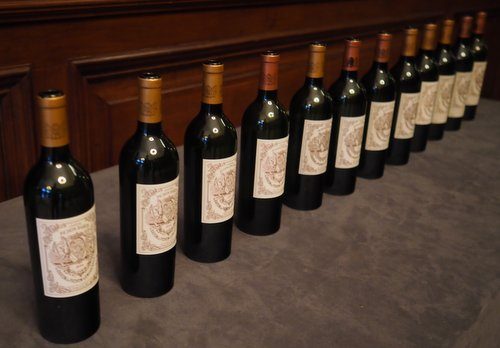
A vertical of Château Pichon Baron, 2001-2014

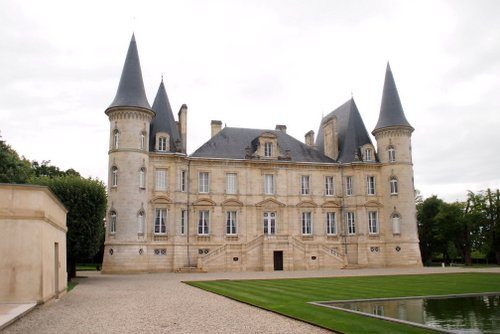
Second-growth Château Pichon Baron is one of the great vineyard terroirs in Bordeaux. Located in Pauillac, just opposite Latour, it boasts three of the five Médoc first growths as near neighbours.

Christian Seely was in London to present an extensive vertical of the modern era of Pichon Baron. ‘Pichon is capable of making wines that are among the greatest in the world,’ he declared enthusiastically. Previously resident of the Douro, where he looked after the AXA-owned Quinta do Noval (having turned it around from its dismal underperformance of the 1980s into one of the top properties in the Douro), Seely was invited to come to Bordeaux to head up all of AXA’s vineyard interests in 2000. Previous boss Jean Michel Cazes had done a good job with Pichon since AXA’s purchase in 1987, but Seely wanted to take it next level. And the market was ready to pay more for the very top wines: Seely was smart enough to see that by reducing quantity and raising quality, Pichon had the potential to be one of the elite group, rather than an also-ran. But he’s also aware that perceptions take time to change. I once asked him: if you start making first-growth quality wines, how long will it take for the market to realise it? His reply: a generation.

Christian Seely

Seedy believes that Pichon shares some of the world’s greatest terroir for Cabernet Sauvignon with its near neighbours Latour and Las Cases. The vineyards are undulating, not flat, and there are some deep beds of gravel under these undulations: perfect for old vine Cabernet to thrive. When he arrived Pichon were using the entire Pichon vineyard area for Grand Vin, and made 395 000 bottles. Seely’s proposal to the board was to make Grand Vin only from the best vineyard block: the terroir shared with these illustrious neighbours. By not diluting this terroir, he believed he could take Pichon to its full potential. But this comes at a cost in terms of volume. Now the Grand Vin production is less than half what it was, with around 175 000 bottles each year.

A note on names: here I’m using the name the Château has been using since the 2012 vintage: simply, Pichon Baron. Before then, it was referred to as Château Pichon Longueville Baron. This led to some confusion with Pichon Longueville Comtesse de Lalande.
Chateau Pichon Baron 2014 Pauillac, Bordeaux
This is a perfect example of the best that Bordeaux can do in a cooler year. June, July and August saw lower than average sunshine and temperatures. But September and October were wonderful and so Seely could wait quite late to pick. They started Merlot on 20 September, then interrupted harvest in October for 8 days before picking the rest of the grapes. This is fine, fresh and expressive with a sweet core of floral blackcurrant fruit. It’s very fresh with good concentration and great finesse. Really lovely freshenss and mouthfeel here. It’s full and generous yet still has precision. 96/100

Château Pichon Baron 2013 Pauillac, Bordeaux, France
Not part of the vertical, but I thought I’d include it here, tasted the same week. Widely regarded as one of the weakest recent Bordeaux vintages, but still a nice wine. This is really fresh and balanced. Lovely blackcurrant fruit with some raspberry freshness, and savoury notes of gravel and spice. It’s definitely a lighter expression of Pichon, but it’s perfectly proportioned and drinking very well now, and will carry on drinking well for a decade, I reckon. Lovely focus and definition here. Classic Claret with nice structure and acidity. 93/100

Chateau Pichon Baron 2012 Pauillac, Bordeaux
This was a cooler year with a nice September, but it doesn’t have the richness of 2014. Elegant and supple with fresh, gravelly blackcurrant fruit. Quite elegant with nice finesse. Lovely gravel and chalk notes and some tannic structure. Has elegance and purity. 94/100

Chateau Pichon Baron 2010 Pauillac, Bordeaux
‘Concerning the great duo of 2010 and 2009, the jury is still out as to which of these is the greater, but they are two very good examples of great Bordeaux,’ says Christian Seely. ‘They are both years when we didn’t have too much to complain about. They are both years when we had all the sunshine we wanted, but average temperatures in 2009 were 2 C higher, and rainfall in 2010 was on the low side resulting in smaller grapes.’ This is very fine and concentrated with ripe, sweetly fruited blackcurrant and black cherry fruit, as well as a hint of raspberry. Pure and structured with lovely tannins and some warmth on the finish. Straight and fine. 97/100

Chateau Pichon Baron 2009 Pauillac, Bordeaux
Ripe, sweet, pure and dense with rounded sweet blackcurrant and blackberry fruit, and just a hint of olive and even tar. Some fine herbal notes, too. Lovely ripeness and density are coupled with good structure and some generosity as well as finesse. 95/100

Chateau Pichon Baron 2008 Pauillac, Bordeaux
Quite a poor summer but a lovely end of season, with a wonderful September and October. ‘We were quite euphoric,’ recalls Seely. ‘It enabled us to get the grapes right.’ This is lovely: there’s great structure with some tar and cedar notes under the sleek blackcurrant fruit. Olives, tar and herbs lurk under the fruit, and there’s nice structure and fruit. Just starting to develop nicely. 94/100

Chateau Pichon Baron 2007 Pauillac, Bordeaux
2007 and 2008 were both years with poor summers, but 2008 was saved more by a warm end of season than 2007 was. There wasn’t quite enough sunshine to make the wine as ripe as it should have been. Gravelly, chalky nose with some developments: savoury, stony notes and nice balance. Blackcurrant fruit with some iodine/earth hints. Drinking beautifully now and for the next few years; showing maturity but also freshness. 93/100

Chateau Pichon Baron 2006 Pauillac, Bordeaux
Christian Seely thinks it’s wrong to think of 2006 as not a good vintage. ‘The best 2006s are great wines,’ he says. ‘Pichon was bad tempered when we tried to show it as a baby, with high acidity, and it was tannic and reserved. But I have always believed in it enormously.’ This is lovely: taut with nice focus to the blackcurrant fruit. Structured with real finesse and good acidity. Some dry tannins on the finish, but this really has lovely purity and finesse. 94/100

Chateau Pichon Baron 2005 Pauillac, Bordeaux
This has a reputation for being a great year. ‘I believe this was one of the very great years of Pichon,’ says Christian Seely. ‘It was important for me because it got me off the ejector seat.’ Refined nose with sweet herbs and brooding blackcurrant fruit. This has dense structure and fruit. It’s all perfectly proportioned. There’s a hint of mint and some iodine but the core is silky sweet blackcurrant fruit meshing with lovely structure. 96/100

Chateau Pichon Baron 2004 Pauillac, Bordeaux
This is another cooler year that was saved by a fine September. Still tightwound with lovely purity of fruit. Quite sleek and silky with primary blackcurrant and black cherry fruit. This shows freshness and purity coupled with subtle hints of olive, chalk and gravel. Lovely finesse and brightness. 95/100

Chateau Pichon Baron 2003 Pauillac, Bordeaux
A year famed for being incredibly hot and dry. ‘This was a deeply worrying year for us,’ recalls Christian Seely. ‘I’ve seen drought in the Douro, but that is with varieties selected to deal with it.’ But on the grand plateau in Pichon the leaves stayed green: an illustration of the importance of terroir. Consultant winemaker Jacques Boissenot advised them against acidifying: don’t think about acidifying, he said, this wine is balanced, you will see. This is concentrated, fresh and structured with raspberry and blackcurrant fruit. Linear and ripe with nice freshness. Very pure: it doesn’t taste too ripe. The terroir has asserted itself over the vintage. 94/100

Chateau Pichon Baron 2002 Pauillac, Bordeaux
‘I love this vintage,’ says Christian Seely. ‘Unfortunately, peoples’ perception of this year is not good, for good reasons. It was an irregular vintage.’ Smoky, gravelly and a bit tarry and ashy. Nice dense blackcurrant and blackberry fruit. Juicy with a savoury, earthy twist. Supple. 93/100

Chateau Pichon Baron 2001 Pauillac, Bordeaux
The 2000 was the first vintage made with more selection in the cellar, but 2001 was the first made with lower yields. This is showing lovely development with cedar, tar and fine herbs. Nice grip under the ripe but balanced blackcurrant fruit. Nice weight and focus to this wine. 94/100

Find these wines with wine-searcher.com


from Jamie Goode’s wine blog http://www.wineanorak.com:/wineblog/bordeaux/a-vertical-of-chateau-pichon-baron-2001-2014

For Fine Wine Investment opportunities check out Twelve by Seventy Five: http://www.twelve-by-seventy-five.com/

from
https://twelvebyseventyfive.tumblr.com/post/171374105272

Tuesday, February 27, 2018

Marelise Niemann’s Momento wines, Bot River, South Africa

Marelise Niemann

Marelise Niemann is a champion of Grenache. Her label, Momento, began officially in 2013, when she was still working at Beaumont in the Bot River region of South Africa. Beaumont was her first proper job as a winemaker, although after university she did 8 months in California in 2007. She began at Beaumont in January 2007, and stayed there for 8 months.

But it was in 2011 the she bought her first parcel of grapes: she shared the grapes from a vineyard in the north of the Swartland with Donovan Rall. So she made wine, but it was only in 2013 that she realised she wanted to do her own thing, and released it under the Momento label. Unfortunately, this wine wasn’t to be repeated: the farmer ripped the grapes out because the old vines were yielding less than a ton a hectare.

Sampling Grenache in the Anysbos vineyard, Bot River

So there was no Grenache in 2012 and 2013 because Marelise couldn’t get the right grapes. But since 2014 she has been working with the same vineyards, and adding others as they come available. The desire to work with Grenache – not a widely planted grape in South Africa – stemmed from working a vintage with Eben Sadie in Priorat in 2010. ‘After this, I wanted to get old Grenache,’ she says. ‘While I was working there I said I had to go back to South Africa and look for old Grenache.’

The wine came first, then the label and then the business model. The first vintage was only 780 bottles: one 400 litre and one 225 litre barrel. The label is based on a drawing by Hennie Niemann, Marelise’s husband: it’s an old vine with various people incorporated into it.

All the Momento reds are made in the same style: one third whole-bunch, natural yeast, gently plunged down. Marelise uses plastic bins and two of the big (6 ton) tanks. ‘I would do everything in small bins if it was practical,’ she says. The first two vintages were made at Beaumont, but the last four have been made at Gabrielskloof, also in Bot River.

The barrels she uses are all older: the youngest is a fourth-year barrel. ‘The idea is to keep the barrel as a vessel,’ says Marelise. She ages the wine 12 months in barrel and then it goes into tank for four to six months before bottling. ‘For me, for Grenache – in the style I make it – the key factors are aroma and elegance on the nose. I don’t like that over-matured dead character. I always pick a bit earlier.’ This year, the first portion came in at 22.8 Brix, and at the longest she leaves it to is 24 Brix. ‘The more portions the better: if you can work with portions from different soils and different regions you can make something with more elements than you would have from one vineyard. ‘

Her plans? ‘The brand is already established but I need to grow a bit more. Next year I would like to do different Grenache bottlings if the vineyards allow this.’

Marelise is a champion of Grenache, which in her hands makes elegant, Pinot-like wines. It thrives in dry years, and it’s a low maintenance variety, especially when grown as a bush vine. ‘For me this is one of the grapes of the future for South Africa: it will work well here,’ she says. ‘It’s a light-coloured, gentle flavoured grape. In past years people overworked it, picking too ripe and extracting too much to get richer, darker, thicker flavours. We can do the opposite and produce something that is fresher and finer in style. When people think of Grenache they think of something thick and big but I see something completely opposite.’ I think she’s right.

Momento Grenache 2011 Swartland
Supple and fresh with sweet cherries and plums, and a fine spiciness. Really fine grained and with a fresh spicy edge. There are notes of dried herbs and black tea with lovely elegance and finesse. Such a delicious wine that’s light on its feet but which has lovely flavour and a savoury twist. Has held out nicely. 93/100 (02/18)

Momento Grenache 2014 Swartland
This is from Langkloof in the Swartland: bush vines on decomposed granite. The farmer is Scholtz Rossouw. They were getting half of the price they are being paid now (about 13 000 Rand a ton). 2500 bottles made. So supple, fresh and elegant with delicate, sappy red cherry and raspberry fruit. Fresh with nice tannin structure and a really elegant mouthfeel. Silky and juicy with nice brightness: quite Pinot like. Fresh and bright red fruit personality. 94/100 (02/18)

Momento Grenache 2015 Swartland
Langkloof, but also with some fruit with a new vineyard on the property grown from cuttings of the best old vines. Picked a little riper and did more whole bunch this year. Perfumed and quite intense on the nose with spice-infused raspberry fruit and some peppery savouriness. Lovely weight in the mouth. Concentrated but still really elegant with a peppery grip to the juicy raspberry and red cherry fruit. This is quite structured and has potential for further development. This has substance to it. 95/100 (02/18)

Momento Grenache 2016 Western Cape
Some voor Paarderberg grapes plus two barrels from Bot River (La Motte’s farm there). Really aromatic and perfumed with lovely fragrant cherry and berry fruits. The palate is supple and elegant with real finesse. Such a lovely wine with sweet fruit, brightness and a bit of green sappiness in the background. Enticing and elegant, with enough structure to suggest this could age beautifully. 95/100 (02/18)

Momento Grenache 2017 Western Cape
The Bot River portion is from Anysbos this year. There’s a ripe portion in here from Scholtz’ vineyard at 24/25 Brix because of a picking issue. Taken out of barrel in January and will be bottled in May after harvest. Lovely finesse here with supple, sappy sweet red cherry fruit and a fine-grained tannic structure. Lots going on here. Still a baby, but seductive with sweet cherries and plums and nice structure. A really elegant style. 94-96/100 (02/18)

Momento Chardonnay Verdelho 2016 Western Cape, South Africa
Fine herbal notes here, with some citrus and green tea, as well as bright grainy pear fruit. The palate is fresh and supple with lovely brightness. Really expressive with a nice mineral twist to the fruit, and a delicate tangerine and grapefruit twist. 93/100 (02/18)

Momento Chenin Blanc Verdelho 2016 Western Cape, South Africa
This vintage has 22% Verdelho from the Swartland in the blend. Fresh and spicy with ripe apple and citrus, as well as a tint hint of nuttiness. Rounded but fresh with a citrus edge and a long finish. 93/100 (03/17)

Momento Chenin Blanc Verdelho 2015 Bot River, South Africa
This has 9% Verdelho in the blend. Fresh, lively and transparent with juicy lemons and tangerines. There’s an appealing stony freshness to this wine which also has some pear skin character. Very pure. 94/100 (03/17)

Here’s a video interview with Marelise:


from Jamie Goode’s wine blog http://www.wineanorak.com:/wineblog/grenache/marelise-niemanns-momento-wines-bot-river-south-africa

For Fine Wine Investment opportunities check out Twelve by Seventy Five: http://www.twelve-by-seventy-five.com/

from
https://twelvebyseventyfive.tumblr.com/post/171344474967

Monday, February 26, 2018

A world without mirrors, and the importance of receiving criticism well

Imagine living in a world without mirrors (and, of course, cameras and smart phones sort of count here, too). How would you see yourself?

To catch a reflection of yourself in any sort of reflective surface, such as still water, would have been intriguing, because we cannot see ourselves. So that’s what I look like! Is that really me?

The observer seeing themselves in the reflected image has been an important cultural theme, from the wicked queen in Snow White to Narcissus staring at his own reflection until he died. Now we have the iPhone selfie addicts, anxious for external affirmation of their attractiveness.

But even in an age where mirrors are everywhere, we tend to have an image of ourselves that is often at odds with how others see us. And this isn’t just about our physical appearance; it also concerns our personalities and the way we behave.

In effect, for many of us, we are living without emotional, psychological and spiritual mirrors. We find it very hard to have a true sense of how we appear to others. In the pre-mirror age, presumably we would have allowed others to alert us if our hair was badly out of place, or we had a streak of mud across our forehead, or bits of lunch on our chins.

So, where do we find mirrors that tell us how we are emotionally, or psychologically? The best we can do is to listen to others. We need to attempt to step outside ourselves and take a look in, and to do this we need some help.

This is where criticism comes in. Honest, constructive criticism is one of the most precious things we can receive. Usually, though, we are terrible at receiving it.

The natural tendency of the ego is to defend itself, and this is never more true than when we feel we are being criticised. Some are so acutely sensitive to criticism that they receive it very badly indeed. Most of us smart a bit when we receive it, and our initial instinct is to become a bit defensive and justify ourselves. If we were wise, we would welcome it humbly.

This even applies to hostile criticism. Most things in life are never black and white, and this is true of criticism. Motives are never entirely pure, and constructive criticism often has a bit of something else in it. Occasionally I receive hostile criticism: social media makes this particularly easy for people to dish out because it doesn’t have to be delivered face to face.

I’ve learned in these situations not to respond: never complain, never explain (I got this from Disraeli via my buddy Sam Harrop). I don’t need to defend myself. Even if people make untrue allegations, the best thing is to let these pass and not to respond defensively. They evaporate quickly. But I have also learned (and this is easier said than done) to try to listen. Does this person, hostile as they are, have a point? Is there something I can learn from them? Sometimes, perhaps often, the answer is no. But it is healthy to ask the question, because sometimes they mean ill but are actually providing something valuable. They may be a flawed mirror, but they are a mirror none the less.

Generally, we shy away from criticism, whether it is receiving it, or delivering it. In both instances, we do ourselves and our friends a disservice. There must be a correct balance, though: a magical ratio of praise to criticism. Clearly, there exist some hypercritical individuals who feel the need to complain and nit pick at everything. Living in a palace of mirrors (especially distorted ones) is probably worse than not having any at all. But most of us err the other way.

As a wine journalist, my job is to be constructively critical about the wines that I taste or drink. It is much more comfortable just to say nice things about wines, and not to risk upset by trying to explain why you gave a low rating to a particular bottle. This sort of task has to be done with humility, though. I think winegrowers appreciate honesty when it is delivered in the right spirit, and with the acknowledgement of the uncertainty that surrounds aesthetic appraisal of wine. It’s still difficult to delver and hear, but I think it is appreciated by many. In a world of ever-escalating scores, we need a bit of honesty and tough love.

How do you respond to criticism? When someone has the courage to take the considerable risk of being very honest to you, do you become defensive and attack back? Are you able to step outside of yourself and take a look in, or do you want to smash the mirror? And when it comes to hostile criticism, are you so busy defending yourself or taking affront that you fail to see the pearl in the middle of the poo?


from Jamie Goode’s wine blog http://www.wineanorak.com:/wineblog/uncategorized/a-world-without-mirrors-and-the-importance-of-receiving-criticism-well

For Fine Wine Investment opportunities check out Twelve by Seventy Five: http://www.twelve-by-seventy-five.com/

from
https://twelvebyseventyfive.tumblr.com/post/171302871267

Sunday, February 25, 2018

Crystallum: some of South Africa’s most compelling Chardonnay and Pinot Noir

Crystallum is the wine label of Peter-Allan Finlayson (above), who set up in partnership with his brother (Andrew, a Hermanus-based architect) and his Dad (Peter, who was the first winemaker in Hemel-en-Arde with Hamilton Russel, and who for a long time now has been cellar master at Bouchard Finlayson).

Peter-Allan, though, is the main dude here, and he makes the wines. He started out in 2007 with just one wine, a Sauvignon Blanc, but since then the focus has been firmly on Pinot Noir and Chardonnay, sourced from top vineyards sites in the Overberg, with an emphasis on Hemel-En-Aarde. Until very recently, the vineyard sources were all from growers, but more recently Crystallum has begun to get involved in vineyard ownership, which helps to protect grape supply for the future.

The wines are made at Gabrielskloof, where Peter-Allan is cellar master. Previously they were made at Hemelrand in Hemel-en-Aarde, a cellar shared with Chris Alheit and others (now Chris has grown to the point where he needs all the space). Winemaking is appropriate: low intervention, usually with no adds until fermentation is complete except for some organic nutrients during the middle of the Chardonnay fermentations or occasionally a bit of sulfur dioxide in the larger ferments, and with a high proportion of stem use in the Pinot Noir.

These are some of the (if not the) best expressions of the Burgundy grapes being produced in South Africa at the moment.

Crystallum The Agnes Chardonnay 2009 Western Cape, South Africa
The first vintage of The Agnes, drawing on three vineyard sources. Lovely toast and nut on the nose with some hazelnut and honeycomb. Lovely weight with fine spiciness and some pure pear and peach fruit. Nicely balanced, this has developed really well into this toasty maturity. 92/100 (02/18)

Crystallum Clay Shales Chardonnay 2016 Hemel en Aarde, South Africa
Made in a 2600 litre foudre, this is a lovely, textured Chardonnay. Pear and citrus fruit with a bit of depth, some silkiness in the mouth, and pretty tangerine detail. Subtle, elegant and lovely. 94/100 (03/17)

Crystallum Clay Shales Chardonnay 2017 Hemel-en-Aarde Ridge, South Africa
Stony and mineral with a lovely spicy, lemony twist. Textural and fresh with a hint of pineapple richness. Really detailed and spicy with lovely weight. This is bright and precise with citrus and pear, and a hint of apple. A profound Chardonnay. 95/100 (02/18)

Crystallum Peter Max Pinot Noir 2017 Western Cape, South Africa
14% alcohol. Blend of the four different vineyards: three in Hemel en Aarde and Elandskloof. Nice density here: textured and sweetly fruited with a fine, sappy green hint to the fleshy, ripe raspberry and red cherry fruit. It’s really fine and elegant with nice sweetness and gentle extraction. Such a satisfying, elegant wine. 94/100 (02/18)

Crystallum Peter Max Pinot Noir 2015 South Africa
30% whole cluster. Pure floral aromatic nose with sweet cherries and plums. Elegant and supple with lovely purity and finesse on the palate. Red cherry, red currant and lovely silkiness and weight. 95/100 (03/17)

Crystallum Cuvée Cinéma Pinot Noir 2014 Hemel-en-Aarde Ridge, South Africa
There’s a leafy, sappy edge to this wine, with some fine herb and undergrowth notes. It’s showing some maturity, but it’s really elegant and fine with a lovely graininess. It’s more advanced than it should be, but it may be a vintage thing. Drinking really nicely now but don’t keep it. 93/100 (02/18)

Crystallum Cuvée Cinéma Pinot Noir 2016 Hemel-en-Aarde Ridge, South Africa
Supple and epressive with fine red cherries and nice raspberry bite. Has some sappiness. Very textural and freshwith nice graininess. Good definition and purity. 95/100 (02/18)

Crystallum Cuvée Cinéma 2016 Hemel-en-Aarde Ridge, South Africa
Supple, fresh and elegant with fine spices and a bit of savoury grip with sleek cherry fruit. Serious but with lots of pleasure. 50% whole cluster, 4-5 weeks on skins. The whole bunch adds nice structure. 95/100 (02/18)

Crystallum Cuvée Cinema Pinot Noir 2016 Hemel en Aarde, South Africa
Fresh and vital with lovely red cherries and plums. Lovely finesse to this wine, which is juicy and lively but also has a silkiness to it. 94/100 (03/17)

Crystallum Whole Bunch Pinot Noir 2016 Hemel-en-Aarde Ridge, South Africa
Same vineyard as Cuvée Cinéma, but 100% whole cluster. First release and  just two barrels made. Sweetly aromatic with lovely fine spices and supple greenness. The palate has elegance but also grip. Firm and with lovely spiciness. Has a warmth to it, with nice savoury complexity. Some mint on the finish. 95/100 (02/18)

Crystallum Bona Fide Pinot Noir 2016 Hemel-en-Aarde Valley, South Africa
From a vineyard next door to Bouchard-Finlayson. Supple and bright with a sour cherry edge to the focused fruit. Sweetly fruited with a nice spiciness and some structure. This has freshness, depth and elegance. After a while it opens up with sappy floral aromatics. 94/100 (02/18)

Crystallum Malabel Pinot Noir 2015 Overberg, South Africa
Supple, juicy and fine with lovely cherry fruit. Fine grained with freshness and detail to the elegant cherry fruit. 95/100 (08/16)

Crystallum Mabalel Pinot Noir 2016 Kaimansgaat, South Africa
115 clone. Sappy with nice integrated greenness and fine red cherry fruit. Supple and detailed with real finesse and purity. There’s a balance between richness and freshness here. 94/100 (03/17)

Find these wines with wine-searcher.com


from Jamie Goode’s wine blog http://www.wineanorak.com:/wineblog/south-africa/crystallum-some-of-south-africas-most-compelling-chardonnay-and-pinot-noir

For Fine Wine Investment opportunities check out Twelve by Seventy Five: http://www.twelve-by-seventy-five.com/

from
https://twelvebyseventyfive.tumblr.com/post/171265533992

Saturday, February 24, 2018

Video: Simplesmente Vinho, an artisanal wine fair in Porto


I’m in Porto for the sixth edition of Simplesmente Vinho, a fair showcasing the best authentic and natural wines from Portugal and Spain. There are 101 producers here, covering a range of styles and wine growing areas, and it’s a happy hunting ground for geeks like me.

The venue is a spectacular old building on the river, called Casa de Cais Novo. This used to be an extensive warehouse for Port wine, before the taxes were raised too far and all the Port shipping moved over to Gaia, over the river from Porto. Had this happened earlier, Port wine would no doubt be Gaia wine. Cais Novo is spacious and atmospheric, and perfect for this tasting.

The idea behind this event was prompted by visits to off-salons that accompany the major wine fairs in France and Italy. There, smaller producers who typically found big fairs a bad match for them, banded together to form off-site salons of their own where they would show their wines. So Simplesmente developed as an off-salon for Essencia, a bigger wine fair that is taking place now in Porto.

I’ve tasted extensively and found some real gems. These are just a few: plenty more to follow.

One of the revelations of the show was Laura Lorenzo’s wines from Ribeira Sacra under the Daterra label: so elegant and fine

Vitor Claro was one of Portugal’s top chefs; now he’s making exceptional, elegant, fresh wines from the Alentejo

Antonio Madeira is a new superstar of the Dão with his amazingly elegant wines

Luis Seabra is making very correct, but also quite serious wines from the Douro and Vinho Verde, and has just rented a vineyard in Dão

Vasco Croft of Aphros in Vinho Verde: he’s really getting the hang of working with old Portuguese amphorae

Pedro Marques of Vale de Capucha in Lisboa, making some stunning whites from interesting limestone-rich soils


from Jamie Goode’s wine blog http://www.wineanorak.com:/wineblog/portugal/video-simplesmente-vinho-an-artisanal-wine-fair-in-porto

For Fine Wine Investment opportunities check out Twelve by Seventy Five: http://www.twelve-by-seventy-five.com/

from
https://twelvebyseventyfive.tumblr.com/post/171242899432

Friday, February 23, 2018

A lovely meal at DOP Porto with some nice wines

Had a great meal last night at DOP restaurant in Porto, with some really creative riffing on a Portuguese theme from Rui Paula. We began with a fruity scallop carpaccio, and then progressed to a beautifully cooked corvina (relative of sea bass) fillet with mango and coconut. These exotic flavours worked well, and this was served with Asian noodles. Then the meat: succulent baked kid (baby goat) with flavoursome rice. This was followed by a serious Portuguese cheese plate, and then some dessert.

Some nice wines accompanied the food, with quite a range of flavours and styles.

Filipa Pato 3B Blanc de Blancs NV Bairrada, Portugal
Solid, tasty fizz fro Filipa. This is getting better. Taut and complex with bright citrus fruit as well as some subtle honey and toast. Lively and vivid with a bit of pithiness. Lovely. 90/100

Finca Teira 2016 Ribeiro, Spain
Lively and fresh with a mineral streak to the bright lemon and mandarin notes. So fine with a tangy edge. Bright and intense. 91/100

Antonio Macanita Verdelho Original 2015 Pico, Azores
So linear and stony with fresh citrus fruit. There’s a faint smokiness and a steely, mineral edge. Good acidity with a tingling, electric finish. 92/100

Jose Aristegui Traste 2015 Valedoras, Spain
Intense and rich with sweet bold black cherry fruit and some salty, tarry notes. Powerful and a bit bitter on the finish. Sweet and alcoholic but with some nice presence. 89/100

Quinta de Arcosso Reserva 2009 Tras os Montes, Portugal
Concentrated and intense with vivid, rich but fresh black cherry and blackberry fruit. Dense and quite tannic with a slightly drying finish. Really focused. 91/100

Quinta do Infantado Vintage Port 1997 Douro, Portugal (magnum)
Dense spicy and tarry with bold blackberry fruit with a dusty, dry, savoury edge and lots of tannin. Has some chocolate and raisin character but it’s the dense fruit that drives this wine. 93/100


from Jamie Goode’s wine blog http://www.wineanorak.com:/wineblog/portugal/a-lovely-meal-at-dop-porto-with-some-nice-wines

For Fine Wine Investment opportunities check out Twelve by Seventy Five: http://www.twelve-by-seventy-five.com/

from
https://twelvebyseventyfive.tumblr.com/post/171195463407

Thursday, February 22, 2018

Making wine at Gabrielskloof: the final instalment

This is the final instalment of my series of reports from 10 days of vintage experience at Gabrielskloof, in Bot River, South Africa. I really enjoyed my time here, came back thinner and stronger, and learned quite a bit from taking a different perspective on winemaking – from behind the scenes. The picture above was from the journey to work on the final morning, and shows the beach at Onrus. It was about 0630, and it was beautiful. Here I’m wrapping up with some more pictures and stories of vintage, and there will be a film to come!

Out in the vineyard, sampling the grapes. This is in the Hemel-En-Aarde Valley, next door to Bouchard Finlayson where Peter-Allan’s dad is the cellar master. This Pinot Noir is pretty much ready to go: it will produce the Crystallum Bona Fide wine.

A typical Pinot bunch: this is in perfect shape, and doesn’t have shoulders (which can be a bit behind the main bunch).

The clay/sand and shale soils of the Hemel-En-Aarde Valley.

The same grapes arriving in the winery two days later.

All the grapes are weighed on arrival, and the weight of the kissies (crates) and pallet are then taken off. This is so the grower gets paid the right amount. Good quality grapes can cost as much as 17 000 Rand a ton (just over £1000), but some are much cheaper than this. Even good Stellenbosch Cabernet can be had for around half this price. By international standards, the best South African grapes are quite cheap.

The receiving equipment

Then it’s time to process the grapes. If a sorting table isn’t being used, it’s quite simple. Grapes are tipped into a hopper, taken by a conveyor and then pass through the destemmer into a receiving bin or poly fermenter.

Here the grapes have been harvested into kissies (crates) and these have to be tipped into the hopper.

A conveyor then takes them up to the distemper. It’s possible to do some quick sorting on the way, but if there are problems then a proper sorting table is needed.

If the grapes have been harvested into bins, these can be tipped in directly using a forklift.

Here, some whole bunches are being tipped into a poly fermenter, and destemmed grapes will then be put on top.

Grapes coming out of the destemmer, but not crushed.

When this grape receiving bin is full, it’s lifted using the hydraulic system and placed over a fermenting tank.

Then the grapes are allowed to drop in.

For some ferments, nothing is added. But here I’m adding a dose of sulfur dioxide: enough to restrain any bad bugs from growing, but not enough to stop the yeasts doing their thing.

Dumping the stems (from the destemmer) into the compost bin. Not the glamorous side of winemaking.

Peter-Allan Finlayson checking the sugar on a ferment.

And, finally, Marelise Niemann getting into food treading some Syrah.

And that was that. 10 days I won’t forget. How has working in the cellar changed my journalist’s perspective? That’s something I need to think about – perhaps it would make an interesting stand-alone blog post.


from Jamie Goode’s wine blog http://www.wineanorak.com:/wineblog/south-africa/making-wine-at-gabrielskloof-the-final-instalment

For Fine Wine Investment opportunities check out Twelve by Seventy Five: http://www.twelve-by-seventy-five.com/

from
https://twelvebyseventyfive.tumblr.com/post/171161550912

Wednesday, February 21, 2018

How are you?

How are you?

This is a question most of us are asked frequently, but it’s a difficult one to answer.

Of course, when we’re normally asked this question, there’s an expected answer, and unless we’re speaking to a good friend in the right context, then it would be unusual not to give this expected answer: I’m good thanks.

But if I am to answer this question truthfully, much of the time I’d have to say that I don’t know for sure. Look: I think I’m OK. I wake up in the morning looking forward to the new day. I have a very satisfying job [if you can call it that – the sort of job people envy me for. In fact, if it were possible, I’d be jealous of myself. I don’t take my work circumstances for granted.]

I have a network of good friends and family. Not too many: just enough. I have my health. I don’t have any aches or niggling pains. [I don’t take this for granted, either.] I am free to go about my business, and I can travel freely and, while I’m not rolling in cash, I don’t have financial worries. So I’m OK.

But how am I, really? I don’t know for sure. It’s hard to do a really honest, accurate self-inventory, and there are some places inside I’d rather not look. The most perilous journey that most of us make is the journey into the depths of our hearts. Like many, as long as everything seems OK, then I’m happy to carry on. I suppose this is like running a car without respecting the service intervals: the risk is that something bad will go wrong, and then it will be very difficult and expensive to fix. It might not even be fixable. Or I might just get so used to driving a car with mechanical limitations that I’ve got used to them, even though the car isn’t performing the way it should be.

You really don’t want to ask me questions like this…

I’m not arguing here in favour of needless introspection. Sometimes you just need to let a plant grow, without pulling it out of its pot to inspect the roots every couple of days: this would be counterproductive.

Sometimes, though, some soul maintenance is helpful. And it’s good to know yourself. If you don’t know yourself, you are a danger in the context of a relationship with a significant other. And it’s having a deep relationship of this kind that prods all the buttons and goes into places where we’d rather it didn’t, opening the cupboards and draws where we’ve piled in the stuff that we couldn’t or didn’t want to sort through. It makes us face ourself in often very uncomfortable ways: I didn’t know I was like that, and so on. So, back to the idea of soul maintenance: to continue with the gardening metaphors, if you want a plant to grow well, create the sorts of conditions where it can flourish. Prepare the soil; remove those weeds that are safe to remove (weeding can damage the plant); provide water. Left to its own devices, without adequate light, water or nutrition, there’s a chance the plant will not flourish.

If I prod around a little, I can sense there are areas where I probably need to do a bit of processing. Just over two years ago I moved out of home. I got a divorce. Since then, I’ve not had a place that is home. The excellent temporary arrangement (living at my sisters) has worked well, partly because I’m travelling more than I am in the country. Right now, it looks like I may end up living outside the UK, in time. I’ve left all that is familiar and stable, and I’ve left behind possessions, shared friends, even two dogs. Pyschologically, this all takes some processing, as does the pain and sadness that inevitably accompanies the end of a long-term relationship, even though it was my decision to leave.

I’ve had more than the average portion of change, coupled with a large dollop of uncertainty. It has seemed easier than I thought it would be to adjust to, but I suspect I may not be respecting the service intervals or watering the plant properly.

One close friend said a while back that he was quite scared for me, in my situation. He thought that by leaving my marriage and family home, I was embarking on a perilous path. I’m not scared, though. Fear is a fickle friend, and I’m not going to give any time to fearful thoughts or anxieties. I’ve had to face a lot of change over a short timescale, but change is part of life. It’s impossible for us to stand still, and any attempt to do so is bound to fail. Time moves on, we grow older, seasons change. There’s no safety in stasis. The idea that we can settle where we are comfortable – preserving and prolonging the moment – is a fallacy.

Perhaps wine is a helpful illustration of this. Each year brings a new vintage, and every vintage is different. Winegrowers are faced with the dynamics of unique growing seasons and then must respond intelligently. Change is forced on them, just as it is in our inner lives. We must respond by growing and developing, processing the raw material that life sends our way, often in the form of struggles and challenges, as well as new opportunities and successes, to forge something lasting and valuable.


from Jamie Goode’s wine blog http://www.wineanorak.com:/wineblog/uncategorized/how-are-you

For Fine Wine Investment opportunities check out Twelve by Seventy Five: http://www.twelve-by-seventy-five.com/

from
https://twelvebyseventyfive.tumblr.com/post/171123494117