Thursday, February 28, 2019

Napa Valley Cabernet, a question of style

After writing up yesterday’s Napa Cabernet tasting, I dug around and found this report, from a tasting held at the Jackson Family Wines internal meeting in Napa back in May 2017, which I hadn’t previously published.

Napa Valley Cabernet Sauvignon is one of the world’s most famous wine styles, but it’s not without controversy. Sometimes over-ripe and too extracted, it can be a wine of style rather than a wine of place. So this was a good chance to take a guided tour of the stylistic diversity on offer.

Wine and Spirits editor Joshua Greene presented this session on Cabernet Sauvignon. Joshua is an astute taster and has quite strong opinions, and in this sort of context – speaking to a group largely composed of Californian winemakers and viticulturists – these opinions are quite bold.

Josh outlined some of the changes in the California wine scene. Baby boomers, who have sucked up expensive Napa Cabernet on the basis of critic ratings, are retiring. Robert Parker, the most influential of these critics, is retiring. There are changes in connectivity with the rise of the Internet and social media, and there is demographic change. This will eventually impact wine sales and perhaps also wine style.

‘A lot of Napa Cabernet is wine for the 1%,’ says Josh, ‘but globally the 1% has expanded radically. There are a lot more wealthy people around today.’

Josh chose to take us mini-verticals of three different Napa Cabernets. One is a brand that changed dramatically; the second is one that has maintained its essence; the third is one that has evolved.

Josh recalls talking to a Napa winemaker who had been paying $US27 000/ton for his Cabernet Sauvignon. The winemaker told Josh, ‘You would not like this wine but I need to make it this way because of what I pay for the grapes.’ To get the sort of critic ratings from Laube and Parker that will make an expensive Cabernet appeal to the very wealthy, it seems to help if it is made in a certain style.

‘I love this valley and I’m envious of the people who live here,’ says Josh, ‘but, practically, tasting wine blind in my offices, Napa Cabernet is the least diverse it has ever been. This is sad for consumers.’

‘People are making wines because they say this is what our buyers want, but they are making wines that taste the same even if they come from very different terroirs.’

He adds, ‘For me Cabernet is inhabiting the space that Chardonnay once had in California:
formulaic, designed for what people want.’

He highlighted one lone voice: the late Al Brounstein, who for a long time produced balanced Cabernets from his Diamond Creek property. There were three different vineyards with different terroirs. ‘He produced wines that were expressive of those three plots each year,’ says Josh.
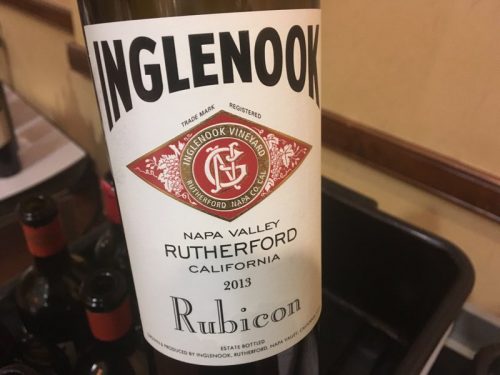
We began with Rubicon, a wine made from the Inglenook property that has been planted to Cabernet since the 1870s, and many consider it to be Napa’s best terroir.

When Francis Ford Coppola brought the property he showed the wine around and was told it lacked freshness. He brought a consultant in, and it didn’t work, and winemaker Scott McLeod left. Coppola interviewed potential new winemakers by bringing them into Inglenook, cooking a meal with them and talking. He hired current winemaker Philippe Bascaules because he was modest and careful, and he thought the approach Philippe took to food would work with wine.

Philippe has moved towards California sprawl in the vineyard (allowing the canopies to spread rather than keeping them in a tight vertical trellis, in order to provide dappled shade for the grapes), and has moved the growing season forwards by early pruning in December, to get ripeness in August and pick the grapes before they get over-mature. He picks early so the wine will work with food. With these three wines we see the traditionally shaped 1991, then a wine from the period of excess, 2007, and now the new, more balanced incarnation.
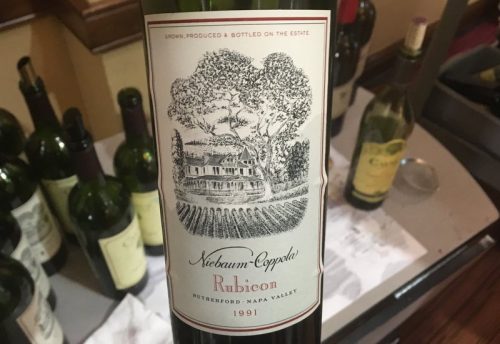
Inglenook Rubicon 1991 Rutherford, Napa Valley
Lovely earthy complexity here with gravels, spice and nice compact blackcurrant fruit. There are hints of tar and some floral cherry notes. Very expressive with lovely evolution. So pretty and detailed with a lovely gravelly, fine grained core. 94/100
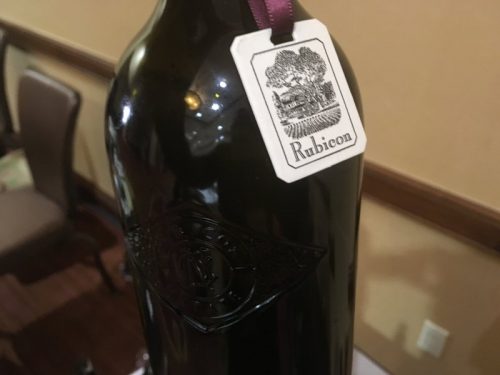
Inglenook Rubicon 2007 Rutherford, Napa Valley
Sweet and ripe with powerful, lush black fruits. It’s quite a rich style with rounded tannins. It’s very appealing but a bit anonymous. 90/100

Inglenook Rubicon 2013 Rutherford, Napa Valley
This is beautiful with lovely freshness and floral black cherry, blackberry and blackcurrant fruit. This has lovely detail and brightness with purity of fruit and fresh, fine tannins. There’s a slightly inky quality here. Vivid and expressive with ripeness but also balance. 95/100
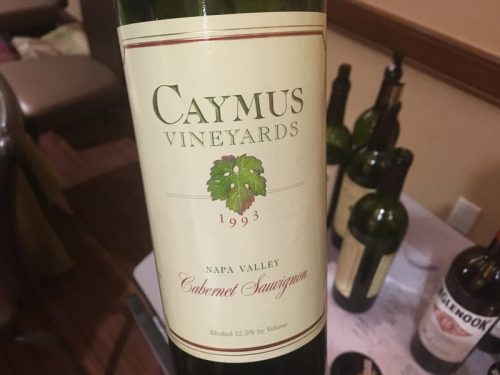
Caymus is a famous Napa Cabernet brand, and they are unusually secretive about their winemaking. They don’t share technical fiches (for example, there’s no information on residual sugar or pH), and they are rumoured to have a concentrator in the cellar. I really don’t like this wine, which I find overly sweet (someone mentioned that they have 1-4% residual sugar), but it sells, and many restaurants feel they need to have Caymus on their list. For me, this is the bad side of Napa. It may be a commercial success, but it’s a wine of style, not a wine of terroir. If you have good terroirs, and Napa does, then make a terroir wine. But this wine could have come from anywhere.

Caymus Cabernet Sauvignon 1993 Napa Valley
Malty and evolved. A bit tired and oxidised. Some red cherry fruit with a warm spicy edge. Very earthy and savoury, and delivers only a limited amount of pleasure, for those who enjoy the taste of decay. 86/100
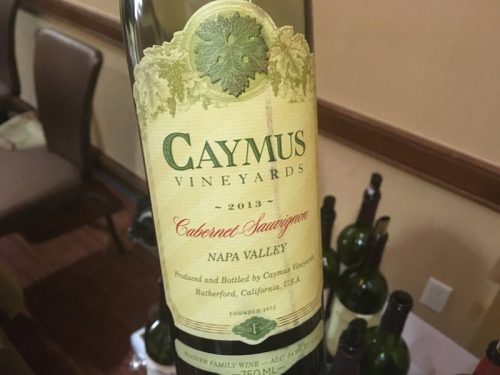
Caymus Cabernet Sauvignon 2013 Napa Valley
Very sweetly aromatic. Incredibly sweet on the nose with a floral black cherry and blackberry character. Ripe, sweet, seductive palate with some sweetness on the finish, and a lush texture. Very rich and intense. This is a crowd pleaser and it’s very seductive, but it’s not serious. 89/100
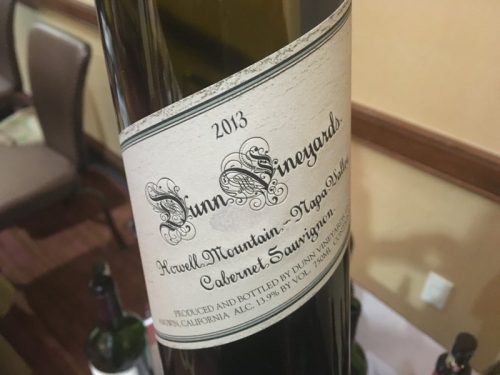
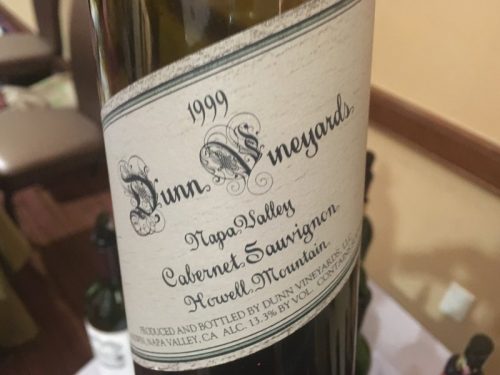
The final example was Dunn. Randy Dunn has been making wines since 1972. You couldn’t drink them early,’ says Josh, ‘because the tannins were so massive.’ The grapes were harvested at 23-24 Brix, and the wines tended to be fabulous 20 years later. Josh pointed out that Randy has stepped back and his son Mike has come in, with a resulting stylistic shift in the wines. Is that a good thing or not? My instinct would be to question why there’s a need to change a winning formula, but the 2013 was quite lovely.

Dunn Howell Mountain Cabernet Sauvignon 1999 Napa Valley
Beautiful, evolved wine with lovely, balanced sweet blackcurrant fruit with a slight gravelly edge and some fine grained tannins. There’s freshness and maturity in harmony here, and it has evolved really nicely, in an old school sort of way. Fresh and a bit grippy, this is drinking perfectly now. 93/100

Dunn Howell Mountain Cabernet Sauvignon 2013 Napa Valley
Brooding blackcurrant nose with a hint of chocolate. Pure and enticing with liqueur-like fruit and some floral aromatics. There’s lovely freshness here on the palate, with sweet black fruits but also some grip and structure underneath. It’s very stylish and should develop nicely over the short and medium term. 94/100

Find these wines with wine-searcher.com


from Jamie Goode’s wine blog http://www.wineanorak.com:/wineblog/california/napa-valley-cabernet-a-question-of-style

For Fine Wine Investment opportunities check out Twelve by Seventy Five: http://www.twelve-by-seventy-five.com/

from
https://twelvebyseventyfive.tumblr.com/post/183117548492

Wednesday, February 27, 2019

Napa Valley Cabernet Sauvignon, 2015-2014

The Napa Valley is one of the world’s most famous wine regions. Just 30 miles long and five miles wide, this may be a celebrated wine region but it only accounts for around 4% of California’s wine production. As part of the Vancouver International Wine Festival, I attended a tasting that took us through 10 Napa Valley wines, spanning 2005 through to 2014, with one vintage of each year.

The wines were all Cabernet Sauvignon, which is the dominant variety in the region. It represents 47% of all plantings in Napa and 67% by value of grape production. ‘The economics are there will be a lot of Cabernet Sauvignon planted even if it isn’t optimal for all sites,’ says Kirk Grace of Stag’s Leap. If you can grow Cabernet here, you do, which doesn’t always work for the wines.

Merlot is being pushed out, and Petit Verdot is gaining ground says Ray Signorello of Singorello winery. ‘From the Oakville and Rutherford areas they aren’t using so much Merlot.’ He says that Enologix is doing a big study on the climate of the last 30 years and the predictions for the next 30. They think the varietal mix will change in the valley. But Silver oak proprietor Vivien Gay says her Twomey Merlot is one of the top sellers. ‘For us it is an extraordinarily important variety.’ Jean-Charles Boisset thinks there’s a bright future for Cabernet Franc. ‘It is the father of Cabernet Sauvignon,’ he says. ‘It has potential for growth. It complements CS magnificently.’

There are currently 16 AVAs in Napa, but Jean-Charles Boisset of Raymond thinks there could be more, referencing Burgundy. ‘The monks began a long time ago and they’ve kept adding AVAs.’ He thinks that this is the way forward for Napa. ‘The reason to exist is the differentiation of those small towns the soil composition of Napa is the most complex in the planet. We have 16 AVAs but I think we will have 160. It’s only the beginning. It is our role to continue to define the map of the future.’

These were an interesting set of wines. To my palate, many were picked too late and given too much new oak. I think that the Stag’s Leap really stood out. Anthony Gismondi says this is more like old school Napa. Those wines aged really well. Some of the riper wines won’t.

St Supery Estate Dollarhide Cabernet Sauvignon 2005 Napa Valley, California
Large property at higher elevation with 13 different soil variations. This part plated in 1983 with shale-dominated soils. 100% Cabernet Sauvignon. Supple and quite mellow with sweet blackcurrant and blackberry fruit. There’s some freshness here and lovely smoothness of texture. Polished and assured, but showing quite a bit of oak. It’s lush, modern and easy with sweet oak, and easy to like, but lacks real definition. But some people will love this: it does taste expensive. 91/100

Louis M Martini Lot 1 Cabernet Sauvignon 2006 Napa Valley, California
There’s lovely, lush, smooth ripe blackcurrant and blackberry fruit. Rich and opulent with seductive ripe fruit. Oozes fruit and opulence. Has some hints of mint and dried herbs. Nice finesse here in this ripe, polished style. Hints of tobacco and cedar on the finish, with a smooth, long finish. 92/100

Beringer Vineyards Reserve Cabernet Sauvignon 2007 Napa Valley, California
This is quite structured with a warm, supple palate showing herbs, tar and ash with nice structure, but it’s quite ripe and mushy and beginning to dry out a bit. Has a slight bitterness on the finish. A ripe style showing sweet blackcurrant fruit. I’m not a huge fan of this, even though it has concentration and serious aspirations. 88/100

Silver Oak Cabernet Sauvignon 2008 Napa Valley, California
7% Merlot, 7% Cabernet Franc and 3% Petit Verdot in the blend (so it’s only in the USA that this could be labelled as a Cabernet Sauvignon). Founded in 1972 when there were only about 20 wineries in Napa, by the Duncan family who still own. Just two Cabernets, one from Napa, one from Alexander Valley. Nice definition here: it shows sweet blackcurrant fruit with nice supporting oak, and good focus to the lush fruit. There’s a vanilla-edge to the finish, where the American oak begins to show a bit more. The bright, sweet blackcurrant fruit here is really nice, but there’s quite a lot of polish and oak lurking around. Potential for development: still quite fresh and direct. If you like oak you will love this now. 92/100

Signorello Estate Padrone Cabernet Sauvignon 2009 Napa Valley, California
Lost their property in the wildfires, and currently rebuilding the winery. Long, cool season with a rainy finish. 100% Cabernet Sauvignon for the first time. There’s some nice complexity here. Concentrated with cedar, herbs, some spice and nicely defined blackcurrant fruit, with some juicy freshness on the finish, and notes of leather and herbs. Has some grippy structure, and a bit of dryness on the finish. Hints of roast meat, medicine and herbs on the finish. The finish detracts a little. 89/100

Hess Collection Cabernet Sauvignon Mount Veeder 2010 Napa Valley, California
Aromatic, floral blackcurrant fruit nose with some nice green hints. There’s certainly some ripeness here with a supple, smooth, fresh mouthfeel. Very stylish with a lovely concentrated, ripe fruit profile. Sweet, lush, quite fine and very easy to like, but not terribly complex. 91/100

Stag’s Leap Vineyard Fay Cabernet Sauvignon 2011 Napa Valley, California
This has lovely freshness to it: it feels like the grapes were actually picked at the right time. Sleek but focused blackcurrant fruit with a graphite and pencil shaving edge to the concentrated, well structured palate. This is serious, and should age beautifully. Really fine. Ripe but not too ripe. 95/100

Black Stallion/Delicato Family Vineyards Transcendent Cabernet Sauvignon 2012 Napa Valley, California
Sweet, ripe and lush with sumptuous black cherry and blackberry fruit. Ripe and exotic with a slight disconnect between the sweet fruit and the drying structure. Is a bit mushy and ashy, and unfocused and overripe. Easy to like if you appreciate sweet fruit and not much else. 86/100

Cardinale Cabernet Sauvignon 2013 Napa Valley, California
Made by Chris Carpenter for Jackson Family Wines. This is a blend from mostly hillside and mountain vineyards. Really concentrated, intense and quite focused. There’s some very ripe blackcurrant and blackberry fruit, but it has nice structure and focus, with some grip and good acidity. Has a slightly citrussy finish with a primary, fruit-driven character. Should develop very nicely over the next decade, and possibly longer. Lovely. 93/100

Raymond Vineyard Reserve Cabernet Sauvignon 2014 Napa Valley, California
This is quite vital and vivid with bright blackcurrant and cherry fruit, showing nice freshness. Supple and very drinkable, but it has some structure, too. The fruit profile is certainly quite ripe, but there’s some balance and restraint. Juicy finish. It’s quite a joyful, playful wine. 92/100


from Jamie Goode’s wine blog http://www.wineanorak.com:/wineblog/california/napa-valley-cabernet-sauvignon-2015-2014

For Fine Wine Investment opportunities check out Twelve by Seventy Five: http://www.twelve-by-seventy-five.com/

from
https://twelvebyseventyfive.tumblr.com/post/183104679162

Monday, February 25, 2019

More airport lounge wines

Off to Vancouver, so a bit of time in BA’s T3 Galleries lounge. Sampled the wines, just as I did a couple of weeks ago.

Reata Sonoma Coast Chardonnay 2016 California
14% alcohol. This is a new one to me, and it’s clearly a reasonably ambitious wine, although fairly technologically made. Quite rich with some apricot, pineapple and spice notes. Mouthfilling with good acidity. Lots going on here, and although it is ripe it shows good balance. 90/100

Morgadio Albariño 2017 Rias Baixas, Spain
Fresh and citrussy with clean, modern linear fruity flavours. Nice brightness. Polished commercial style. 87/100

Château Barde-Haut Saint Emilion Grand Cru 2011 Bordeaux, France
14% alcohol. Quite classic, combining sweet blackcurrant and berry fruits with some tar, ash and gravel notes. There’s some lushness, but it’s a bit drying on the finish. Still, there’s a lot to lie about this wine, which shows quite a bit of mellow development. 89/100

Cline Zinfandel 2014 Lodi, California
14% alcohol. Sweet and lush with a tea, ginger, cinnamon and herb edge to the ripe strawberry and cherry fruit. There’s also a savoury clove and cedar spiciness. It’s an unusual wine but it has quite a bit of appeal. I think you taste the winemaking here, as well as Zinfandel, which I usually struggle with a bit. 86/100

Château de Ruth Grande Selection Côtes du Rhône Villages Sainte Cecile 2016
14.5% alcohol. A private label wine for British Airways. Ripe, rich and slightly baked with pruny blackberry fruit. Lush, rich and warm. Grainy texture. Look: this is a well made, ripe wine, but that’s about all it is. Big, lush and ripe. 86/100

Sutil Carmenere Reserve 2016 Colchagua, Chile
Green edge to the sweet blackberry fruit. Quite chalky. Finishes green and awkward. It’s drinkable, but not enjoyable. Carmenere is a hard variety to get right. 82/100


from Jamie Goode’s wine blog http://www.wineanorak.com:/wineblog/uncategorized/more-airport-lounge-wines

For Fine Wine Investment opportunities check out Twelve by Seventy Five: http://www.twelve-by-seventy-five.com/

from
https://twelvebyseventyfive.tumblr.com/post/183050176727

A clichéd natural wine producer review

I love natural wine (well, whatever that is…), but as with any style of wine there’s good and there’s bad and then there’s some stuff in the middle. So, here in a spirit of friendly fun-poking, here is my prototype clichéd natural wine producer review. [Just in case you were trying to guess, this doesn’t refer to anyone in particular. It’s a composite bit of satire.]

Two weeks ago I visited Domaine XXXXXX in the XXXX region of France. XXXX and XXXX met  when they were both working vintage with famous natural producer XXXXX in the XXXXX. They fell in love and decided they’d like to have their own vineyard, so in 2005 they each sold their Paris apartments and bought a remote, semi-derelict farmhouse. 14 years later the farmhouse is still being renovated, but around it they have planted 3 hectares of vines, using fourteen different varieties that they like a lot. They farm using cosmohyperorganics, which is a growing system they found out about while on a yoga retreat in the Austrian Alps, and have two horses and six cows in addition to their vines. They hosted me on a Sunday afternoon and were clearly still hung over after spending Friday and Saturday at a big natural wine fair in Lyon.

The first wine I tried was a Pet Nat. They decided to make a Pet Nat because their Japanese importer was asking for it, and they had some spare press wine fermenting in barrels that they didn’t know what to do with. So while fermentation was still progressing they took the wine out of barrel and bottled it. They think it had around 20 g/l sugar but they weren’t sure because they did it by taste on a Monday morning after a hectic weekend where they only got four hours sleep over three nights. After three months fermenting in bottle they tried opening a couple, and found out the hard, messy way that roughly one-third of the contents gushed straight out. After googling ‘nucleation sites’ and calling up a (trained) winemaker friend for some advice they realized that they’d have to disgorge the wine. The result is a slightly sweet, modestly fizzy wine that tastes like an alcopop, but goes down a storm in natural wine bars. The label was designed by one of their children – their six-year-old boy XXXX (it was a picture they had on their fridge that he’d bought home from school) – and the bottle is sealed with a crowncap.

Then we went to their white, a blend of most of the white grapes on the estate. Chardonnay, Sauvignon, Pinot Blanc, Garganega and Petit Manseng. These were all harvested together and whole-bunch pressed, and went to old barrels without settling, where it fermented using indigenous yeasts and no sulfites. Two of the four barrels went reductive and one developed a bit of mousiness. After 8 months in bottle, the wine was blended into tank and bottled unfiltered and unfined. Analysis showed it had a pH of 2.8 and a TA of 14 g/l, but they are happy because they say that they are acid freaks and you can’t have too much acidity. VA was 1.3 g/litre, and residual sugar was 6 g/l because one of the barrels stuck. The wine has strong matchstick reduction with searing acidity and flavours of lemons, lime, honey, bruised apple and disappointment. There’s also a slight vinegary edge, and a gentle taper on the finish into strong mousiness. This demonstrates that it is possible to have reduction and oxidation in the same wine. The wine is also slightly spritzy because it decided to do some malolactic fermentation in bottle. They say that they are quite happy with this because the carbon dioxide protects the already partly oxidised wine from further oxidation (no they haven’t heard of Boyle’s law about diffusion of gases), and if the wine is carafed for an hour it diminishes. One of the leading natural wine critics gave this wine a stellar review and their New York distributor took most of the production at a very good price. So they are happy. Label design was by their 11-year-old daughter.

Next up: their orange wine. They were quite upset when a previous visitor accused them of jumping on a bandwagon, because they had been planning to make a skin contact wine for at least a year after their Dutch importers asked them for one. So they took a couple of tons of white grapes (Catarrato, Muscat and Riesling) and fermented them on the skins in a couple of macro bins, one of which was whole bunch (the destemmer broke half way through vintage). After fermentation slowed down, they covered the bins and added some carbon dioxide and left them in the corner of the cellar. Six weeks later after a holiday to New Zealand they were moving some barrels and they rediscovered the ferments (which they sheepishly admit to having forgotten about), so they pressed them off to and old foudre and left the wine without sulfites for another 6 months, before bottling from the cask in clear glass sealed with a crown cap. The wine is a copper colour with a hint of vinegar, some grippy tannins, attractive apricot and peach notes, and a strong medicinal, phenolic, germolene edge. When someone suggested the wine might have brett, they were surprised, but lab analysis showed a 4EP level of 2600 mg/litre. They admit that this might have something to do with the pH of 4.2 and the absence of any added sulfites. There is no label: instead they write the name of the wine on each bottle individually using a white marker pen, a process that seemed a good idea at the time but which they admit is now a time-consuming chore.

Finally, we tasted the red blend, which comes from their solitary hectare of red grapes. This block is planted to Pinot Noir, Sangiovese, Nebbiolo, Lagrein, Ploussard, Merlot and Petit Verdot. The grapes hand picked at varying maturities (the average was 19 Brix, and they picked five weeks earlier than their neighbours in late July) and then were fermented whole bunch in five macro bins, with minimal extraction. After an initial quick treading by foot, the fermenters were closed and left for a week, with the caps kept wet by using a watering can whenever they remembered to check. After six days of fermentation the wine was pressed to old barrels and allowed to finish fermenting, before blending and bottling with a prophylactic dose of sulfur dioxide (10 mg/l added before bottling). This infusion-style wine is a pale red in colour, and tart and acidic, with notes of cranberry, herbs, undergrowth, green apples and regret. With a volatile acidity of 1.5 g/l, it’s not for cowards, and there’s no doubting its natural credentials. Once again, the label was designed by one of their children (their eight-year-old girel, this time), the bottle sealed with a DIAM closure and wax dipped. It has sold out, despite an ex cellar price of 40 Euros.

It was a great visit.


from Jamie Goode’s wine blog http://www.wineanorak.com:/wineblog/natural-wine/a-cliched-natural-wine-producer-review

For Fine Wine Investment opportunities check out Twelve by Seventy Five: http://www.twelve-by-seventy-five.com/

from
https://twelvebyseventyfive.tumblr.com/post/183044587522

Saturday, February 23, 2019

What to do in Porto

I’m back again in Porto, for the excellent Simplesmente Vinho festival, and also to catch a bit of the much larger wine fair called Essencia. Porto is a lovely city to spend time in. And since my first visit back in 2002, it has changed quite a bit. It has a lot more tourists, to the point of this becoming a bit of a problem. Any city can only carry so many tourists without the nature and authenticity of the place being altered. Good cities in safe countries are a major tourist draw. As a tourist myself I know I can’t really complain about this. For now, though, Porto still has its charm and is still a little rough round the edges in a nice way.


This is a great city for walking. Yesterday I wandered for a long time, observing, looking for nice images, and it was beautiful. Spring like and sunny. Full of hope.


If you find yourself here, some recommendations. From Porto, walk over the lower span of the Ponte Luis I bridge to Gaia. If you haven’t visited a Port lodge, pick one and go and taste. Then wander further down to the Mercado opposite the cable car station and get a drink and maybe some oysters. Stop for a coffee in 7G roasters.

Mercado, Gaia

Mercado, Gaia

Then take the cable car up over the port lodges and walk back over to Porto on the top span of the bridge, with its amazing views. Wander to Prova, the city’s top wine bar and share a bottle (the Wine Quay Bar is also cool, and has amazing views). Wine here is so well priced!

Looking down on the lodges of Gaia from the bridge

For dinner, take an uber to Matosinhos, the port area, where the top seafood restaurants are found. Gaveto is my favourite.

Some pictures:

Top span, Dom Luis I bridge


from Jamie Goode’s wine blog http://www.wineanorak.com:/wineblog/portugal/what-to-do-in-porto

For Fine Wine Investment opportunities check out Twelve by Seventy Five: http://www.twelve-by-seventy-five.com/

from
https://twelvebyseventyfive.tumblr.com/post/183019216327

Thursday, February 21, 2019

Nagano region, Japan (9) Izutsu Winery

Based in Shiojiri, Izutsu Winery is, by Nagano standards, quite a big operation. This is part of the Kikyogahara Wine Valley, which is the oldest wine region in Nagano, with over 100 years history. The first winery licence in Nagano was granted in 1872, and in 1890 grapes were grown here: these were the labrusca varieties Concord and Niagara.

Winemaker Shin Noda

Isutzu was founded as a winery in 1933. Previously, the company had been growing mulberry for silk worms, but in 1929 the world economic crisis made it hard to export silk.

Yoshioko Tsukahara was the founder of this winery, and it is now in the hands of the third generation. Their grape sources are their own 19 hectares of vineyards, plus fruit from growers, although it is becoming more difficult to buy grapes. Production scale is 800 000 bottles.

We visited with winemaker Shin Noda, who gave a tour of the winery, and then a tasting.

Izutsu Winery Ryugan 2017 Nagano, Japan
Ryugan is a bit like Koshu: a big-berried hybrid variety. Very bright, linear with some grapefruit and pear notes. Good acidity here with crisp, clean, pure flavours. Zippy and quite tasty in a primary, fruity style. 85/100

Izutsu Winery Sauvignon Blanc 2018 Nagano, Japan
Crisp, bright and taut with nice bright citrus fruit. High acid style. This is light and fresh with some grapefruit and a nice grassy edge, as well as some exotic elderflower notes. Well made in very acidic, lighter style. 87/100

Izutsu Winery Unwooded Chardonnay 2017 Nagano, Japan
Bright, acidic and stony with some nutty hints. Fresh and a bit smoky with attractive pear and citrus fruit. Light style with some savoury interest. 85/100

Izutsu Winery Chardonnay Barrel Ageing 2017 Nagano, Japan
20% new oak, all French oak. Smoky, nutty, slightly woody nose. The palate has some attractive vanilla and cedar oak notes complementing the fresh citrus and pear fruit. This is an appealing, linear wine that has its edges softened a little by the wood, and it finishes clean with hints of bread and toffee. Stylishly done. 88/100

Izutsu Winery Merlot 2017 Nagano, Japan
Unoaked. Fresh, juicy Loire-like nose of sappy berry fruits. The palate is fresh, juicy and sappy with some sweetness, offering cherries, raspberries and a bit of strawberry, too, with well integrated green notes. Very well made and great value for money. 87/100

Izutsu Winery Cabernet Franc 2017 Nagano, Japan
Unoaked. This is sappy and green with some tannic grip under the berry fruits. It’s a bit green and awkward, with a short, firm finish. 84/100

Izutsu Winery Merlot Barrel Ageing 2015 Nagano, Japan
This was a difficult year. Strong oak imprint on the nose. Supple, fleshy fruit here with bright berries, and some sweet, slighty bitter oak character, with charred coffee and vanilla notes. Pleasant and drinkable, but too much oak for me, bearing in mind the character of the fruit. 85/100

Izutsu Winery Muscat Bailey A 2017 Nagano, Japan
Good colour. Juicy, bright and berryish with supple cherry and plum fruit, and a jelly-like character. Simple fun here, with expressive fruit. A really honest wine that’s quite fun. 88/100


from Jamie Goode’s wine blog http://www.wineanorak.com:/wineblog/uncategorized/nagano-region-japan-9-izutsu-winery

For Fine Wine Investment opportunities check out Twelve by Seventy Five: http://www.twelve-by-seventy-five.com/

from
https://twelvebyseventyfive.tumblr.com/post/182975404202

Wednesday, February 20, 2019

Vineyards of Hampshire tasting: some of England’s best sparkling wines on show

Last week, the vineyards of Hampshire held a tasting showcasing some of the top sparkling wines from this county. Of course, Hampshire is, as a county, a political boundary and doesn’t recognise specific soils or climates, but it does have within its boundaries some very good places for growing wine grapes, and quite a bit of chalk. There were some really superb wines on show, and the average quality – as you can see from my scores – was very high. Here are my notes.

Black Chalk

www.blackchalkwine.co.uk

Jacob Leadley was previously winemaker for Hattingley Valley. He’s now gone out on his own making Black Chalk wines, sourcing grapes from top growers in Hampshire.

Black Chalk Classic 2015 Hampshire, England
49% Chardonnay, 34% Pinot Meunier, 17% Pinot Noir. 12% alcohol. Focused and bright with lovely citrus, a hint of apple and good acidity. Linear and fine with real elegance. 94/100

Black Chalk Wild Rosé 2015 Hampshire, England
41% Pinot Noir, 38% Pinot Meunier, 21% Chardonnay. Pale pink in colour, this is taut, lean and precise with crisp, linear citrus fruit with some red cherry hints. Very nice focus to this wine. 92/100

Black Chalk Wild Rosé 2016 Hampshire, England
Bright and linear with lively citrus and grapefruit, with some herbs and nice precision. Subtle red cherry notes. Elegant style. 92/100

Cottonworth

www.cottonworth.co.uk

A relatively new project based on three family-owned vineyards covering 30 acres in the Test Valley. Vines are planted on chalk-rich soils and have done really well in competitions, notably the International Wine Challenge.

Cottonworth Classic Cuvée NV Hampshire, England
This is based on the 2014 vintage. 46% Pinot Noir, 45% Chardonnay, 9% Pinot Meunier, with a dosage of 6 g/l. Very linear and bright with a real sense of refinement, and some subtle creamy hints under the citrus fruit. Has delicacy and precision. 93/100

Cottonworth Sparkling Rosé NV Hampshire, England
48% Pinot Meunier, 47% Pinot Noir, 5% Pinot Precoce. Dosage 7 g/l. Refined with lovely pure citrus fruit and subtle raspberry and cherry hints. Such focus and elegance here with nice weight, but also freshness and delicacy. 93/100

Exton Park

www.extonparkvineyard.co.uk

With 22 hectares of vines (55 acres) and a state-of-the-art winery, Exton Park has been turning out some very smart wines. Winemaking is in the hands of Corinne Seely, and the vineyard is planted on the pure chalk of the South Downs. Corinne doesn’t do malolactic fermentation, so the wines have a real keenness to them. Pinot Meunier has been a big success so Corinne says they are going to plant another hectare of it.

Exton Park Brut Reserve NV Hampshire, England
2 years on the on the lees and 2 years on cork. 60% Pinot Noir, 40% Chardonnay. Taut and keen with high acidity and some subtle toasty notes. Brisk and linear with lemon and herb character on the palate. Very juicy. 91/100

Exton Park Blanc de Noirs NV Hampshire, England
100% Pinot Noir. Linear and taut with high acidity. Precise with some subtle toast, cherry and citrus characters. Pure, linear and very fine. 92/100

Exton Park Blanc de Noirs 2013 Hampshire, England
An experimental bottling (just 400 bottles) from a single block of Pinot Noir. Vivid, intense and taut with very high acidity. Piercing lemon and redcurrant notes. Very expressive. 90/100

Exton Park Blanc de Blancs 2011 Hampshire, England
This had 3.5 years on lees and 3 on cork. It’s complex, toasty and a bit creamy with nice precise lemony notes, some herbs and a juicy, linear finish. Powerful with complex herb and toast character. 93/100

Exton Park Brut Rosé NV Hampshire, England
70% Pinot Noir, 30% Pinot Meunier. Very delicate with sappy, fine green notes on the nose. Lovely precision on the palate with cranberry, raspberry and sweet citrus. Fine. 92/100

Exton Park Pinot Meunier Rosé NV Hampshire, England
Sappy and herby with refined cherry fruit and an appealing herbal twist. This is a delicate, pure wine that has a lot of character. 92/100

Hambledon Vineyard

www.hambledonvineyard.co.uk

The core of the Hambledon project is the soil, which is chalk, but not just any chalk. This chalk was part of the Paris basin, and was formed on the seabed some 65 million years ago. It’s the same chalk that is found in the Côtes des Blancs in Champagne, and has a high Belemnite content. With some new plantings in 2018, there are now 200 acres under vine at Hambledon, and the grapes are processed in a beautifully equipped gravity-fed winery. Malolactic fermentation is practised here.

Hambledon Classic Cuvée NV Hampshire, England
Based on the 2014 vintage, this is 40% Chardonnay, 31% Pinot Meunier and 29% Pinot Noir. Dosage 7 g/litre. This is really refined. The acidity is pronounced but it is elegant acidity that integrates well with the subtly creamy, herbal citrus fruit, with a twist of apricot and mandarin richness in the background. Very fine. 92/100

Hambledon Classic Cuvée Rosé NV Hampshire, England
90% Chardonnay, 10% Pinot Noir, 10g/l dosage. Pale pink in colour. Sappy with nice green hints and some leafiness. Nice bright citrus and cherry notes with some redcurrant. Very lively and expressive. 91/100

Hambledon Première Cuvée NV Hampshire, England
73% Chardonnay, 3% Pinot Meunier, 24% Pinot Noir. 7 g/l dosage. 46 months on less and base wine is 14% barrel fermented. This is compact and refined with nice subtle citrus and pear fruit. Beautiful acidity with a lovely linear, focused palate and subtle toastiness. There’s some richness as well as the freshness, and this is very fine. 94/100

Hattingley Valley

www.hattingleyvalley.co.uk

With 24 hectares (60 acres) of vines across two sites in Lower Wield, Hattingley Valley is a major player in the English sparkling wine scene. Their first vineyard was planted in 2008, so these vines are beginning to get some maturity, and the wines are made in their own dedicated winery. A proportion of the wines are barrel fermented.

Hattingley Valley Classic Reserve NV Hampshire, England
Base wine is 2014 with 18% reserve wines. 50% Chardonnay, 30% Pinot Noir, 19% Pinot Meunier, 1% Pinot Gris. 7 g/l dosage, 24 months on lees. Lively and bright with an appley edge to the crisp citrus fruit. Very expressive with keen acidity and lovely focus. 90/100

Hattingley Valley Rose 2014 Hampshire, England
60% Pinot Noir, 38% Pinot Meunier, 2% Pinot Noir Precoce. 8 g/l dosage, 24 months on lees. Delicate and expressive with lovely citrus fruit and some toast and subtle cherry notes. Very lively and balanced. 91/100

Hattingley Valley Demi-Sec 2013 Hampshire, England
59% Pinot Noir, 36% Pinot Meunier, 5% Pinot Noir Precoce. 35 g/l dosage, 3 years on lees. Rich nose leads to a palate with sweet appley fruit and some spice. Complex, broad and off dry, this is really effective. 90/100

Hattingley Valley Blanc de Blancs 2013 Hampshire, England
100% Chardonnay, 6 g/l dosage, 4 years on lees. Fresh and vivid with nice purity and some lemony fruit, with a hint of apple. Subtle herbal notes in the background. Fine and nicely expressive. 92/100

Jenkyn Place

www.jenkynplace.com

Simon Bladon moved from Yorkshire to Hampshire in 1997, buying Jenkyn Place, which in previous life had been an important hop farm. He planted his first vines in 2004, and after three subsequent rounds of planting, the vineyard is now complete. The wines are made by Dermot Sugrue.

Jenkyn Place Classic Cuvée 2013 Hampshire, England
62% Chardonnay, 24% Pinot Noir, 14% Pinot Meunier. 9 g/l dosage. Fresh and bright with vivid citrus fruit. Has a very lively character with some herbal notes. Such precision and focus with a juicy personality. 90/100

Jenkyn Place Sparkling Rosé 2014 Hampshire, England
52% Pinot Noir, 32% Chardonnay, 16% Pinot Meunier. Dosage 8 g/l. Pale pink in colour, this is juicy and fresh with subtle cherry and citrus fruit with some fine herbal notes. Very lively. 90/100

Jenkyn Place Blanc de Noir 2010 Hampshire, England
50% Pinot Noir, 50% Pinot Meunier. 7 g/l dosage. This is really lively and expressive with juicy lemony fruit. Has great acidity with some fine herbal hints. Bracing, with keen acidity. 91/100

Raimes

www.raimes.co.uk

Augusta and Robert Raimes are fifth generation farmers in the South Downs, and have planted grapes on the chalky soils of their family farm. The wines are made by Emma Rice at Hattingley Valley, and the results are impressive.

Raimes Classic 2014 Hampshire, England
51% Chardonnay, 29% Pinot Noir, 20% Pinot Meunier. Gold Medal in the 2019 International Wine Challenge. Lively and fresh with nice citrus and pear fruit. Very juicy, Vivid with some lovely fine herbal hints on the linear palate. Very good. 92/100

Raimes Blanc de Noirs 2015 Hampshire, England
69% Pinot Noir, 31% Pinot Meunier. Compact, taut and lively with linear citrus fruit. Has herby hints as well as a bit of cherry. Very linear and delicious. 91/100


from Jamie Goode’s wine blog http://www.wineanorak.com:/wineblog/sparkling-wine/vineyards-of-hampshire-tasting-some-of-englands-best-sparkling-wines-on-show

For Fine Wine Investment opportunities check out Twelve by Seventy Five: http://www.twelve-by-seventy-five.com/

from
https://twelvebyseventyfive.tumblr.com/post/182940638027