Sunday, March 31, 2019

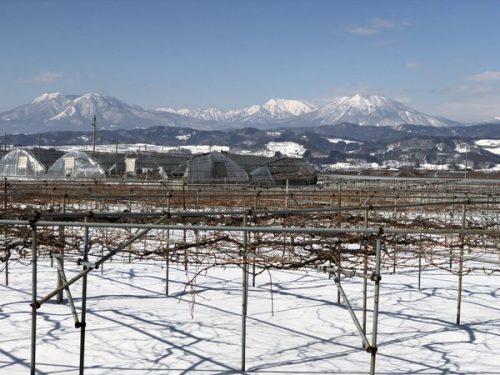
Nagano region, Japan (12) Takayashiro Farm

I visited Takayashiro Farm with the president of the company, Ko Takehada, and the winemaker Kenjiro Ikeda. It’s based in Nagano city. Ko Takehada previously worked for a

for a subsidiary company of Suntory selling juice. After he got married he quit Suntory and moved to Nagano, selling liquor wholesale. In 1995 he started to grow all kinds of fruits: apples, table grapes (such as Kyoho), and peaches.

Kenjiro and Ko

In 1998 he first planted wine grapes, beginning with Cabernet Sauvignon, because he says he is a hard drinker and he wanted to drink wine. He sold the grapes he didn’t use himself to St Cousair. In the early 2000s, Manns Wine asked local farmers whether they could grow vinifera, so he planted more wine grapes. 1999 was the peak of the sales volume of wine in Japan. After 2000 the volume decreased drastically. The IT bubble burst caused this slump, although it has now recovered, but it meant that Manns stopped buying the grapes, so Ko decided to make more wine using the grapes he’d grown.

The mayor of Nagano City proposed that he should establish a winery, because at that time there was no winery in Nagano City. So he decided to start his own winery, establishing the company in 2003 and starting the winery in 2004. Initially, there were four farmers who contributed grapes to the winery, and Ko began growing lots of different varieties – 13 different ones including Chardonnay, Kerner, Riesling, Viogner, Sauvignon Blanc, Pinot Gris, Barbera, Merlot, Syrah, Pinot Noir and Zweigelt. Right now they have 6.2 hectares of vines.

As well as using their own grapes, they sometimes buy in grapes if they are available. Ko thinks he has to contribute to the rural industry, which is why he sometimes accepts grapes from farmers who have some to sell. This area is famous for table grapes such as Shine Muscat or Nagano Purple. So if the weather is bad and these are unsaleable, he will take those grapes and make wine from them.

Total production is 35 000 bottles per year, in 20 different wines. They also make fruit juices and jams, and sell table grapes.

Takayashiro Farm Chardonnay Sparkling 2017
There’s a herby edge to the sweet pear fruit. Has some attractive fruit but there’s a slight rubbery character here. Juicy finish. Easy drinking style. 82/100

Takayashiro Farm Schonburger Sparkling 2018
A 200 bottle trial: Charmat method. Very aromatic and pretty. Grapey and sweet with attractive crisp fruit and some rose petal prettiness. Moscato style. 11% alcohol. 85/100

Takayashiro Farm Shine Muscat Sparkling 2018
Injection method. Fresh, aromatic, grapey and rich. Lychee and rose petal with lovely balance. Joyful, sweet and fresh on the finish: very effective. 88/100

Takayashiro Farm Nagano Purple Sparkling 2017
Fruity, quite delicate and expressive with sweet pear, table grape and subtle cherry notes. It’s pale pink in colour and relatively subtle, with some sweetness on the finish. 85/100

Takayashiro Farm Takayashiro Blanc Sparkling 2017
84% Sauvignon and 16% Kerner. Taut and herby with some rubbery, cheesy hints. Dry and tangy with lots offruit but a slightly awkward bitter, pithy edge. 81/100

Takayashiro Farm Pinot Noir Sparkling 2017
Red/pink in colour. Nicely savoury edge to the cherry and plum fruit with nice freshness. Has a bit of grip. Dry and satisfying with some hints of earth and spice. Nice food wine. 87/100

Takayashiro Farm Sauvignon Blanc 2014
Current release. This has a little evolution, and it’s showing nicely with a nutty, slightly spicy edge to the pear and citrus fruit. Waxy and fresh, with some subtle almond notes. 87/100

Takayashiro Farm Viognier 2015
Subtle and light with some varietal character and a soft mid-palate. Textured pear fruit with some nectarine, and a touch of lychee. Nice soft texture here: quite thought provoking. A light style. Works well, but would this have been better younger? 87/100

Takayashiro Farm Chardonnay Barrel Aged 2016
Nutty and spicy with some vanilla hints. Nice oak here, but it does take a lead role, which some might appreciate and others not. This is aged not fermented, which is why the oak isn’t so well integrated. Nice fruit though with good balance and acidity. 86/100

Takayashiro Farm Takayashiro Blanc 2016
A blend. Aromatic and fruity with nice weight and some sweetness. Very pretty and easy with nice balance. Clean and very well made for the price (Y1300). Off dry. 86/100

Takayashiro Farm Takayashiro Rouge 2016
Merlot-dominated blend, with 21% Fuji no Yume (hybrid) in the mix. Fresh, light and expressive with lovely clean, pure red cherry and raspberry fruit. Has a smoothness to it, with nice fresh fruit. Elegant, drinkable and delicious. Great for the price (R1300). 88/100

Takayashiro Farm Dew of Takayashiro 2016
Varietal Fuji no Yume, which has Merlot as one of its parents and which has small berries. Deep coloured. Lovely fleshy cherry and raspberry fruit with a lushness, and some suble meaty hints. Lovely richness to the fruit, which has great freshness and harmony. A lovely wine with lovely purity. You’d never guess this as a hybrid. 90/100

Takayashiro Farm Cabernet Sauvignon 2012
Fresh, brooding blackcurrant fruit nose. Lovely palate showing some development with a hint of earth and spice. Very well made with nice savoury hints and supple blackcurrant notes, with some freshness. Tastes like a mature Cru Bourgeois: it’s really nice. Good development. 90/100

Takayashiro Farm Cabernet Franc 2014
Supple, light and elegant with a leady edge to the pure red cherry and raspberry fruit. This is a light style but the fruit is compact and balanced with nice red fruit core and fine green leafy hints. Shows a lightness of touch and real elegance. Very stylish. 90/100


from Jamie Goode’s wine blog http://www.wineanorak.com:/wineblog/japan/nagano-region-japan-12-takayashiro-farm

For Fine Wine Investment opportunities check out Twelve by Seventy Five: http://www.twelve-by-seventy-five.com/

from
https://twelvebyseventyfive.tumblr.com/post/183838865332

Reflections on smell and life

Saturday was a gorgeous day. That sort of spring day that offers lots of hope – a secret glimpse of summer to come. On Friday night I headed up to Bury St Edmunds where my parents live, in a small village called Hollinger. My sisters and I had travelled to spend the night there (just younger brother Arthur missing), as a surprise for my father’s 80th birthday.

He’s not been well for a while now, so this anniversary has a special poignancy. We ate together on Friday evening and the following morning went for a walk at Ickworth House, a National Trust property whose driveway is 200 metres away from my folks’ house. It was indescribably beautiful.

We were walking past the front of the house and suddenly I smelled something. It was a flowering viburnum. My father has always gained a lot of pleasure from smell. For as long as I can remember he’s been fascinated by plants and gardens, and his special interest is in aromatic plants. Is this obsession with smell something that I’ve picked up, that has then shaped my career choice?

The flowers of viburnum look very similar to those of jasmine, and the smell is sort of similar: it has some real bass notes to it, and quite an intensity. We stopped for a while and took it in. Smell is such an underrated sense, one that we only really value if we have it impaired or if we lose it. Its absence is usually keenly felt. But I also think it is a sense that we can develop, and by focusing on it more it can be a source of great pleasure.

Could working with olfaction in creative ways ever be considered art? I think the complexity of smell – we are only able to discriminate a few separate odours in a mix, and we desensitize and cross-adapt with prolonged exposure to specific odorants – would present challenges for an artist who wanted to work with it. Plus the different thresholds we all have, and the fact that smells diffuse – these factors would necessitate careful design of smell art.

Beginnings and endings. We focus a lot on beginnings in our society and we do them well, but we are less good with endings. The result? Loss leaves us all at sea. We feel that we are the first ones ever to experience it, and when things end no one knows quite how to respond or what to do, because we have so little structure for dealing with endings. But the end is part of the beginning. Everything is finite and we need to integrate the end with the present. And nothing is ever really lost, or wasted. Saturday was a special day, and it is now banked. It meant something.


from Jamie Goode’s wine blog http://www.wineanorak.com:/wineblog/uncategorized/reflections-on-smell-and-life

For Fine Wine Investment opportunities check out Twelve by Seventy Five: http://www.twelve-by-seventy-five.com/

from
https://twelvebyseventyfive.tumblr.com/post/183838235697

Saturday, March 30, 2019

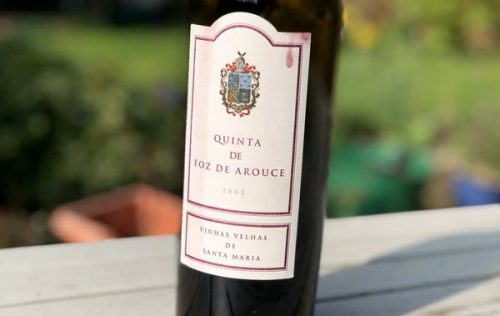
A Portuguese oddity: Quinta de Foz de Arouce Vinhas Velhas 2003

I remember visiting Quinta de Foz de Arouce a few years ago. It’s a really lovely estate in the Beiras region, just south of Bairrada, near coimbra, and I wrote a report on it. The soils are schist and the grape variety here is Baga, and this is the first vintage of a special bottling from old vines, and at age 15 it’s delicious and still has some time to go.

Quinta de Foz de Arouce Vinhas Velhas de Santa Maria 2003 Beiras, Portugal
13.5% alcohol. Very old Baga wines planted in schist soils, fermented in lagares and then aged in new oak. Bright and expressive with lovely tannic structure and focused black cherry and blackberry fruit. This has developed really well with nice freshness, hints of earth and spice, a twist of iodine, and really compact structure. The oak is perfectly integrated into the dense core of fruit. It reminds me of a modern but very expensive Barolo with real intensity and more than a hint of elegance. 94/100


from Jamie Goode’s wine blog http://www.wineanorak.com:/wineblog/portugal/a-portuguese-oddity-quinta-de-foz-de-arouce-vinhas-velhas-2003

For Fine Wine Investment opportunities check out Twelve by Seventy Five: http://www.twelve-by-seventy-five.com/

from
https://twelvebyseventyfive.tumblr.com/post/183822809802

Friday, March 29, 2019

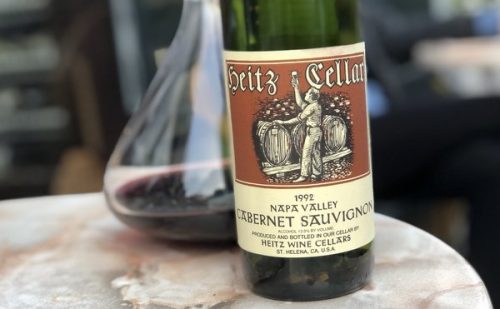
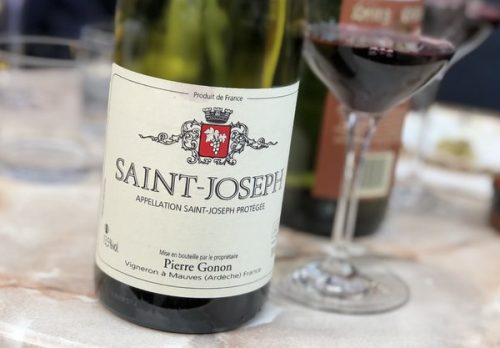
Two lovely wines at The 10 Cases: Heitz and Gonon

Two lovely wines last night at the brilliant The 10 Cases. The first was a BYO that Gareth Birchley brought along (from Hedonism), and the second was off the list. The list at The 10 Cases is amazing.

Heitz Cellar Cabernet Sauvignon 1992 Napa Valley, California
This is an incredible wine from a slightly different era in Napa, before things got a bit too ripe. Lovely supple blackcurrant fruit with some plummy depth. There’s some savoury, gravelly grip here. Nice texture and lovely fruit intensity. Showing a bit of development and some minty hints. This is beautiful. Some lovely cedar, blackcurrant and mint. This wine is amazing now and has some distance to go. 95/100

Pierre Gonon Saint-Joseph 2016 Northern Rhône, France
This is a thrilling expression of Northern Rhône Syrah. I know Gonon is super-trendy now, but it deserves to be, and at £69 on the list this isn’t crazy expensive. Fresh and detailed with black cherries, plums, olives and meat. So floral and precise but also with nice grip and structure. Notes of blood and iron with nice precision. Essence of northern Rhône. 95/100


from Jamie Goode’s wine blog http://www.wineanorak.com:/wineblog/northern-rhone/two-lovely-wines-at-the-10-cases-heitz-and-gonon

For Fine Wine Investment opportunities check out Twelve by Seventy Five: http://www.twelve-by-seventy-five.com/

from
https://twelvebyseventyfive.tumblr.com/post/183803643527

Thursday, March 28, 2019

Central Otago (14) Domain Road

The home vineyard, Domain Road

Graeme and Gillian Crosbie were, like many Dunedin residents, drawn to Central Otago for summer sunshine. ‘Everyone came to Central Otago for their summer,’ says Graeme, who made his money as a property developer, ‘so we’ve had a house here since 1987. All our adult lives we’ve been interested by wine, and when we saw what was happening around us the opportunity came to purchase this land and we jumped in.’

Graeme Crosby, owner, Domain Road

In 2002 they bought an old apricot orchard on Domain Road in the Bannockburn subdistrict and planted 6.5 hectares of vines. A decade later they purchased more land on Felton Road and popped in another 7.5 hectares, which they named the Defiance vineyard.

Defiance vineyard

Schist soils, Defiance vineyard

Loess soils, home vineyard

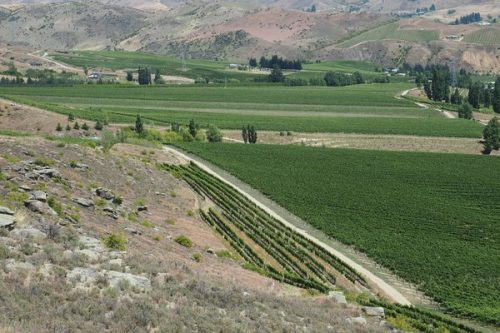
The area is marked by the gold rush of the 1860s, and from the home block you can see the sluicings: large areas where hillsides were washed away in the quest for gold. They are now protected as a historical feature: the act of desecration of a landscape now redeemed.

50% of their vineyard area is planted to Pinot Noir, which is a relatively low proportion for the region, which is Pinot focused. They do very attractive whites, too – including Chardonnay, Riesling, Sauvignon and Pinot Gris.

But it has been a long and sometimes difficult journey, building a small winery in such a strong place. ‘A lot of people don’t realise that it’s a very long business to get up and running,’ says Graeme. ‘You do everything from growing the grapes, getting them into a bottle, getting the bottle away to some other part of the world, and then following it over there and selling it to someone. We are a small family business with 14 hectares of vines. I need all the skills that people would have if they had 14 000 hectares.’

Domain Road has an impressive new container-based tasting room on the Defiance Vineyard, which sits in a beautiful setting. This vineyard, on Felton Road, seems like a special site, and the inaugural Pinot from here, the 2016, is a very impressive wine. The wines are made at VinPro by Pete Bartle, and the 2017 Pinots tasted from barrel there looked really smart.

Domain Road Bannockburn Sauvignon Blanc 2017 Central Otago, New Zealand
Has a barrel portion (20-30% depending on the year, but this vintage, which was quite small, had 40% barrel ferment), as well as some tank ferment. Very pretty and lively with nice focus. There’s some tropical richness, a bit of elderflower, and good acidity. There’s a hint of fig, too. Lovely texture here. 90/100

Domain Road Chardonnay 2017 Central Otago, New Zealand
From the Defiance vineyard, 100% barrel fermented. Pressed off into tank overnight, and then to barrel after it is inoculated. This is quite delicate and bright with subtle toast, cedar and spice from the oak, as well as a solid citrus core, some floral notes, and really appealing peachy richness, too. Good acidity and a bit of structure, with lots of potential for development. Give this time. 93/100

Domain Road The Water Race Dry Riesling 2017 Central Otago, New Zealand
Taut, fresh and lemony with brightness and focus. Dry and linear with good acidity (pH 2.88, 5.5 g/l rs) and a bit of tangerine exoticism on the finish. Good concentration of flavour here. 90/100

Domain Road Duffers Creek Riesling 2017 Central Otago, New Zealand
11% alcohol, 14.7 g/l residual sugar. Lovely delicacy here with a bit of sweetness balancing out the high acidity. Very linear with a lovely tangerine and melon character as well as some limey brightness. Very stylish, finishing taut. 92/100

Domain Road Defiance Pinot Gris 2018 Central Otago, New Zealand
Rounded and textural with nice fresh melon and table grape notes, with a bit of sweetness. Has a very smooth texture. Attractive, rounded and pretty. Subtly smoky. 89/100

Domain Road Defiance Pinot Gris 2017 Central Otago, New Zealand
13% alcohol. This is quite delicate, but it also has plenty of flavour. It’s quite stony and mineral with nice brisk acidity, but also some grapey richness and hints of bacon and smoke. 90/100

Domain Road Bannockburn Pinot Noir 2016 Central Otago, New Zealand
This is fresh and supple with bright red cherry and raspberry fruit. There’s good acidity and some nice tannic structure. Bright and red fruited, this has lovely focus. There’s a bite on the finish, too. Very stylish and quite serious, with nice grip and potential for development. 94/100

Domain Road Defiance Single Vineyard Pinot Noir 2016 Central Otago, New Zealand
First harvest from Defiance was 2015, and all the Pinot was used for making rosé. So this is the first proper Pinot from this vineyard. Not all of the Pinot is used for the Defiance. About 7 barrels are selected for the final wine, and everything else goes into the Bannockburn Pinot Noir. Textural and fine with some silkiness, but also nice sour cherry and raspberry fruit, with some structural bite. There’s generosity but also freshness. A really impressive wine. Such a joy right now but with potential for development. 95/100

Domain Road Paradise Pinot Noir 2015 Central Otago, New Zealand
This is from the home vineyard, and it’s a barrel selection: in 2015 three barrels were chosen, given 15-18 months in barrel. Not too showy, but with lovely assured tannic structure. Harmonious with fine-grained tannins. Has a savoury edge to the cherry and plum fruit, and a sense of elegance. Good structure here. 94/100

Domain Road Symposium 2018 Central Otago, New Zealand
Late-harvested Sauvignon picked at 32.5 Brix. 120 g/l residual sugar. Fermented a percentage in barrel, and used one of those for this wine – the second will progressively be used in future years. This is a third of the blend, and the rest was tank fermented. Very lively and fruity with good acidity, still, and lovely tropical and elderflower notes. Clean, fruity and sweet, but not fully sweet because of the acidity. Lovely fruit expression here. 92/100

Find these wines with wine-searcher.com


from Jamie Goode’s wine blog http://www.wineanorak.com:/wineblog/new-zealand/central-otago-14-domain-road

For Fine Wine Investment opportunities check out Twelve by Seventy Five: http://www.twelve-by-seventy-five.com/

from
https://twelvebyseventyfive.tumblr.com/post/183768157057

Monday, March 25, 2019

In Bordeaux

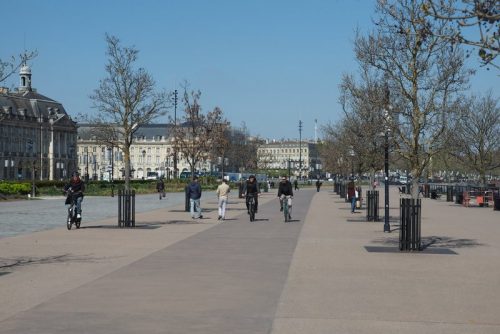
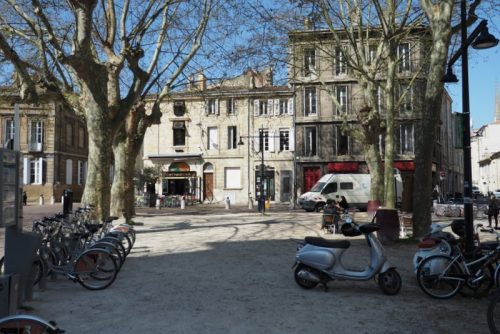
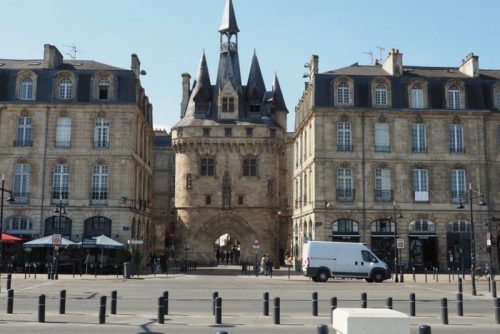
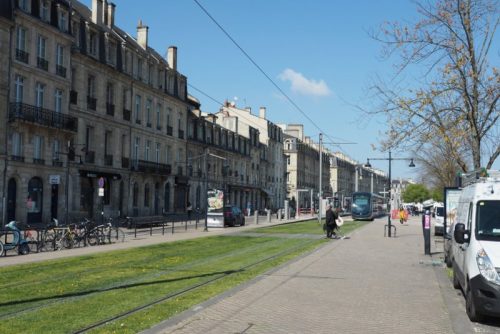
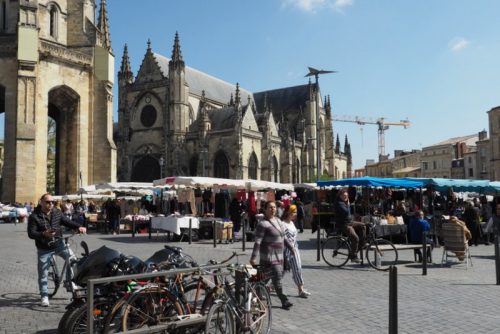
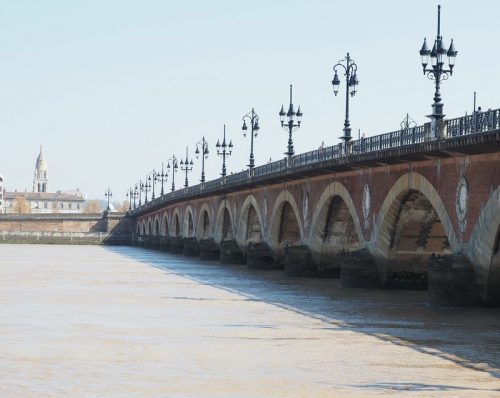
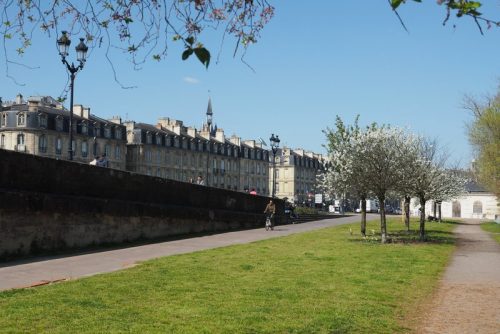
I’m in Bordeaux. Tomorrow I get to taste most of the top 2017s in bottle, which will be my first look at this vintage. But this afternoon I had a few hours spare, so I wandered around the city on a perfect spring day and took some pictures and made a short film. It’s a lovely city these days, and I always enjoy my time here. Tonight we dine at Malartic-Lagravière with a focus on the wines of the Graves, and then tomorrow after the tastings it’s off to Cos and Pédesclaux. Then home Wednesday morning.

The short film:


from Jamie Goode’s wine blog http://www.wineanorak.com:/wineblog/bordeaux/in-bordeaux

For Fine Wine Investment opportunities check out Twelve by Seventy Five: http://www.twelve-by-seventy-five.com/

from
https://twelvebyseventyfive.tumblr.com/post/183701148317

Saturday, March 23, 2019

Central Otago (13) Akarua

Akarua’s terraced 25 Steps vineyard in Lowborn: one of the most instantly recognisable vineyards in the region

Akarua is an important producer for Central Otago. In a region of small outfits, they are a reasonable size, and of late have been on a vineyard-buying spree. With winemaker Andrew Keenleyside (who fairly recently took over from Matt O’Connell) I visited a few of them.

Andrew Keenleyside, winemaker

The first is the distinctive 25 Steps vineyard, at the end of the Sugarloaf hill in Pisa. Here, terraces have been constructed, each holding two rows of vines. There’s also a vineyard block on the flat top of the hill. The challenge here is wind: it’s an exposed site that gets blown around a lot. This vineyard is 9 hectares, all planted to Pinot Noir.

They also bought the vineyard previously known as Pisa Range. This is now called Lilyvale. And next door is another purchase: what was Kawarau Estate is now De Bettencourt, and it was the first organic vineyard in the region. There are some 25 year old vines here, but they have had to replant much of the vineyard. Akarua also have 21 hectares on Felton Road. Add these together with the original Cairnmuir vineyard, and it makes them the second biggest player in the region after Mount Difficulty.

Looking across the vineyard over Pisa, with the netted cherries and then Lake Dunstan in the distance

The Pisa subdistrict

Looking across over Lake Dunstan

It’s a wind-affected site: short internodes on these vines

The history of Akarua goes back to 1996. It was established by Sir Clifford Skeggs, who made his money in fisheries, and later diversified to take in a range of businesses. He planted a significant vineyard, the 48 hectare Cairnmuir, and the first wines were made in 1999. Skeggs also holds the record for four terms as mayor of Dunedin, between 1977 and 1989. His son David is now in charge of the business.

The original vineyard in Bannockburn

The white area is netted cherry orchards

One of Akarua’s specialities is sparkling wine, and Tony Jordan has been consulting for them since 2009. The base wines are made in Akarua, but the rest of the production process is done at specialist fizz producer No 1 Family in Marlborough. The non-vintage spends 18 months on lees minimum, and the vintage has 3 years. ‘We are consistent on our dosages,’ says Andrew, ‘which says we are doing something right with our tirage – always in the 6-6.5 g/l range.’

Akarua Brut NV Central Otago, New Zealand
Blend across vintage, majority for this one is from 2016. 6 g/l dosage. 13% alcohol. Fresh, pure and clean with lovely crisp citrus and pear fruit. Focused with a bit of structure from the good acidity and a nice finish. 90/100

Akarua Rosé NV Central Otago, New Zealand
Mainly 2016. 6 g/l dosage. Lots of small batch fermentation, and one will be fermented half way on skins and then pressed off to get colour but not too much tannin. This is used as the colour component, and this is added at tirage. Pale pink colour. Linear and fruity with nice precision, showing subtle redcurrant and cherry notes, and good acidity keeping things fresh. Lovely pure fruit here. Dry style. Lovely. 91/100

Akarua Vintage Brut 2014 Central Otago, New Zealand
60 Pinot Noir, 40% Chardonnay. Some barrel ferment of base wine and 3 years on lees. Toasty and complex with subtle brioche and fine citrus and apple notes. Has nice focus and complexity. Lively acidity adds interest. Lovely complexity to this wine. Has richness and depth. 92/100

Akarua Sauvignon Blanc 2017 Central Otago, New Zealand
From an organic block in the De Bettencourt vineyard in Pisa, from 25 year old vines. Pressed, first two thirds go to stainless steel then the more phenolic last third is splashed into barrel with some oxygen. Fresh, delicate, slightly nettle elderflower nose. Delicate palate with nice texture and tension, and lovely green herbal hints and a nice long finish. Very stylish and understated. 90/100

Akarua Riesling 2017 Central Otago, New Zealamd
From the Felton Road vineyard, 15 year old vines, just off dry style. pH 2.89. 12.5% alcohol, 9 g/l acid. Lovely melon and citrus fruit here with keen acidity that is balanced by a little sugar. Really pure and intense. Apricot and lime on the finish. 92/100

Akarua Rua Pinot Noir 2017 Central Otago, New Zealand
Rua is Maori for number two. Aka is the word for the grape vine and Rua is for two (originally Chardonnay and Pinot Noir). Lovely floral cherry fruit nose with a bit of damson bite. So pretty with a nice bitter twist and some sour cherry. Very stylish. 100% barrel aged even though it is second-tier wine. Lovely fruit expression. 92/100 ($25)

Akarua Bannockburn Pinot Noir 2017 Central Otago, New Zealand
Subtle roast coffee edge to the aromatic cherry and plum fruit nose. Elegant, refined cherry and plum fruit on the palate with some fine spiciness. Such a lovely, refined structure: there’s tannin but it integrates so well with the fruit. Harmonious. 93/100

Akarua Kolo Single Vineyard Pinot Noir 2016 Central Otago, New Zealand
From the single block on Felton Road. Loess, plus river gravels and broken schist soils. Open, aromatic nose. Supple, sweet with some bruised apple notes and red fruits to the fore. Very smooth and stylish with light, expressive but nicely concentrated red cherries. This is a very distinctive wine. 94/100

Akarua The Siren Pinot Noir Bannockburn 2015 Central Otago, New Zealand
From different bits of the home vineyard. Ripe and smoothly textured with fine grained tannins and lovely sweet, generous red fruits. Plummy and cherry-scented with nice weight. Very appealing and textured, but there’s also quite a bit of structure. 94/100

Here is a short film showing the various vineyards that Akarua farm:

Find these wines with wine-searcher.com

from Jamie Goode’s wine blog http://www.wineanorak.com:/wineblog/new-zealand/central-otago-13-akarua

For Fine Wine Investment opportunities check out Twelve by Seventy Five: http://www.twelve-by-seventy-five.com/

from
https://twelvebyseventyfive.tumblr.com/post/183660154222

Friday, March 22, 2019

People, places, landscapes and change

I’m currently intrigued by the idea of being from a place. Thanks to a friend, I discovered the author Robert Macfarlane, and I’m currently working through his book The Old Ways. He’s a gifted writer with an incredible voice, and in this book he takes us on his journeys discovering old paths and routes throughout the UK. There are so many gems in here: passages of great beauty that nestle like seeds in your mind, and then germinate to produce thoughts and ideas that just keep on going.

In one chapter, Macfarlane is in the Cairgnorms in the Scottish highlands. Later in their lives, his grandparents made this their home, and this powerful place wrote itself on them in mysterious ways:

…landscape has long offered keen ways of figuring ourselves to to ourselves, strong ways of shaping memories and giving form to thought

…better than anyone else Shepherd [an author he refers to] ‘recounted’ the power of the Highland landscape to draw people into intimacy with it, and showed how particular places might make possible particular thoughts.

I love this idea that belonging to a place can change us. That, in some way, the locale seeps into our thinking and our being, such that we are changed. In my travels I visit places that have quite a power to them. What must it be like to live for an extended time in Central Otago, or the Douro Valley, or Chianti, or the Alentejo? I could go on: the place changes the people.

This also raises questions. For example, if you are willing to engage with the place will it change you more? You could imagine that being outdoors, exploring, hiking and being present would enable a greater depth of interaction and thus change. And some places have more power: would they change you more?

This is highly relevant to wine. We think of the concept of terroir as being the influence of the place on the vine, and thus its fruit, which – with sensitive winemaking – results in a wine that conveys the place. But what of the human interaction. Does the place change the people who make the wine, and thus the way they grow their vines and make their wine? This is an intriguing notion.

But this idea is also extended by Macfarlane. Is it possible for our connection to a place to travel with us when we leave it?

But there are also the landscapes that we bear with us in absentia, those places that live on in memory long after they have withdrawn in actuality, and such places – retreated to most often when we are most remote from them – are among the most important landscapes we possess.

This gives hope to travellers like me. I can spend time in a place, absorb it, be changed by it, and then carry it around with me. I really hope that I can, at some stage, belong to a place fully. I’d really like that. For now, I just collect postcards in my heart. Places, people – it’s such an interesting way of thinking.


from Jamie Goode’s wine blog http://www.wineanorak.com:/wineblog/uncategorized/people-places-landscapes-and-change

For Fine Wine Investment opportunities check out Twelve by Seventy Five: http://www.twelve-by-seventy-five.com/

from
https://twelvebyseventyfive.tumblr.com/post/183627300592

Thursday, March 21, 2019

Central Otago (12) Domaine Rewa

Philippa and Yannick Fourbet

In a privileged site in the Lowburn subdistrict of Central Otago, Domaine Rewa – a small biodynamic vineyard – is turning out some very smart wines. And there’s a great story behind it, too.

Back in 2010, Philippa Shepherd (now Fourbet, but we’ll get to that later) was working for Deutsche Bank in London. The job was pretty high-powered (she was at Director level), but she hadn’t left her roots behind her. She was born and raised on a farm in Waitahuna in Otago, about 2 hours from Rewa. ‘I always wanted to have a business,’ she says, ‘and I wanted it to be land based, because I always knew I wanted to be an old lady in New Zealand.’

As a child she visited the area, but it was very different then. ‘This was all just rabbit-infested, desolate land, before the dam came in.’ Now it’s very different, and the Cromwell Basin is home to some of New Zealand’s top vineyards.

Here’s a film where I interview Philippa and Yannick – we discuss pots and biodynamics, among other things, including Yannick’s plans to make amphorae for wine.


After Philippa decided she wanted to buy something, she looked around for quite a while. She even thought about buying an apple orchard. But in 2009 her parents found this vineyard, which had been planted by the Lawrence family who now run Aurum wines. The next day, Philippa put an offer in from London, having only seen the property in photographs. ‘In 2009, no vineyard had changed hands in Central Otago for two years,’ she says. ‘There were 800 vineyards in New Zealand, and 500 of them were for sale.’

She says she got it for the price of a house in Auckland. It was planted in 1999, and has 2.5 hectares of Pinot Noir, and a hectare each of Chardonnay, Pinot Gris and Riesling. Initially, as an absentee owner, she hired Grant Rolston of Vine Wise to manage the vineyard (he’s still involved now), and he spoke to Pete Bartle who ended up making the wines (he still does, at VinPro). They took over the property just after the 2010 vintage, and made the first wines in 2011. The initial Domaine Rewa production was just 3000 bottles, and now they are making 15 000.

In 2011 they started farming organically, and then started implementing biodynamics in 2012. If they’d carried on with certification, they would be certified in 2014, but they decided to stick with just organic certification, even though they still practice biodynamics. ‘They are quite painful here,’ says Philippa, referring to the biodynamic certifying bodies. ‘We had problems planting herbs in the garden and we couldn’t buy a lemon tree.’

The only viticultural problems have been with powdery mildew, which takes a lot of effort to control, and with the tannins in Pinot Noir. In some vintages the site is capable of making quite tannic Pinots, and they don’t think it’s an issue with not enough irrigation.

But the other half of the story is the French Potter, Yannick Fourbet, who is now Philippa’s husband, and who has transplanted his business from the south of France to Central Otago. Yannick was born and raised in Cameroon, and then moved to France to finish off his eductation. After a short spell as a marine biologist, he studied for an MBA in marketing, and then started dealing in antiques. He then fell in love with Anduze pots, and bought shares in a pottery called La Chêne Vert, where he learned how to make them. ‘Somehow, along the way, a Kiwi girl walked into my workshop.’ It was 2012, and Philippa was looking for pots for her vineyard in New Zealand. She was asking lots of questions and the sales person didn’t have much English. They came to find Yannick: ‘Yannick, Yannick, you speak English, there is someone here.’

‘I come out with my big apron and clay in my hair. Hello, can I help you? She fell in love with the pots before the potter, which is fine by me,’ he recalls. In 2013 he was exhibiting at the Chelsea Flower Show.

‘We had been corresponding for a year, sporadically,’ Yannick says. “I was done with setting up the stand and I gave her a call and said would you like to have a drink? She was really busy at the time: she was going right and left in Europe for Deutsche Bank, and her parents were visiting as well. So we had this drink and so much fun that the next day we reiterated the operation. We had dinner and, then, you know, it was very nice.’

At this point, Yannick was working in France running his workshop, and Philippa was still tied up in Deutsche Bank, working long hours and travelling a lot. But they began their relationship. ‘The next thing you now we decided to get married,’ says Yannick.

‘We got engaged in 2014 and got married in 2015,’ says Philippa. ‘I was pregnant with twins, but I stayed in London until the end of 2015, and then we lived in France for 2016/17 in the Cevennes, and then we moved here.’ They arrived in January 2018, and now Domaine Rewa is their home. They weren’t initially going to make the move so fast, but Yannick is 53, Philippa is 42, and with two young boys, it seemed the best time.

‘If you are going to run a vineyard from the other side of the world, unless you have so much money, you are really capped on where you can go,’ says Philippa. ‘There is no way we could have continued.’

So now they are in situ, and looking to grow production (they are still selling some grapes), and build Domaine Rewa. But there’s another side to the business: pots.

‘After we met, I have always told Philippa that pots will sell wine, and wine will sell pots,’ says Yannick. ‘Where it ticks the box is that people from the wine industry have heard about us coming back here, me being a potter, and the idea of building a workshop to make horticultural pots like I have always done, except I plan to have collection that will be typically Kiwi, from Central Otago.’ The pot side of things has interested winemakers, and Pete Bartle, Alan Brady and Rudi Bauer have all asked Yannick whether he can make amphorae for wine. The workshop is now under construction. It will be interesting to try the first Central Otago wines fermented and aged in clay from the region.

The couple have a tremendous energy to them. Philippa, especially: she is still working in banking as a director for NZ Bank, and commutes once a week to Wellington where she works for a day, stays overnight, and then heads back to Domaine Rewa. Now they are living in the vineyard, this should be a winery to watch.

THE WINES

Domaine Rewa Riesling 2015 Central Otago, New Zealand
This wine has lovely texture with a citrus core and some subtle melon and honey notes. Dry with some sweet fruit and nice intensity. A stylish wine with some residual sugar countered by nice acidity. 92/100

Domaine Rewa Riesling 2016 Central Otago, New Zealand
There’s brightness and freshness here. Taut with attractive lemony fruit and a bit of pithiness, as well as really good acidity. Linear and bright with lovely purity and precision. Youthful. 92/100

Domaine Rewa Chardonnay 2016 Central Otago, New Zealand
An intriguing wine with a creamy, bready edge to the linear pear and apple fruit. There’s a nice pithy edge here with lovely stony notes. Such precision to this wine, which shows a great linear drive and a sense of delicacy. 93/100

Domaine Rewa Chardonnay 2017 Central Otago, New Zealand
Fresh and vivid with lovely juicy citrus and pear fruit. Has freshness and a direct, linear drive. Stony and bright with good balance and poise. 93/100

Domaine Rewa Pinot Noir 2012 Central Otago, New Zealand
This is drinking well, but it still has quite firm tannins. Juicy and fine with red cherries, some spices, some earthy notes and a fine-grained structure. Developing in a nice direction with good finesse. 93/100

Domaine Rewa Pinot Noir 2014 Central Otago, New Zealand
Lovely black cherry and blackberry fruit. Quite dark and intense but also showing some elegance. Really precise style with silkiness and purity, as well as some generosity. 94/100

Domaine Rewa Pinot Noir 2015 Central Otago, New Zealand
Delicate nose with some fine herbal notes as well as focused red fruits. Supple, juicy palate with redcurrant and red cherry fruit. There are also some hints of seaweed and decayed leaves. Sweetly fruited and expressive in a lighter style. This is an outlier. 91/100

Domaine Rewa Pinot Noir 2016 Central Otago, New Zealand
This shows pure, vivid red cherry and berry fruit. Finesse and elegance are the hallmarks, with purity, a lightness of body and a spine of grippy tannins. Lovely elegant style. 94/100

Find these wines with wine-searcher.com


from Jamie Goode’s wine blog http://www.wineanorak.com:/wineblog/new-zealand/central-otago-12-domaine-rewa

For Fine Wine Investment opportunities check out Twelve by Seventy Five: http://www.twelve-by-seventy-five.com/

from
https://twelvebyseventyfive.tumblr.com/post/183610610042