Thursday, May 2, 2019

Chablis (6) Domaine Louis Michel

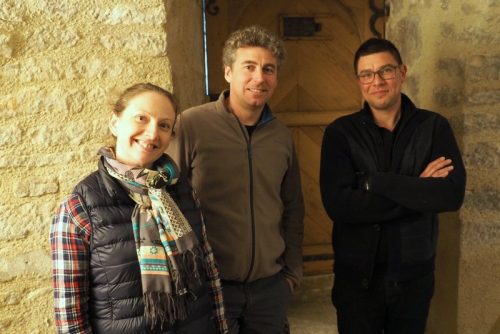
Ruth, Guillaume and Antoine

Louis Michel is located in the heart of the village of Chablis, and here they’ve been making wines since 1850. But the family’s winemaking history is even longer, and can be traced back to 1670 in Tonnerre. There’s a lot of historical continuity in this region.

They have a sizeable 25 hectares of vineyards, and produce only wine. This is quite unusual for an old family winery in the region, because most adopted polyculture, with other crops to tide them over when in this frost-prone region the vines bore few or no grapes.

‘This has always been a family of winemakers,’ says Guillaume Michel. ‘When everything used to frost they had nothing else to survive.’ Guillaume has an English wife, Ruth, and I met with them both as well as their vineyard guy, the fabulously named Antoine Angst.

Most of their vineyards are in the historical part of Chablis. The adoption of frost protection in the 1960s and 70s, and the growth of the market, led to the expansion of the appellation from a low of 550 hectares in 1955 to 6000 hectares.

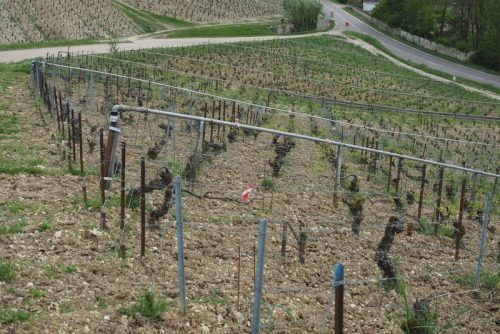
Frost protection is expensive, though. The heat candles, called bougies, cost €8.50 each, and although they claim to burn for 10 h, you are lucky if you get 7 h out of them. You need 400/hectare, but Guillaume uses double that number.

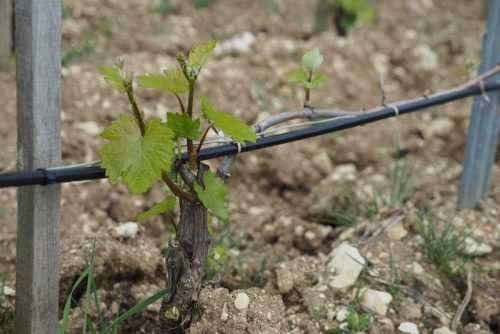
In terms of vineyard work, ‘we have never stopped ploughing,’ he says. He says that herbicides became the norm here from the 1970s. ‘We started to use a little bit as an alternative where ploughing is not efficient or there is no other solution,’ he says, but where he can, he works the soil.

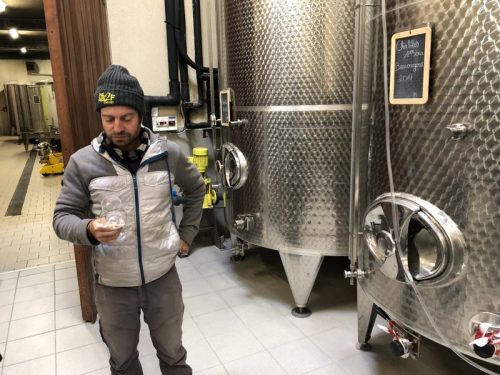
Winemaking is very simple. ‘Everything is vinified the same way,’ says Guillaume. ‘The idea is to let the terroir talk instead of the winemaking.’ No oak is used at all. ‘It’s 100% stainless steel,’ he says. ‘It has been this way for 50 years here.’ He doesn’t add yeast, and all the wines go through a natural malolactic fermentation. They mature the Petit Chablis and Chablis for 18 months in tank, and the other wines get 14-20 months.

2017 is a classic Chablis vintage, he says, but pointed out that production was down 50% (frost), as in 2016 (mildew, hail and frost). ‘In 2016 all the growing season was a nightmare,’ he says. ‘No one wants to talk about it.’

We had a discussion about yields. The maximum for Petit Chablis and Chablis is 60 hl/hectare, and this falls to 58 for premier crus and 54 for Grand Crus. ‘With Chardonnay, you can keep quality even with quite high yields,’ he says. There’s also a mechanism for commercializing an extra 10% of yields, called VCI (volume complimentaire individual). If you have reduced yield, you can use this 10% from the previous year, with lots of paperwork of course. ‘Economically it can be interesting,’ says Guillaume, ‘but the problem is if we use this system people will want to make more, so the quality can suffer.’ There is no VCI on Grand Cru vineyards.

Domaine Louis Michel Petit Chablis 2017
Lovely character here: nice sweet pear and citrus with a juicy grapefruit character. Lovely weight and focus with nice fruit character. 89/100

Domaine Louis Michel Chablis 2017
Made from six parcels, mainly from the left bank. This is compact and fruity with a nice pretty mandarin edge to it and zippy, clean citrus fruit. Pure and beautifully judged with nice fruit. 90/100

Domaine Louis Michel Chablis 1er Cru Montmains 2017
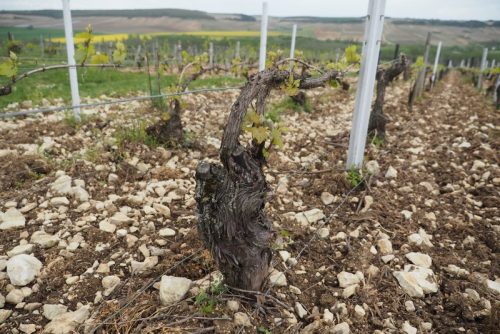
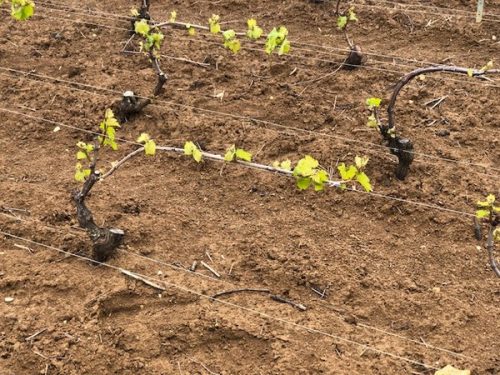
Lots of clay in this vineyard. Delicate and fine with nice bright citrus fruit with some melon and pear richness. Quite delicate with lovely precision to the fruit, finishing with a racy lemony flourish. 92/100

Domaine Louis Michel Chablis 1er Cru Forets 2017
Concentrated and fresh with nice bright grapefruit and lemon notes, and good acidity. Nice precision to the fruit with some flintiness. Very mineral in style, showing good focus. Classic style. 92/100

Domaine Louis Michel Chablis 1er Cru Butteaux 2017
Lively and precise with keen acidity. Nice tension here with real purity to the lemony fruit, and a hint of grapefruit. Butteaux is always more austere when it is young, and I really like this tension and acidity. Needs time to show its best. 93/100

Domaine Louis Michel Chablis 1er Cru Butteaux Vieilles Vignes 2017
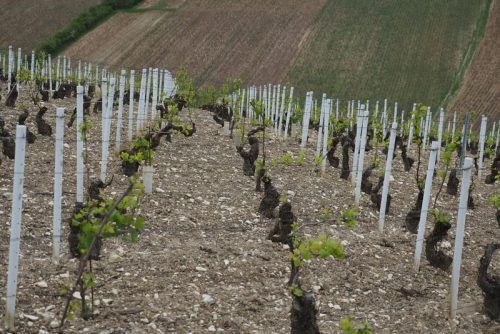
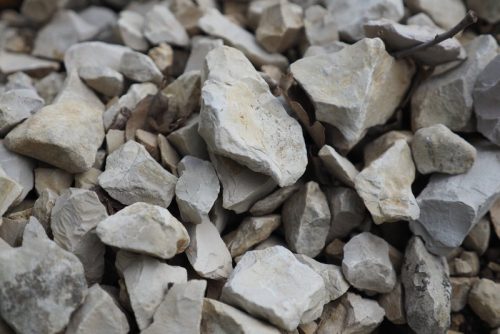
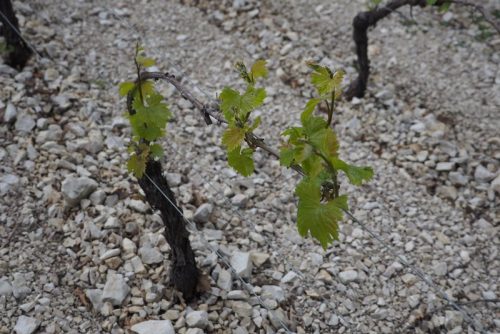
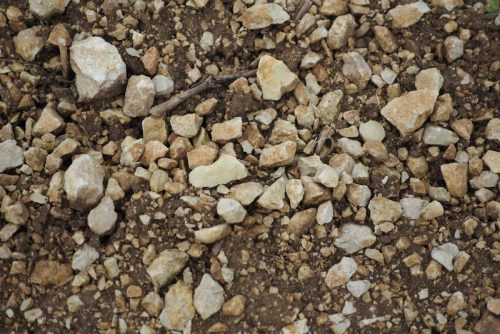
More clay here, a sort of blue or grey colour. It takes all the water, making the surface quite dry and causing the vines to suffer. This is lean and a little austere, but in a nice way. There’s vivid lemony acidity with a twist of lime and nice tension in the mouth. Vivid and bright with some pithy notes on the finish. Needs some time. 93/100

Domaine Louis Michel Chablis 1er Cru Vaillons 2017
A warmer valley than Montmains, the grapes get their ripeness here first. Ripe with some nice tangerine and apricot notes as well as sweet citrus. There’s a lovely fruit richness here, but it’s also quite tight and expressive. Fruity, vivid and delicious with lovely juiciness. Drinking well already, although there’s potential for development. 92/100

Domaine Louis Michel Chablis 1er Cru Sechets 2017
Officially Sechets is spelt ‘Secher’, and this is part of Vaillons. This has quite dense, complex citrus and pear fruit. It’s linear, bright and fruit focused with subtle grapefruit and pith characters. Fruity and appealing, but with a mineral undercurrent and a fine-grained finish. Lovely wine. 93/100

Domaine Louis Michel Chablis 1er Cru Vaulorent 2017
Some say that Vaulorent should be a GC but it’s in the commune of Fontenay, not Chablis. Just next to Preuses, it’s on the same hill. Nice concentration and focus with a bright fruitiness from the deep red and brown clay. Has a nervy mineral streak with juicy lemons and herbs, as well as a touch of cream. Warm south exposure, which makes it almost Côte d’Or in style. Lovely weight. 93/100

Domaine Louis Michel Chablis 1er Cru Montée de Tonnerre 2017
The parcel they have is based in Chapelot. Bright, pure and tangy with juicy lemon and herb notes as well as some grapefruit and mandarin. Nicely mineral and quite compact and steely, this needs time for all the elements to find their place. Nice grainy structure and a long lemony finish. Serious effort, but give it a few years. 94/100

Domaine Louis Michel Chablis Grand Cru Vaudesir 2016
North facing slope in Vaudesir. Beautiful aromatics with passionfruit, mandarin and even a bit of mango. The palate is open and fruity with pure grapefruit and mango, and a lovely lemony core. Ripe, generous and nicely fruit with lovely depth. The exotic fruits will likely recede and the minerality take over. So interesting. 94/100

Domaine Louis Michel Chablis Grand Cru Grenouilles 2016
At the top of this plot. Just five domains share this, and the Chablisienne coop have 80% of it. This is probably the only Grenouilles without oak. Has a creamy, dairy edge to the nose. Lively, fruit-laden palate with a creamy edge to the attractive pear and white peach fruit. Nice texture here. Needs time to open out. 92/100

Domaine Louis Michel Chablis Grand Cru Les Clos 2014
Taut and quite austere with subtle wax and nut hints to the nose. The palate is linear and fine with subtle cabbage notes and amazingly taut lemony acidity. Such precision to this wine, with a bit of pithiness on the finish. Very expressive and needs more time still. ‘Les Clos is never ready,’ some people say. 93/100

Find these wines with wine-searcher.com

CHABLIS 


from Jamie Goode’s wine blog http://www.wineanorak.com:/wineblog/burgundy/chablis-6-domaine-louis-michel

For Fine Wine Investment opportunities check out Twelve by Seventy Five: http://www.twelve-by-seventy-five.com/

from
https://twelvebyseventyfive.tumblr.com/post/184594475387

Wednesday, May 1, 2019

Chablis (5) Domaine Pattes Loup with Thomas Pico

I arrived at Pattes Loup in Courgis to find a rather tired Thomas Pico, because the previous day he’d done a 58 km walk with some of his friends. He’s one of the new stars of the region, and while he doesn’t describe himself as ‘natural’, you find his wines alongside those of De Moor in natural/authentic wine bars around the world.

In 2004, Thomas Pico returned to work at his family estate in Courgis, Chablis – Domaine Bois d’Yve – after several years of working in Nuits St George in Burgundy. This was the year when his grandfather died, and Thomas remembers him saying: ‘don’t make the same mistakes I did in the vineyard.’ Pattes Loup, which translates ‘wolf’s paws’, is the name of the parcel that his grandfather gave him that year.

Immediately, things began to change, but perhaps the most significant transition was that he stopped all spraying of herbicides. Three years later, he shifted production to organics. He encouraged his father to do the same.

One of the distinctive things about his approach is the long élevage he gives his wines. The village Chablis gets 18 months minimum before bottling, while the premier crus get 34 months. ‘To arrive at transparency you have to wait,’ says Thomas.

He’s 38 now, but has been running the family domain since he was in his early 30s. There are 24 hectares of vines, and production can vary dramatically by vintage. In the hail and frost hit vintage of 2016 he made just 40 000 bottles, but in the ample, sunny 2018 vintage production was 100 000 bottles.
He’s concerned about the continued reliance on herbicides in the region. ‘In Chablis it is a problem,’ says Thomas. ‘We have vineyards with erosion. 95% of vineyards are still using herbicides, we drink wine but we don’t know what is inside.’

He says it’s often the producers who emphasize terroir the most, who – somewhat ironically – use herbicide. ‘They speak more about terroir, when you speak with an organic producer they don’t speak about it.’ Thomas also thinks that there’s little incentive for most to change because they are making money. ‘I don’t think many will shift to organics because Chablis is selling easy, like Champagne and Sancerre.’ People aren’t going to reduce their production, so it’s only people who really care who will make the switch. ‘It is an international problem, people are acting in the short term. You might earn a lot of money today, but in the long term it will cost money.’

We began by tasting some tanks.

Pattes Loup Chablis 1er Cru Beauregard 2017 (tank sample)
Thomas says he might bottle this in the summer. Refined, layered and textured with fine-grained structure and some spiciness under the citrus and pear fruit. 92-94/100

Pattes Loup Chabis 1er Cru Butteaux 2017 (tank sample)
Alcoholic fermentation and malolactic in barrel, then 2 years in tank. This won’t be bottled until 2020. Very refined, bright and linear. Has vivid lemony fruit with apricot hints. Great acidity. 93-95/100

Pattes Loup Chablis 1er Cru Butteaux 2016 (tank sample)
Beautiful aromatics with freshness and purity, and notes of nuts, wax, honey and spice. Shows real precision with amazing minerality and focus. Such precision and purity here. 94-96/100

Bottled wines:

Pattes Loup Chablis Vent d’Ange 2016
Subtle creamy edge to the focused citrus fruit nose. The palate is vivid and quite mineral with generous pear and citrus fruit. Has a subtle creamy twist under the dense, mineral fruit. Lovely acidity that integrates well. 92/100

Pattes Loup Chablis 1er Cru Côte de Jouan 2016
There was just one barrel of this. Such a beautiful, smooth, textured wine with bright lemon and pear notes, a touch of white peach and lovely linear acidity. Good concentration and focus here with a sense of delicacy. So refined. 94/100

Pattes Loup Chablis 1er Cru Beauregard 2016
A very fresh 1er cru, high up (330 m). Refined, taut, citrussy nose. So fresh, focused and expressive with high acidity but it’s very well integrated. Such concentration with fine spicy notes and lovely precision, finishing long and slightly pithy with some saline streaks. Beautiful stuff. 95/100

Pattes Loup Chablis 1er Cru Butteaux 2015
Bottled July 2018. Dense and textured with hints of pith and quince as well as bright citrus fruit. This has real precision and focus with beautiful acidity and lovely density. So thrilling. 95/100

Pattes Loup Chablis 2007 (magnum, opened a few days ago)
This was the second vintage for Thomas. This is dense and has a little development with some wax and nuts and hints of cabbage. There’s a lovely mineral core still, with good acidity and lovely acidity. Lovely stuff. 93/100


from Jamie Goode’s wine blog http://www.wineanorak.com:/wineblog/burgundy/chablis-5-domaine-pattes-loup-with-thomas-pico

For Fine Wine Investment opportunities check out Twelve by Seventy Five: http://www.twelve-by-seventy-five.com/

from
https://twelvebyseventyfive.tumblr.com/post/184569829942

Tuesday, April 30, 2019

Chablis (3) fighting frost

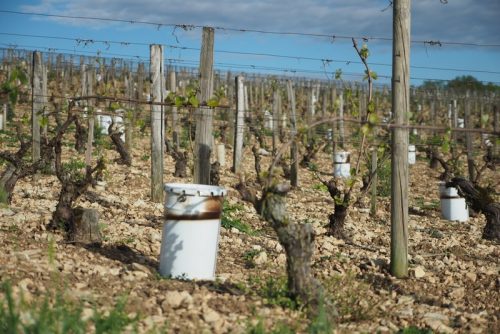
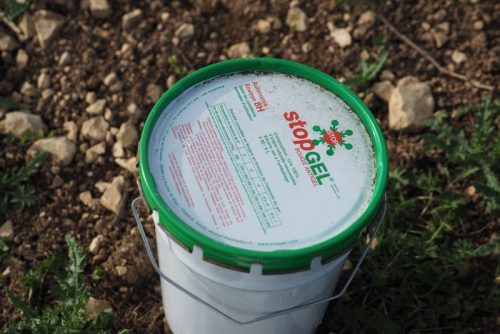
Bougies in a vineyard

One of the main challenges in this northerly, continental region is spring frosts. These still cause considerable losses from time to time, and the 2016 and 2017 vintages were affected.

The Chablis winegrowers have resorted to a number of protective measures.

The first is burning stuff in the vineyard to raise the temperature. The small smudge pots (known here as bougies) are quite common, but it is an expensive method, and not very environmentally friendly. There are also an older variant: metal heaters that burn fuel, and these can get through quite a lot – one grower told me of using thousands of litres in a night.

Straw bales ready for action

There’s old school straw: these bales are set alight and burn all night. They aren’t to expensive, but they have a high carbon footprint.

Electric heating wines in Preuses GC

A fancy method that is quite expensive is to install heated wires, which run along the fruiting wire. This is in the Grand Cru Preuses vineyard (a plot owned by William Fevre), which is just too steep for bougies.

Baches

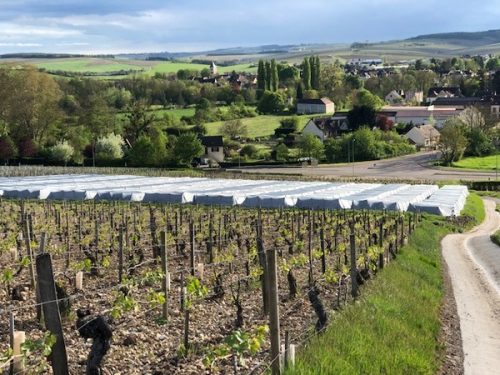
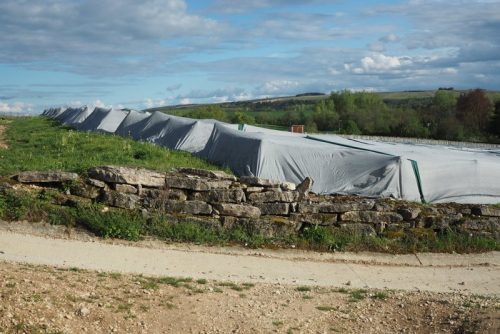
A slight exotic solution is to use a thermoprotective fabric (called baches) which is left over the vines until the frost risk has passed. Each piece of fabric covers four rows of vines. This works well and has a low carbon footprint, but isn’t cheap and takes a long time to apply. The vines end up being a little advanced. For a while this solution was banned because it looks bad, but it is now allowed again. There isn’t a lot of this used around the region. I heard one report of a grower who got frosted under a bache.

Water protection

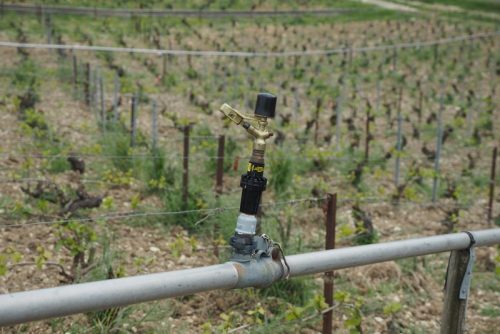
Probably the most common protective measure is one that seems a little counterintuitive. It involves spraying water on the vines which then freezes and creates an ice layer over the buds. This ice is at 0 C, and this protects the buds from frost damage. But the water needs to continually applied through the night while the temperatures are in the danger zone. It works, but there needs to be a supply of water, some heavy-duty pumps, and miles of pipes. Many of these systems take water from the Sereine, but others have created dams specifically for this purpose (irrigation is not allowed here). The village of Beine, which has 605 hectares of vines, created an artificial lake in 1978 for frost fighting. It’s surface area is 15 hectares and it contains 450 000 cubic metres of water, which feed 40 km of pipes, protecting 100 hectares.

The final option for frost fighting is to use propellers. Strangely I haven’t seen a single on in Chablis, although I’ve been told there is at least one in the region. These work by moving air around, and rely on the existence of a slightly warmer layer of air above the freezing layer at ground level. Helicopters do the same thing. Their advantage is that they work, but their disadvantage is they are expensive, and every now and then a different sort of frost occurs where there is no warmer upper layer of air. And they upset the residents with their noise.


from Jamie Goode’s wine blog http://www.wineanorak.com:/wineblog/burgundy/chablis-3-fighting-frost

For Fine Wine Investment opportunities check out Twelve by Seventy Five: http://www.twelve-by-seventy-five.com/

from
https://twelvebyseventyfive.tumblr.com/post/184554967022

Chablis (4) the Balade Gourmande (film)

Sunday was the Balade Gourmande in Chablis. It changes village each year, and this time the location was Maligny. The idea is that 600 people walk around the vineyards, stopping at regular intervals for a kind of staggered lunch.

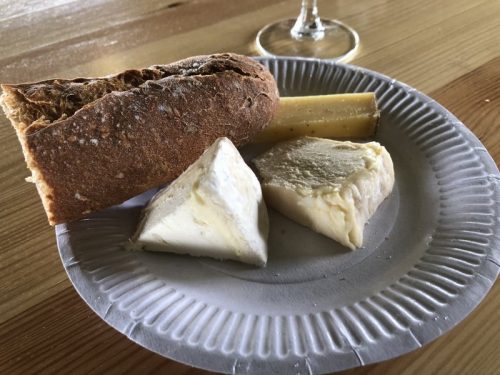
The first stop is starter and Petit Chablis, the second a pre-main with Chablis, the third a main course with Premier Cru Chablis, and then cheese with Grand Cru Chablis. There route is 13 km or so. And when you get back to Maligny, it’s time for Cremant and cake. A lovely day out. I filmed it:


from Jamie Goode’s wine blog http://www.wineanorak.com:/wineblog/burgundy/chablis-4-the-balade-gourmande-film

For Fine Wine Investment opportunities check out Twelve by Seventy Five: http://www.twelve-by-seventy-five.com/

from
https://twelvebyseventyfive.tumblr.com/post/184554966827

Monday, April 29, 2019

Chablis (2) the soils

Limestone and clay in Les Clos

Chablis is one of those regions where the soils are to the fore in discussions about the wine, but they are not the only factor determining the characteristics of the wine. It is soils in concert with aspect (which creates the microclimate) that shapes the wine quality here. But, If like me, you are a lover of vineyards soils, then you will go crazy when you visit Chablis.

Blanchots

Marl (also known as Marne in French) showing a bottom layer of deposited limestone and a top layer of compressed clay with fossils in it

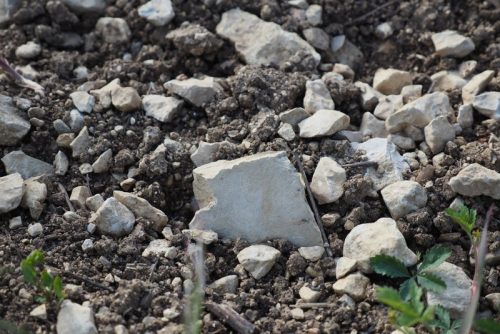
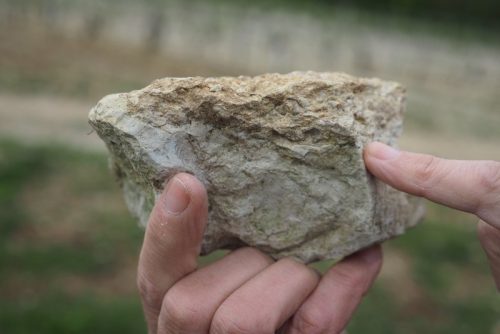
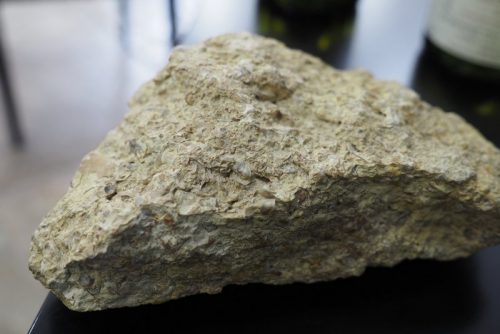
This is a region all about limestone, but there are different sorts of limestone. The simple story is this: the region is about limestone of two different ages. The first, and most important, is what is called Kimmeridgian limestone. This is from 150 million years ago, and the stones and bits of rock here are composed of limestone that has been deposited on an ancient seabed, interweaved with layers of marl: limestone-rich clay that has been compressed into rock.

Cote de Lechet, a left bank 1er Cru

A classic chunk of marl

There are lots of oyster fossils in this marl, and there are also seams that look almost like pure oyster shells that have been lightly glued together. This Kimmeridgian limestone is what forms the basis of the Chablis, Chablis Premier Cru and Chablis Grand Cru vineyards. Different vineyards – and even different bits of vineyards – have different proportions of rocks and clay/clay loam in them, and generally the more rocky soils make more linear, intense wines, while the deeper soils with more clay make more generous, fleshier wines.

Portlandian limestone in Petit Chablis,on a plateau next to Cote de Lechet

Then there’s a slightly younger limestone called Portlandian. This is harder and more brittle, and doesn’t have fossils in it. These are the soils of Petit Chablis, but it’s not to say they are uninteresting soils. The Petit Chablis vineyards are usually on the plateaus on the top of the hills, and so are more exposed. Generally, they are used to make lighter, fruitier, brighter wines, but this could be because of the climatic factors here more than the soils. They still look like pretty epic vineyard soils.

It would be lovely to ascribe certain flavour profiles to different vineyards, but this is complicated by the fact that few of the vineyards are homogeneous. You really need to know which bit of the vineyard the wine comes from, especially with respect to the bigger premier crus such as Vaillons and Fourchaume and Montmains, which are amalgamations of several climats.

Not all soils are rocky, but it’s rare to see pure clay/loam like this

Can you taste the soil influence? This is an interesting question. When you taste the wine you taste the combination of a range of different factors: the interesting experiment would be to taste wines from vineyards that share a similar aspect (and thus climate), but with different soils, and then see what the difference is. You can attribute this to the soil. I think that it’s the soils, rather than the climate, that really make Chablis a very special place indeed. The climate matters, but you could replicate this in a number of different places. These soils are pretty unique. They remind me of bits of Sancerre, where there’s also some Kimmeridgian limestone. And I think sometimes soils even trump the cepage: it would be fun to try Sancerre from Kimmeridgian terroir versus Chablis and look for the similarities.


from Jamie Goode’s wine blog http://www.wineanorak.com:/wineblog/wine-science/chablis-2-the-soils

For Fine Wine Investment opportunities check out Twelve by Seventy Five: http://www.twelve-by-seventy-five.com/

from
https://twelvebyseventyfive.tumblr.com/post/184522946567

Sunday, April 28, 2019

Chablis (1) an overview

I’m in Chablis, and it’s very exciting, because this is my first time here. I know: I should have been here before, but even though it’s slightly embarrassing, it’s a thrill to finally see what I have read so much about. I’m in an accelerated period of learning, visiting lots of producers and walking vineyards, and over the next few weeks I’ll share all I’ve learned here, with lots of pictures and videos. But first, here’s a bit of background on the region.

In the village of Chablis

The most northerly region in Burgundy, Chablis is rare in the wine world in that it focuses solely on one grape variety: Chardonnay.

The Grand Crus face the village

It’s a region that has gone through some tough times. Back in the mid-1950s there were just 544 hectares under vine. Now that figure has risen to 5641 hectares (productive in 2018). It’s still some way short of the vineyard area before phylloxera.

The region is located around the village of Chablis, with the Serein river running through it. So it’s common to hear people talk of the vineyards on the left and right bank of the Serein, as it flows northwards.

A plastic relief map of the region, which is a useful way to see why certain vineyards are more highly prized than others

But this is actually a region of 20 villages, with Chablis at the centre. The Serein is a small river, and as it progresses there are a series of valleys heading out both left and right, each leading to a village. The hills in these valleys are the basis of the vineyards. Simply put, the slopes with the best sun exposure are where you find the premier cru vineyards, while those less well exposed are the Chablis vineyards. The very best exposure occurs opposite the Chablis village on the right bank, and this hillside is home to the seven Grand Crus. Then on the tops of the hills we find Petit Chablis vineyards.

These are the four appellations in Chablis. The lowest in the hierarchy is Petit Chablis. These vineyards, totalling 1108 hectares (all figures here are productive vineyards in 2018), are planted on plateaus on the tops of hills on both sides of the Serein, and are on slightly younger, hard Portlandian limestone-based soils; the rest of the vineyards are on Kimmeridgian limestone, which is marked by the oyster shell deposits it contains [more on this later]. The second is Chablis, the largest, with 3656 hectares of vines.

Blanchot Grand Cru

The villages of Chablis tend all to be within about 10 minutes drive from Chablis. They are:

Beines, Béru, Chablis, Fyé, Milly, Poinchy, La Chapelle-Vaupelteigne, Chemilly-sur-Serein, Chichée, Collan, Courgis, Fleys, Fontenay-Près-Chablis, Lignorelles, Ligny-le-Châtel, Maligny, Poilly-sur-Serein, Préhy, Villy and Viviers. That’s 20, including Chablis.

Then we have the premier cru vineyards. There were 40 of these. Now these 40 climats have been slimmed down to 17 premier crus, by allowing some to merge with their more famous neighbours. Thus on some labels you will see Vaillon, and on others (much more common) Vaillons. The former tends to be used by those who have the original Vaillon climat, while Vaillons refers to the blended premier cru with seven other climats. The same is true for eight of the other premier crus, which are an amalgamation of what was previously separate 1er Crus. If you want to use the original name of the climat as a premier cru, then that is OK too. There are 777 hectares of premier cru vineyards in the region.

Petit Chablis, with Portlandian limestone soil

Then we have the Grand Crus, which are located in a contiguous block on the right bank of the Serein, right next to the Chablis village. This hillside is spectacularly located, and there are seven vineyards that have been awarded Grand Cru status. But unlike in the rest of Burgundy, where each Grand Cru vineyard is its own appellation (there are 33 of them), here the Grand Crus are each part of just one appellation, Grand Cru Chablis. Cleverly, this allows the use of the name Chablis on the label, which would not be allowed if the Grand Cru was an appellation as in the rest of Burgundy. The seven are: Blanchot, Bougros, Les Clos, Grenouilles, Preuses, Valmur and Vaudésir, and together they total 101 hectares.

Preuses and Vaudésir, in between two Grand Crus

  • Chablis (1) an overview
  • Chablis (2) the soils
  • Chablis (3) fighting frost


from Jamie Goode’s wine blog http://www.wineanorak.com:/wineblog/france/chablis-1-an-overview

For Fine Wine Investment opportunities check out Twelve by Seventy Five: http://www.twelve-by-seventy-five.com/

from
https://twelvebyseventyfive.tumblr.com/post/184507673017

Friday, April 26, 2019

Eisenberg, Austria: home to elegant Blaufränkisch

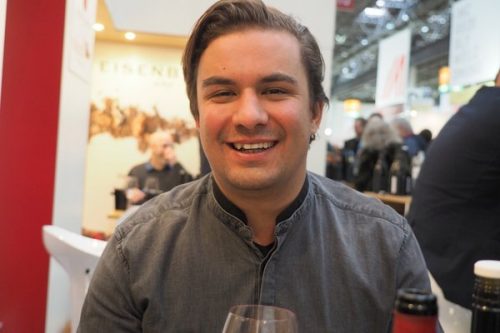
Christoph Wächter

I met up with Christoph Wachter, who heads up the Eisenberg DAC group, to taste some wines from the region. The focus of the tasting was on a new initiative: the designation of villages within the broader Eisenberg DAC.

Eisenberg is part of Burgenland, in the south of Austria, and there are 515 ha of vines here, of which 180 are Blaufränkisch. The DAC was created in 2008, and a second tier, Reserve was introduced a year later (this is just for Blaufränkisch). Now Eisenberg is delineating the village level for the first time.

The Blaufränkisch wines here have a freshness and elegance, and as well as being eminently drinkable, they have some seriousness. ‘It’s like it was in the the 1960s and 1970s,’ says Wachter. ‘The region was known for fresh, elegant Blaufränkisch. It was always a fresh style. Then the 1990s saw a red wine boom in Austria and everyone focused on rich, overpowered oaky wines. Eisenberg was marginalized: no one wanted it.’

But in the 1960s and 70s the vines were cropped to heavily and most of the wines were a bit green and harsh. ‘The optimum is 5-8 tons/hectare,’ says Wachter. This is an area influenced by the Styrian climate, with some rainfall and cool nights, and there’s some altitude here, too.

There are 45 producers in the area, but only around 20 of these live solely from wine, and the group who are really actively taking part in this initiative is 10. They all tend to favour making wine in a more elegant style, and tend to use large oak rather than small barrels, for example. ‘Blaufrankisch has everything,’ says Wachter, ‘and you don’t need new wood for it.’

He took me through some of the village level wines, including his own. These are beautiful expressions of a brilliant grape variety, showing just what it is capable of when handled properly. Some were cask samples, so if this is the case my score is given as a range.

Poller ‘Höll’ Blaufränkisch 2017 Eisenberg DAC Reserve, Austria
Höll is the village. Vivid, focused bright raspberry fruit here with nice elegance, and a bit of coffee oak. Very expressive with nice precision. 92-94/100

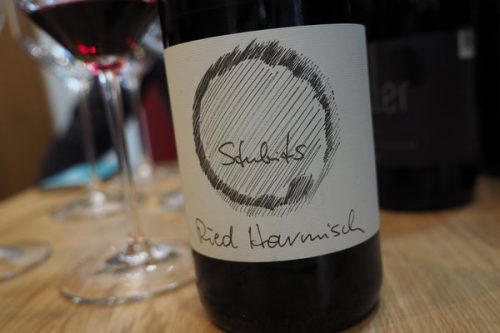
Stubits ‘Harmisch’ Blaufränkisch 2017 Eisenberg DAC Reserve, Austria
From loam/clay soils with a bit of schist. Vines planted in 1965. Wild ferment. Elegant, fine, supple red cherry fruit with freshness and a sappy edge. So expressive with good acidity. Lovely stuff. 93/100

Kopfensteiner ‘Deutsch Schützen’ Blaufränkisch 2017 Eisenberg DAC Reserve, Austria
Deutsch Schützen is the village. Soils are iron-rich clay and some sand. 500 litre barrels are used for this. Very supple and bright with cherries and plums, showing freshness and focus. Has a bright raspberry palate with lovely purity and elegance, with some spicy tannic structure. A fresh, elegant style. 92-94/100

Stephano ‘Deutsch Schützen’ Blaufränkisch 2017 Eisenberg DAC Reserve, Austria
20% new oak here, matured in 500 litre barrels. Supple and fine with nice texture, showing concentration but also lightness and elegance with nice precise red cherries and plums. Fine-grained structure. 92-94/100

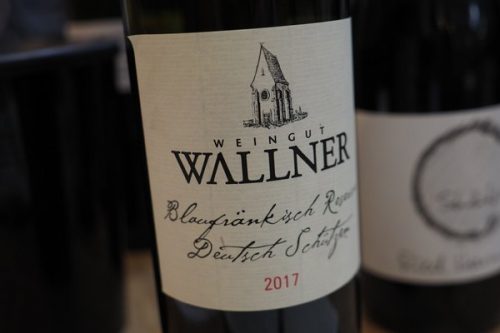
Wallner ‘Deutsch Schützen’ Blaufränkisch 2017 Eisenberg DAC Reserve, Austria
Supple and smooth with cherries, plums and even some apples. Lovely freshness with appealing cherries and nice spiciness. Supple and rounded. 91-93/100

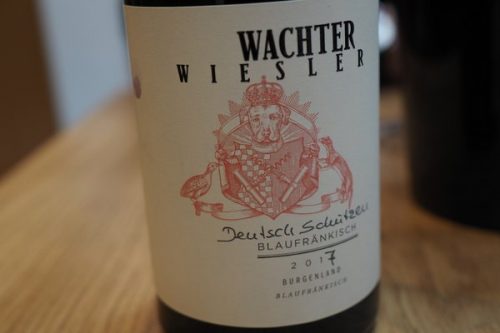
Wachter-Wiesler ‘Deutsch Schützen’ Blaufränkisch 2017 Eisenberg DAC Reserve, Austria
Big barrels, 40 year old vines. Very fine grained and elegant with good structure. Has concentration as well as elegance, with fine, aromatic, floral fruitiness and good acidity. Fresh red cherry finish. This is really serious. 94-96/100
Wachter-Wiesler ‘Eisenberg’ Blaufränkisch 2017 Eisenberg DAC Reserve, Austria
From the Eisenberg village, with green schist soils. Lovely aromatic nose of sweet cherries and fine herbs with subtle leafiness. The palate is refined, fresh and elegant with good acidity. This is astonishingly good, with refinement, structure and finesse. 94-96/100
Thom Wachter ‘Eisenberg’ Blaufränkisch 2017 Eisenberg DAC Reserve, Austria
Thom is the uncle of Christoph. 500 litre used oak. Supple and elegant with liqueur-like red cherries and plums. Has brightness and freshness with lovely raspberry hints. Fine and textural. 92-94/100


from Jamie Goode’s wine blog http://www.wineanorak.com:/wineblog/austria/eisenberg-austria-home-to-elegant-blaufrankisch

For Fine Wine Investment opportunities check out Twelve by Seventy Five: http://www.twelve-by-seventy-five.com/

from
https://twelvebyseventyfive.tumblr.com/post/184465742097