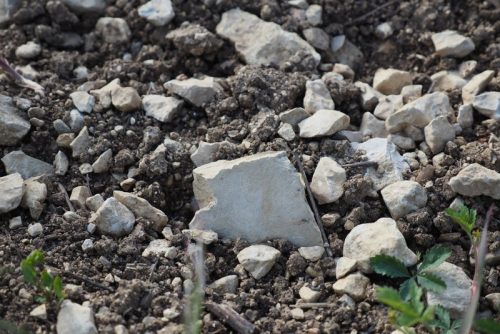
Limestone and clay in Les Clos
Chablis is one of those regions where the soils are to the fore in discussions about the wine, but they are not the only factor determining the characteristics of the wine. It is soils in concert with aspect (which creates the microclimate) that shapes the wine quality here. But, If like me, you are a lover of vineyards soils, then you will go crazy when you visit Chablis.
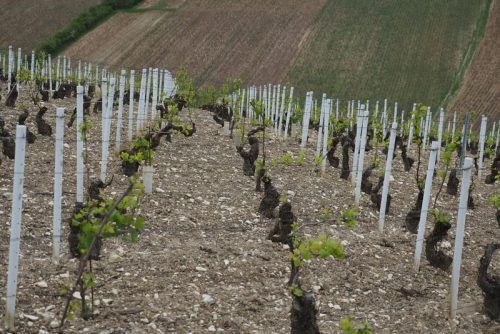
Blanchots
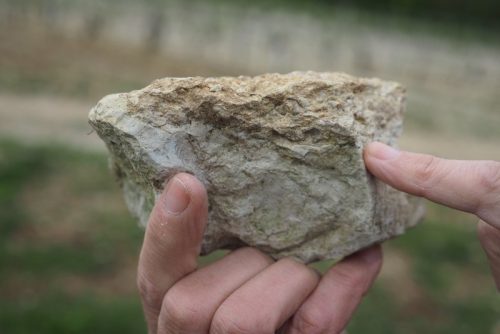
Marl (also known as Marne in French) showing a bottom layer of deposited limestone and a top layer of compressed clay with fossils in it
This is a region all about limestone, but there are different sorts of limestone. The simple story is this: the region is about limestone of two different ages. The first, and most important, is what is called Kimmeridgian limestone. This is from 150 million years ago, and the stones and bits of rock here are composed of limestone that has been deposited on an ancient seabed, interweaved with layers of marl: limestone-rich clay that has been compressed into rock.
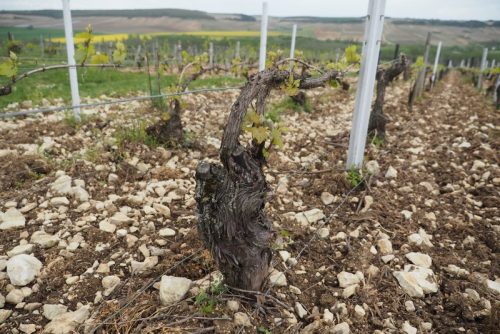
Cote de Lechet, a left bank 1er Cru
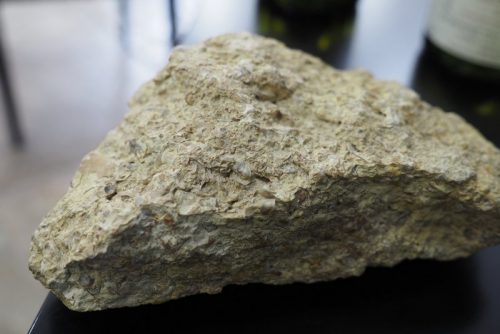
A classic chunk of marl
There are lots of oyster fossils in this marl, and there are also seams that look almost like pure oyster shells that have been lightly glued together. This Kimmeridgian limestone is what forms the basis of the Chablis, Chablis Premier Cru and Chablis Grand Cru vineyards. Different vineyards – and even different bits of vineyards – have different proportions of rocks and clay/clay loam in them, and generally the more rocky soils make more linear, intense wines, while the deeper soils with more clay make more generous, fleshier wines.
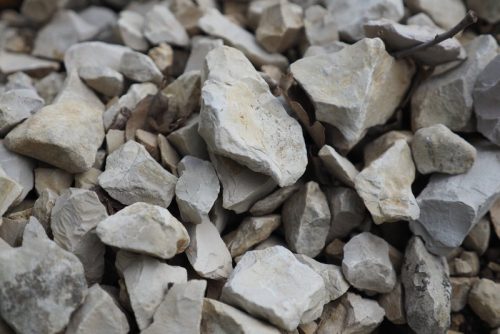
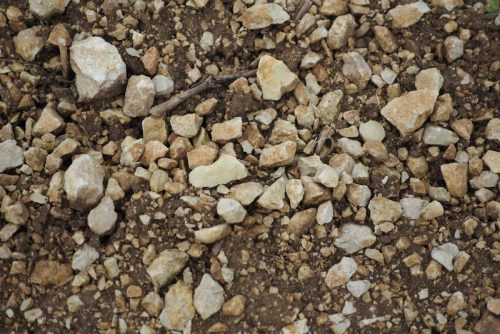
Portlandian limestone in Petit Chablis,on a plateau next to Cote de Lechet
Then there’s a slightly younger limestone called Portlandian. This is harder and more brittle, and doesn’t have fossils in it. These are the soils of Petit Chablis, but it’s not to say they are uninteresting soils. The Petit Chablis vineyards are usually on the plateaus on the top of the hills, and so are more exposed. Generally, they are used to make lighter, fruitier, brighter wines, but this could be because of the climatic factors here more than the soils. They still look like pretty epic vineyard soils.
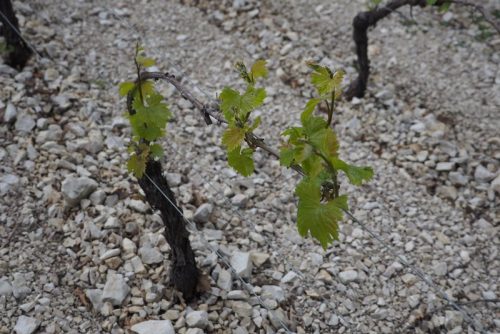
It would be lovely to ascribe certain flavour profiles to different vineyards, but this is complicated by the fact that few of the vineyards are homogeneous. You really need to know which bit of the vineyard the wine comes from, especially with respect to the bigger premier crus such as Vaillons and Fourchaume and Montmains, which are amalgamations of several climats.
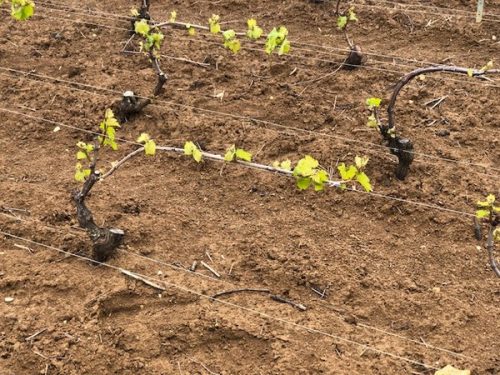
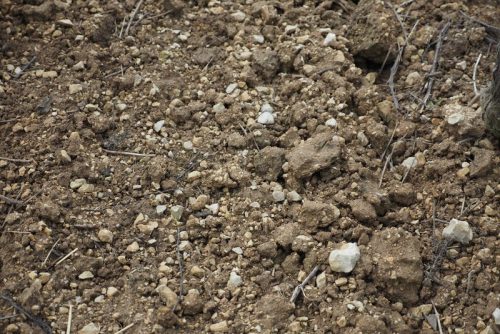
Not all soils are rocky, but it’s rare to see pure clay/loam like this
Can you taste the soil influence? This is an interesting question. When you taste the wine you taste the combination of a range of different factors: the interesting experiment would be to taste wines from vineyards that share a similar aspect (and thus climate), but with different soils, and then see what the difference is. You can attribute this to the soil. I think that it’s the soils, rather than the climate, that really make Chablis a very special place indeed. The climate matters, but you could replicate this in a number of different places. These soils are pretty unique. They remind me of bits of Sancerre, where there’s also some Kimmeridgian limestone. And I think sometimes soils even trump the cepage: it would be fun to try Sancerre from Kimmeridgian terroir versus Chablis and look for the similarities.
from Jamie Goode’s wine blog http://www.wineanorak.com:/wineblog/wine-science/chablis-2-the-soils
For Fine Wine Investment opportunities check out Twelve by Seventy Five: http://www.twelve-by-seventy-five.com/
from
https://twelvebyseventyfive.tumblr.com/post/184522946567

No comments:
Post a Comment