Tuesday, May 31, 2016

ICCWS: Gary Pickering on managing green flavours in wine (what do to about ladybug taint)

gary pickering

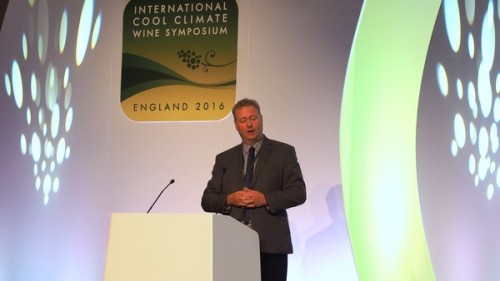
Gary Pickering, of Brock University presented a talk at the ICCWS (International Cool Climate Wine Symposium) on managing green flavours in wine. These are largely (but not exclusively) caused by methoxypyrazines. The two main ones in wine are isopropyl methoxypyrazine (IPMP) and isobutyl methoxypyrazine (IBMP).

There’s a level at which these green flavours can be typical of certain varieties – the Cabernet family seems to show them as a varietal characteristic, and they work well in Sauvignon Blanc – but they are unpleasant when they are too high.

Humans are incredibly sensitive to methoxypyrazines and can pick them up at very low concentrations: the detection thresholds are 2.1 ng/litre for IBMP and just 320 picograms/litre for IPMP, but there’s variation according to which wine context they are found in. There’s also inter-individual differences among people for detecting these, so some people can pick up IPMP at 320 pg/l while others only spot it at 95 ng/litre, which is roughly a 300 fold difference. They survive fermentation pretty much intact and don’t change much in bottle.

There are two sources of methoxypyrazines in wine. The first is from grapes: levels are high in unripe grapes and then diminish with ripening, so in cool climates where grapes struggle to ripen they can be elevated. But perhaps more worryingly, they can also come from ladybirds hiding in the bunches at harvest time.

This is known as ladybug taint (LBT), and there are two species responsible: Harmonia axyridis (the multicolored Asian lady-beetle; MALB), and Coccinella septempunctata (seven spot). These ladybirds take up residence in the grape cluster and end up in the fermentation vat, and when they are stressed (getting crushed and drowned is pretty stressful) they release methoxypyrazines. Just one per vine is enough to taint the wine, and with global warming they are becoming a bigger problem. Affected wines are described as having flavours of greenness, peanuts and earth.

So what can be done about these green flavours if they are present?

Destemming and minimizing skin contact is important, because most methoxypyrazines are extracted in the first 24 h of maceration. Clarification and settling prior to fermentation can make a big difference in reducing levels in the final wine.

Pickering also described some more novel remediation techniques. In his laboratory he has shown that The use of mMUP (mouse major urinary protein), an odorant binding protein specific for methoxypyrazines, can reduce levels from 300 ng/litre to just 5 ng/litre. This protein binds the methoxypyrazines and is then fined out with bentonite. Thermovinification also reduces methoxypyrazine levels. Silicone and polylactic acid are also fairly specific ways of removing methoxypyrazines that have great promise. Clearly, it’s best not to have sky high levels of methoxypyrazines in wine in the first place, but if you do, it’s nice to have a remedial solution.

See more in this paper from Pickering’s group.


from jamie goode’s wine blog http://www.wineanorak.com:/wineblog/wine-science/iccws-gary-pickering-on-managing-green-flavours-in-wine-what-do-to-about-ladybug-taint

For Fine Wine Investment opportunities check out Twelve by Seventy Five: http://www.twelve-by-seventy-five.com/

from
http://twelvebyseventyfive.tumblr.com/post/145200989577

Monday, May 30, 2016

ICCWS 2016: Alistair Nesbitt’s model for identifying suitable vineyard sites in the UK

alistair nesbitt iccws

Alistair Nesbitt, from the University of East Anglia, has created a model that maps spatial climate variability in the UK, showing the suitability of various areas for viticulture in England and Wales. Over the period 1954-2015 there has been a non-linear warming trend for the growing season, and the amount of variability from season to season is quite high. But since 1993, every year has been above the 13 C minimum average temperature for the growing season that is usually regarded as the baseline for successful viticulture. But this doesn’t mean that every year has been successful: rainfall variability, for example, has had an important impact.

In order to see where in the UK might be best suited to viticulture, Nesbitt has created a map looking for areas that are less variable, but still suitable. He’s used a technique called ‘fuzzification’, which is a way of integrating data sets, and has worked on grids of 50 x 50 metres.

In the UK, of land that is currently described as arable (and therefore which potentially could be planted with vines), there are 1.4 million hectares that could be considered suitable for growing vines on the basis of temperature. And of these, there are 197 000 hectares of land suitable with limestone/chalk soils. In Hampshire alone, there are 17 000 hectares suitable for viticulture with limestone/chalk soils. This is quite exciting.

Then it’s possible to integrate other climate details into the model that further clarify which are the best sites. Factors such as frost risk, variability and rainfall levels affect the potential of a site. This gives a rating scale of suitability for viticulture.

OLYMPUS DIGITAL CAMERA

Nesbitt points out that despite the comparisons that keep being made, there isn’t much of a comparison between the UK and Champagne. Over the last decade, the south of the UK has consistently been 1 C cooler than Champagne on average during the growing season, and also wetter. Where is most similar to southeastern England? It’s eastern Denmark, which shows an average difference of 0.1 C over the last ten years.

Nesbitt closed by suggesting that we need to pay more attention to future climate and weather patterns, and we also need to understand better the adaptive capacity of the vineyard. He also revealed that he has found the single field in the UK that is best suited to high quality viticulture, but he won’t say where it is.

A copy of a paper from Nesbitt’s PhD research is available here.


from jamie goode’s wine blog http://www.wineanorak.com:/wineblog/wine-science/iccws-2016-alistair-nesbitts-model-for-identifying-suitable-vineyard-sites-in-the-uk

For Fine Wine Investment opportunities check out Twelve by Seventy Five: http://www.twelve-by-seventy-five.com/

from
http://twelvebyseventyfive.tumblr.com/post/145163792767

Sunday, May 29, 2016

Video: RAW Artisan Wine Fair 2016

RAW fair

A short film from this year’s RAW Artisan Wine Fair, held earlier this month at the Old Truman Brewery, London.


from jamie goode’s wine blog http://www.wineanorak.com:/wineblog/videos/video-raw-artisan-wine-fair-2016

For Fine Wine Investment opportunities check out Twelve by Seventy Five: http://www.twelve-by-seventy-five.com/

from
http://twelvebyseventyfive.tumblr.com/post/145120771147

Saturday, May 28, 2016

Two lovely biodynamic Sauvignon Blancs: Waterkloof and Churton

waterkloof churton sauvignon blanc

Opened this pair. One from South Africa and one from New Zealand. Both biodynamic. Both pretty compelling, and perhaps not what you’d immediately expect from Sauvignon Blanc. This is a variety that can be serious, but doesn’t have to be. It’s almost as if, though, that by putting Sauvignon Blanc on the bottle, you are making a contract with the consumer that you will be delivering a certain style of wine. And these wines aren’t typical Sauvignon, but they are really lovely. Increasingly, we are seeing the emergence of serious Sauvignon, with ageing potential and real interest, and I love it.

Churton Sauvignon Blanc 2014 Marlborough, New Zealand
14% alcohol. From a 22 hectare vineyard in the Waihopai Valley, this is a really textural Sauvignon with crystalline citrus fruits and hints of pepper and minerals. Dry and taut with some generous texture to the bracing, limey fruit. Lovely purity here, with some pear richness and spicy minerality. 92/100 (£13.80 Tanners)

Waterkloof Sauvignon Blanc 2015 Stellenbosch, South Africa
14% alcohol. Rich, appealing, yet restrained pear and white peach fruit. Rich, textural palate with nice breadth. Fine-grained crystalline fruits here and fine spiciness, with just a hint of green pepper in the background. Ripe apple notes, too. Lovely complexity and finesse to this wine. 92/100

Find these wine with wine-searcher.com


from jamie goode’s wine blog http://www.wineanorak.com:/wineblog/new-zealand/two-lovely-biodynamic-sauvignon-blancs-waterkloof-and-churton

For Fine Wine Investment opportunities check out Twelve by Seventy Five: http://www.twelve-by-seventy-five.com/

from
http://twelvebyseventyfive.tumblr.com/post/145073531362

Friday, May 27, 2016

At the International Cool Climate Wine Symposium

Greg Jones presenting at ICCWS 2016

Greg Jones presenting at ICCWS 2016

570 delegates, three tons of ice, 22 000 glasses. Brighton in May. It’s the 9th International Cool Climate Wine Symposium, and it’s being held in the UK for the first time, and everyone is quite excited. I’m currently sitting in a session on Day 2, so I thought I’d report a bit on the first day.

Bruce Tindale, the event chair, kicked things off with some facts and figures on the UK wine industry. Things have been moving fast: there are now over 2000 hectares of vines here which has doubled over the last eight years. The UK is looking to grow to 3000 hectares by 2020, with production set to rise to 10 million bottles by then (the current average is 5 million). There are now 502 commercial vineyards and 133 wineries, and the retail value of the wine produced is some £82 million. Currently just 5% exported. Sparkling wine is 66% of production by volume.

Jancis Robinson was delivering the welcome keynote speech. ‘So many of the world’s finest wines are made in relatively cool climates,’ she said, pointing out that over the last few decades the cooler regions have found life a little easier: ‘Those of us in cool climates are fortunate in this era of climate change that we have benefited from rising temperatures.’

Jancis described the ICCWS as a hugely significant event, celebrating the coming of age of England and Wales as wine producing countries. ‘It is amazing to see the dramatic progress made by the English wine industry,’ she says, referring specifically to the recent success of Hambledon and Nyetimber at the Noble Rot tasting.

She’s a big fan of English sparkling wine. ‘Nowadays it is made with such competence and consistency,’ she points out. ‘It’s not a copy of Champagne. It’s hedgerow in a glass.’ Jancis suggests that the UK is playing an oversized influence in the world of wine, especially in the realm of writing: books, magazines and now online writing. So why not for winemaking also?

But it’s not just sparkling. ‘English still wines continue to make significant progress,’ she adds. ‘I wouldn’t be surprised to have my socks knocked off by an English Pinot Noir or Riesling.’

Given the success of England’s wine industry, she is surprised the government haven’t been more supportive. Addressing her comments to George Eustace MP, Minister of State at the Department for Environment, Food and Rural Affairs (DEFRA), she made some political points. ‘Plumpton College’s WineSkills Programme has had to be abandoned because DEFRA has rescinded its funding of it,’ said Jancis, ‘at the very time when the English wine industry has reached new heights of accomplishment and fame,’ And there was more. ‘For some mysterious reason, DEFRA has failed to renew its membership of the OIV, the world’s massively important International Organisation of Vine and Wine. This means that Plumpton can’t participate in international research projects, leaving it marginalised from the world of wine academia. And it also means that the British in general and English producers in particular have no voice whatsoever in international wine negotiations and regulation. Holland, Belgium, Sweden, India and Azerbaijahn are all members, whereas it would only take a small, five figure sum for the UK to rejoin the OIV.’

The next session was with Greg Jones (Southern Oregon University) and Hans Schultz (Geisenheim), talking about climate change and emerging cool climate regions.

Hans pointed out that cool climates presented both opportunities and risks. The temperature during the growing seasons matters, but he also drew attention to day length effects, which climatic indices tend to neglect.

For coastal zones, high rainfall can be a risk, for continental zones, winter lows are often a problem.

They highlighted some extreme cool climate locations (with degrees latitude):

  • Leelanau Peninsula, northern Michigan 45.15
  • Kamloops, Canada 50.68
  • Lake Timagami, Canada 46.4
  • Annapolis Valley, Nova Scotia 45.15
  • Sussex, Canada 45.4
  • Chiloe Island, Chile 42.67
  • Sarminento, Argentina 45.58
  • Bruny Island, Australia 43.32
  • Alexandra, New Zealand 45.26
  • Aalborg, Denmark 57.1
  • Gothenberg, Sweden 57.7 (close to sea, moderates the climate)
  • Zilona Gora, Poland 51.6 (very continental climate)

Historical records show that, if a rolling 10 year average is used, there has been an increase in growing season temperatures since the 1980s. Oxford in the UK is now the same as Geisehneim was in 1980, and Gothenberg is now the same as Oxford was in 1980. The impact of climate change has been felt more in northern latitudes. Over the past century there has been an average rise of 1.3 C.

Daylength has not been paid enough attention. Compare Sweden (57.7 N) and Adelaide Hills (34.7 N). At summer’s peak there is a 3 h 20 min difference in day length between the two.
Carbon dioxide assimilation by vines is 20-30 tons/ha per year, and the different day lengths can account for 0.8-3.2 tons CO2 per year.

Winter cold is a big risk in many cool climate wine regions. If temperatures drop down to -20 C, then it’s trouble for most Vitis vinifera. But different varieties show different susceptibilities. Gamay is very frost resistant, Pinotage also strong, and Chardonnay is also hardy. Syrah is very sensitive, as is Lagrein.

A one degree temperature change opens up some new areas for cool climate viticulture, and some cool areas become intermediate climates. Greg and Hans reckon we will reach this one degree change by 2040, which isn’t a long time. So it looks like constant change is here to stay. More on the rest of day one later. I need to pay attention to this talk.


from jamie goode’s wine blog http://www.wineanorak.com:/wineblog/uncategorized/at-the-international-cool-climate-wine-symposium

For Fine Wine Investment opportunities check out Twelve by Seventy Five: http://www.twelve-by-seventy-five.com/

from
http://twelvebyseventyfive.tumblr.com/post/145006358057

Thursday, May 26, 2016

A lovely Loire Chenin: Richard Leroy Les Rouliers 2012

richard leroy les rouliers

I’ve had this wine a couple of times now (both times at Noble Rot, but Sager & Wilde are also listing it). It’s a stunning wine that has the most amazing matchstick reduction integrated into the richer Chenin flavours to great effect. This is a perfect example of a wine character that could be seen as a fault (reduction) acting as a positive. Richard Leroy farms 2.7 hectares in Anjou, Loire, and this wine, which comes from a 0.7 ha plot (Les Rouliers) with schist soils, is made without any added sulfur dioxide.

Richard Leroy Les Rouliers Chenin 2012 Vin de France
Amazingly intense matchstick nose is mineral and taut with citrus, flint and spice. The palate has ripe apple, spice and pear with lovely bright citrus notes. Complex and detailed with amazing integrated reductive mineral notes. So expressive. 95/100

Find these wines with wine-searcher.com


from jamie goode’s wine blog http://www.wineanorak.com:/wineblog/loire/a-lovely-loire-chenin-richard-leroy-les-rouliers-2012

For Fine Wine Investment opportunities check out Twelve by Seventy Five: http://www.twelve-by-seventy-five.com/

from
http://twelvebyseventyfive.tumblr.com/post/144952017382

Monday, May 23, 2016

In Beaujolais: Mee Godard, Domaine des Marrans, Bernard Metrat

mee godard

Mee Godard started her own domaine just three years ago. She’s previously studied winemaking in Oregon, and worked in Burgundy and Champagne. Now she has 5 hectares of vines in three different Morgon Climats: Côte du Py, Corcelette and Grand Cras.

Côte du Py, Morgon

Côte du Py, Morgon

This year she’s begun to work organically in the vines, although she’s taking it slowly because she doesn’t want to stress her vines (average age 60 years) too much. It will take time for the soil to adjust, she says.

OLYMPUS DIGITAL CAMERA

‘I want to make vins de garde,’ says Mee. ‘So when they are young they are not easy. You have to decant or wait.’ She adds, ‘I like tannins. Maybe it would be a good exercise for me to make a non-tannic wine.’

OLYMPUS DIGITAL CAMERA

OLYMPUS DIGITAL CAMERA

OLYMPUS DIGITAL CAMERA

We tried all the wines she has made so far: the 2013s, 2014s and 2015s (the latter from barrel; as with most serious producers, the 2015s are taking longer to develop than normal and won’t be bottled for some time).

OLYMPUS DIGITAL CAMERA

OLYMPUS DIGITAL CAMERA

OLYMPUS DIGITAL CAMERA

Right from the start, Mee has nailed it. These are backward, structured expressions of Gamay from good terroirs, and they will repay time in bottle. 2013 was quite a cool vintage, and these are particularly taut wines. 2014 is more classic, and shows a bit more generosity. 2015 is a hard vintage to get a grip on. The wines are big and impressive, with plenty of structure, and for many producers they are a little too big. But Mee has read the vintage well, and hers show superb precision and focus.

This is the sort of domaine where you buy all you can, and stick the bottles away for a few years.

mathieu melinand

Domaine des Marrans was a real find. Mathieu Melinand hosted us. He runs the domaine along with his father Jean-Jacques, and makes wines in the most traditional way: short-ish macerations in concrete fermenting vats, then the wine goes to large oak to mature.

OLYMPUS DIGITAL CAMERA

Marrans is based in Fleurie, just outside the village. It has 20 hectares of vines, with 18 in the crus. As well as 10 hectares of Fleurie, there are 3 in Chiroubles, 3 in Julienas and 2 in Morgon. They’ve been replanting their vineyards with selection massale (mostly from their own old vineyards), and not with clones.

OLYMPUS DIGITAL CAMERA

domaine des marrans

The winemaking here is really terroir transparent, and it allows the good work in the vineyard to be expressed fully in the wines. 2015s from cask were looking pretty smart, although these are certainly big, slightly atypical wines. The 2014s from bottle were superb. I was particularly taken by the Fleurie Clos des Pavillons, which is 4 hectare block that consists of pink granite over a clay base, with vines averaging 70 years old, and the thrilling Morgon Corcelette. We also had a look at an older vintage: the 2000 Fleurie (Pavillons has only been separated out since 2002). This was beautifully elegant.

Bernard Metrat

Bernard Metrat isn’t one of those winegrowers who gets talked about all that much, but I really like his wines. He’s based in Fleurie, and makes consistently fine, balanced, full flavoured wines that express their place. Viticulture is lutte raisonée (Terra Vitis certified) and winemaking traditional. From his 10 hectares of vines he makes wines from three crus.

OLYMPUS DIGITAL CAMERA

Chiroubles La Scandaleuse is a lovely wine, made from the Côte Rôtie climat (which he’s not allowed to use on the label, hence La Scandaleuse). Fleurie La Roilette is superb, and I actually prefer this to the Vieilles Vignes from the same plot, which shows a bit of barrel influence. We had a look at the 2009 La Roilette VV, which was much better, though, with depth and richness allied to elegance.

OLYMPUS DIGITAL CAMERA

I also really liked the Belle Coudrière Moulin à Vent. As with many of the leading Beaujolais winegrowers, these wines are also superbly affordable given the quality on offer. Now is certainly the time to begin exploring Beaujolais, because I reckon its time is coming.

Find these wines with wine-searcher.com


from jamie goode’s wine blog http://www.wineanorak.com:/wineblog/from-the-road/in-beaujolais-mee-godard-domaine-des-marrans-bernard-metrat

For Fine Wine Investment opportunities check out Twelve by Seventy Five: http://www.twelve-by-seventy-five.com/

from
http://twelvebyseventyfive.tumblr.com/post/144799079967

Sunday, May 22, 2016

Sager & Wilde Wine Bar

sager&wilde

Popped into Sager & Wilde Wine Bar today for the first time in a while. It’s a lovely space, and what a wine list! The by-the-glass list is  shortish but it’s really good, and changes frequently, but it’s the lengthier by the bottle list that really grabbed my attention. This is a superbly chosen (I avoided the temptation to use the term ‘curated’, which I think is now officially one of those words it’s no longer possible to use without sounding dickish) wine list. Yes, it’s quite expensive. But then the sorts of wines you get here are worth spending proper money on.

And the food: the short list of bar food is brilliant. We had some almonds and some smoked aubergine on toast, and both were spot on. You could certainly eat well here, even though it’s very much a wine bar, not a restaurant.

This is my sort of place, serving my sort of wines, and I love it. We weren’t here for long, so between us just had three glasses: a lovely Champagne from Frank Pascal, the 2012 house Pinot from Raj and Sashi at Domaine de la Côte in California, and a pink wine from Frank Cornelissen. Sorry: no real notes, or even precise details. It was just an hour of fun. This sort of place makes wine fun, and is the perfect environment for drinking. Now I just need to secure some more commissions and speaking gigs so I can afford to raid that lovely list.

Sager & Wilde
193 Hackney Road
E2 9JL


from jamie goode’s wine blog http://www.wineanorak.com:/wineblog/restaurants/sager-wilde-wine-bar

For Fine Wine Investment opportunities check out Twelve by Seventy Five: http://www.twelve-by-seventy-five.com/

from
http://twelvebyseventyfive.tumblr.com/post/144761122472

Saturday, May 21, 2016

Tantalus Old Vines Riesling Brut 2013 Okanagan Valley, Canada

tantalus riesling

So, this is pretty much a real time tasting note of a sparkling wine from Canada’s Okanagan Valley that’s in my glass at the moment. Tantalus has been growing grapes since 1927, and this Riesling vineyard was planted in 1978, which for Vitis vinifera in the Okanagan, is pretty ancient history. It’s from clone 21B, and this is a really interesting sparkling wine, made with a light dosage, and weighing in at a generous 13.1% alcohol. There’s a lovely balance to this wine: it carries the fruity citrus personality of Riesling and combines it with subtly toasty complexity. This was aged on the lees for two years.

Tantalus Old Vines Riesling Natural Brut 2013 Okanagan, British Columbia, Canada
Lovely fresh, lively citrus fruit (lime and grapefruit pith) with a hint of honey and melon richness, as well as subtle toast notes. There’s a lovely lively personality to this wine, as well as a little sweetness on the finish adding nice balance to the acidity. There’s just a hint of baked apple on the finish. It’s distinctive and quite different, and I really like it. 90/100

Find these wines with wine-searcher.com


from jamie goode’s wine blog http://www.wineanorak.com:/wineblog/canada/tantalus-old-vines-riesling-brut-2013-okanagan-valley-canada

For Fine Wine Investment opportunities check out Twelve by Seventy Five: http://www.twelve-by-seventy-five.com/

from
http://twelvebyseventyfive.tumblr.com/post/144710807992

In Beaujolais: Jean-Marc Burgaud, Domaine Roquette, Frédéric Berne

jean marc burgaud

Jean-Marc Burgaud is based in Villié-Morgon, in the heart of the most celebrated of the crus. We had a beautiful early evening visit here that had an energy of its own. It’s so interesting following the dynamics of producer visits. Often they don’t really know who you are (many producers are so busy making their wines they simply haven’t got time to track the journalist scene), and you don’t know much about them. So there’s an initial reticence to the encounter, and depending on the personal chemistry, the visit can then find energy, or it can be a bit of a struggle. If the wines are good, they usually carry the visit beautifully: your response as you taste the wines is usually picked up pretty clearly by the winegrower.

With Burgaud, everything clicked. We had such a good time. He’s been making wine since 1989, when he started with just 3 hectares. In 1992 he got his first holdings on Côte du Py, the most celebrated of the Morgon terroirs, and now he is working with 17.5 hectres, including 8 hectares in Côte du Py.

Burgaud’s wines are quite structured and yet they avoid being overpowering or too extracted. He works in quite a reductive way, and young these wines can show a bit of matchstick/mineral/spice reduction, but this sets them up nicely for some ageing. I really loved his 2014s, which show a sense of place. The Côte du Py Javernières, which has the most alluvial soils in this climat, is sensational, as is the special bottling called ‘James’, which is from the top of the south side.

It was really interesting to try the 2015, which is an atypical vintage in the region because of the heat and dryness, and which has resulted in powerful, structured wines that tend to be a bit on the big side if the winemaking was handled sensitively. 2015 is being widely heralded by most of the growers as the best they have seen, because despite the ripeness they also had good natural acidity. But winemaking wasn’t easy: many winegrowers have found it hard to get the fermentations to complete, and have had to delay taking the wine out of tank or barrel for blending and bottling. Burgaud’s 15s are looking very good indeed, but it’s early days.

We did a vertical of the Côte de Py, looking at 2010 (beautiful), 2008 (a weaker year), 2005 (tannic but pretty), 2002 (just lovely) and 1995 (sensational). We finished with a bottle of 1964 (not Jean-Marc’s), but he was disappointed it wasn’t showing as well as he’d hoped. Still, a lovely way to end a really lovely visit.

domaine rochette

Domaine Rochette is a typical, solid, traditional Beaujolais producer based in Régnié. They’re a family domaine that began in the early 1980s, and we met with Matthieu Rochette who began working with his parents in 2009. They have 15 hectares altogether, including holdings in four crus. The wines here are consistently good, and particular highlights were the excellent Régnié Cuvée des Braves 2014 and 2015, and the Côte de Brouilly. The Morgon Côte du Py Special Selection is also really good. A real treat was the chance to try the Cuvée des Braves 2000, which had aged fabulously into an elegant maturity.

chateau des vergers

Next up was one of the highlights of the trip. It’s always great to make a new discovery, and I loved the winemaking of Frédéric Berne at Château Les Vergers in Lantignié. He’s a talented winegrower who works in a natural, terroir-transparent way, and he came here in 2005. In way of rent, he gives 50% of the wine to the Château and gets to use the rather rustic, ancient winery (including a gazillion-year old wooden press that looks like it belongs to a museum) and the vineyards. Berne did nine years working with Perraud, learning how to make traditional, conventional wines. Then he worked with the Bret Brothers at Domaine de Soufrandière in Mâcon, where he learned about biodynamics and natural winemaking. This changed everything. ‘I discovered a completely different side of winemaking,’ he says. He’d like to do what they have done for Mâcon for Beaujolais: revisiting the terroirs and making wines of a high level. To this end, he’s pressing for Lantignié to be recognized as a cru, in due time, because of its special soils. It has 312 hectares, and it would be great to see it on the label. His Beaujolais Villages Terroirs de Lantignié 2014 is supple, pale coloured and pure. The Chiroubles Les Terrasses comes from pink granite soils, and in 2014 it is thrilling with a bit of matchstick reduction offsetting the pure, precise fruit. And the Morgon Corcelette 2014 is superbly elegant, with a liqueur-like richness to the fruit with grippy tannin and high acidity, and it all works together perfectly. ‘People don’t understand Beaujolais,’ says Berne. ‘I want to differentiate the terroir and show what Beaujolais can do.’

frederic berne


from jamie goode’s wine blog http://www.wineanorak.com:/wineblog/beaujolais/in-beaujolais-jean-marc-burgaud-domaine-roquette-frederic-berne

For Fine Wine Investment opportunities check out Twelve by Seventy Five: http://www.twelve-by-seventy-five.com/

from
http://twelvebyseventyfive.tumblr.com/post/144698597182

Wednesday, May 18, 2016

In Beaujolais: Chaize, Lapierre and Lapalu

chateau de la chaise brouille

Day one in Beaujolais began at Château de la Chaize in Brouilly, the largest and most diverse of the crus. It’s a proper Château, too. Grand and ornate with beautiful gardens, and a separate, exceptionally long winery. This has to be one of the longest wineries I have ever seen, and I have seen a few in my time. We were shown around by Caroline de Roussy de Sales. In the 18th century one of her ancestors, who was a passionate botanist, decided to build this enormously long winery building, which is fully 100 metres long and consists of an upper winery storey and a below ground cellar. The range is quite simple: there’s the regular Brouilly, made in a taut, aromatic, slightly reductive style (and which is very good), and then two reserve wines made from older vines. The Cuvée Vieilles Vignes is matured in older Burgundy barrels and has a lovely purity and elegance, and there’s the slight aberration: a new oak-aged Réserve de la Marquisse, which wasn’t my style.

lapierre morgon

Then it was off to see one of the legends of modern Beaujolais. Lapierre. Camille Lapierre (above) hosted us, showed us the vineyards, and then gave us an extensive tasting. Camillie explained how they had trialled biodynamics for several years and given up because they didn’t see much of a difference. She thinks this is because they had never messed up their soils. Marcel, her father, had met Jules Chauvet just in time, during the 1970s, at a time when everyone was moving towards herbicides as a more efficient way of controlling weeds. Chauvet warned Lapierre off the new chemical solutions.

Vineyards at Lapierre, Morgon

Vineyards at Lapierre, Morgon

The 2015 at Lapierre are still in barrel. It was such a big year that the fermentations have been slow, and the wines aren’t yet blended. We tried a few barrel samples and they are looking very impressive indeed. We then looked at the two 2014 Morgons: one made without any added sulphites and one with just a little added at bottling. The latter was tighter and more precise, but both were quite beautiful, and it’s hard to say which I preferred. The 2015 will not be made in a no added sulphites version. Cuvée Camille is an incredible wine with real finesse in the 2014 vintage (2013 was the first), and this is quite thrilling. The 2014 Cuvée Marcel Lapierre is from schist-rich soils on the Côte du Py, plus a couple of other parcels of old vines, and it is sappy, vivid, fine-grained and astonishingly good. We then looked at the 2011 and 2008 vintages of the Morgon. 2011 is showing beautifully; 2008 is drinking very well but this tastes older than it is, from a very cool vintage.

Jean Claude Lapalu

Jean Claude Lapalu was the next stop, based in Brouilly. We visited him at home, where he was sitting in the garden having just completed a tasting with some sommeliers. Lapalu is a natural guy, and makes quite a broad range, most of which are sans soufre (without added sulphur dioxide). He adds some for selected cuvées at bottling, and for the white; a typical addition would be 15 parts. I really liked his Beaujolais Villages Blanc 2015 (we later ordered this in a restaurant), and his Beaujolais Villages Vielles Vignes 2015. The Brouilly Vieilles Vignes 2015 is a big but beautiful wine in 2015 and his Côte de Brouilly 2014 is a truly beautiful bottle. The most interesting wine in the range is the amphora-fermented and aged Alma Mater. This is just such a beautiful, expressive natural wine with fine grained structure and lovely detail. I had a slight preference for 2014 over 2013. The wine is made from the very best of grapes each harvest, and it can come from any of the vineyards he works with. Some of Lapalu’s wines are a little too far on the natural spectrum for me, but when he gets it right, they are just beautiful.

Vineyards, Brouilly

Vineyards, Brouilly


from jamie goode’s wine blog http://www.wineanorak.com:/wineblog/from-the-road/in-beaujolais-chaize-lapierre-and-lapalu

For Fine Wine Investment opportunities check out Twelve by Seventy Five: http://www.twelve-by-seventy-five.com/

from
http://twelvebyseventyfive.tumblr.com/post/144591279322

Tuesday, May 17, 2016

Some highlights from RAW Fair (1)

raw wine fair

Held at the Old Truman Brewery on Brick Lane in London’s East End, RAW Fair was great fun. Over 200 wineries exhibiting, representing a fair spectrum of natural/authentic/real/artisan wine (or however you want to describe it. There was a good energy about the place, and as long as you are happy with knowing that you can but taste just a small selection of what’s on offer, there’s a lot of fun to be had. Here’s part one of my round-up, picking out some highlights.

OLYMPUS DIGITAL CAMERA

Le Grappin Beaune 1er Cru Les Grèves 2014 Burgundy, France
Andrew and Emma Nielsen are making some lovely precise single-vineyard wines from rented sites, and this is one of their best. It has an amazing mineral nose, with some pear and spice richness. Pure, textured and generous on the palate yet also amazingly fresh with some nuts and spices. This has lovely purity. 94/100

OLYMPUS DIGITAL CAMERA

Domaine de l’Ecu Taurus 2012 Muscadet Sèvre et Maine, Loire, France
This spends a year in concrete, a year in large cask and then a year in bottle, and it’s a remarkably full flavoured expression of Muscadet. Aromatic and intense with a nose of nuts, apples and wax, as well as some pure lemon notes. Lovely weight and texture on the palate: so powerful and mineral. Superb. 94/100

Le Clos de la Meslerie 2011 Vouvray, Loire, France
American Peter Hahn worked in finance and spent quite a bit of time in France with work. He decided he’d quit to actually make something worthwhile and get back to the land, so he decided to buy a vineyard. Almost by chance he found himself in Vouvray, with a self contained vineyard of four parcels around a house. This 2011 is powerfully aromatic with pear, peach, nuts and wax. Lively and showing a bit of sweetness, this has spice, herbs, ripe apples and lots of intensity. 93/100

OLYMPUS DIGITAL CAMERA

Vale de Capucha Arinto 2013 Lisboa, Portugal
Pedro Marques is making some lovely wines from his Lisboa vineyards, and this Arinto is the purest expression of his limestone-rich soils. From three different parcels, this is fresh and linear and bright with brisk lemony fruit and a deliciously stony character. Nice focus and acidity here. 93/100

OLYMPUS DIGITAL CAMERA

Niepoort Charme 2014 Douro, Portugal
This comes from very old vineyards, mainly in Vale de Mendiz. It’s foot-trodden in lagares with the stems, and three days or so after fermentation starts (the timing is critical), it is drained and pressed to finish fermentation in barrel. This 2014 is fine and expressive with raspberry and red cherry fruit. Elegant with fine-grained red fruits, showing amazing elegance and purity, yet not lacking intensity and concentration. 96/100

OLYMPUS DIGITAL CAMERA

Foradori Nosiola Fontanasanata 2014 Vigneti delle Dolmitti, Italy
This is from the Nosiola variety and it has 9 months of skin contact in clay vessels. Very fine and stony with a mineral core to the pear and citrus fruits, as well as subtle nuttiness. Real finesse here: delicate, textural, pure and with lovely weight. 95/100

Claus Preisinger

Claus Preisinger

Claus Preisinger Erdeluftgrasundreben 2013 Vin de Table, Austria
From Burgenland, this has no added sulphites. It has a distinctive, mineral, reductive nose with some peppery notes. The lively, vital, mineral palate is full flavoured, rich and peppery with nice citrus intensity and some melony richness. Such a lovely wine. 94/100

OLYMPUS DIGITAL CAMERA

Peter Wetzer Somlói Furmint 2015 Somló, Hungary
This Furmint comes from the amazing volcanic terroir of Somló, and it has generous pear, peach and spice notes. It’s textural and broad but there’s lovely focus here with a nice blend of rich fruit and lively mineral notes. 93/100

 Find these wines with wine-searcher.com


from jamie goode’s wine blog http://www.wineanorak.com:/wineblog/natural-wine/some-highlights-from-raw-fair-1

For Fine Wine Investment opportunities check out Twelve by Seventy Five: http://www.twelve-by-seventy-five.com/

from
http://twelvebyseventyfive.tumblr.com/post/144542085857

Monday, May 16, 2016

Suilven Chardonnay 2015 Adelaide Hills

suilven chardonnay

This is the latest release from Thistledown, a collaboration between Giles Cooke, Fergal Tynan and Peter Leske, based in the Adelaide Hills of South Australia. Suilven is a beautifully packaged, sophisticated Chardonnay with potential for development, and this is its debut vintage.

Thistledown Suilven Chardonnay 2015 Adelaide Hills, Australia
13% alcohol. Very fine and expressive with nice pure citrus fruit (lemon and tangerine), and more than a bit of finesse. Bright, focused, pure and elegant with real drive. It’s currently showing some spicy, cedary oak notes, but it’s a sophisticated, linear Chardonnay with massive potential for development. The oak sticks out a bit at the moment, but give it time. 93/100

UK agent is Alliance Wine

Find this wine with wine-searcher.com


from jamie goode’s wine blog http://www.wineanorak.com:/wineblog/australia/suilven-chardonnay-2015-adelaide-hills

For Fine Wine Investment opportunities check out Twelve by Seventy Five: http://www.twelve-by-seventy-five.com/

from
http://twelvebyseventyfive.tumblr.com/post/144444298852

Sunday, May 15, 2016

Money and wine

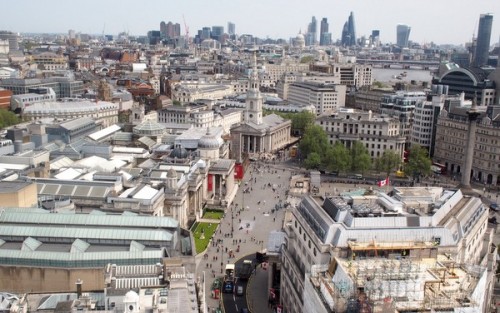
london view trafalgar square st martins city

Money lies at the roots of our society. It is a structural entity – a skeleton around which much of what happens is built. It is also symbolic. Of itself it has trivial value: the notes and coins in your pocket are only worth something because society has agreed that they should be. But this symbolic value is important: it shapes how we think, how we act, how we spend our time, and how we relate to each other.

Money is also quite addictive. For many people, once they have begun to accumulate it, it is as if they have no option but try to accumulate more. Decision making is often determined solely by financial considerations: they are ruled by money. Even when the individual has no real need for more money, their focus remains on accumulating more, even if this act of accumulation constrains them in significant ways and makes their lives complicated and over-busy. The thought of making a choice that doesn’t involve the financially most lucrative option is seen as ridiculous or naïve. We can be ‘bought’. And frequently these individuals will accumulate wealth that they never use. Money has accumulated more money.

It is possible to enjoy money. The problem is that few accumulate it without being owned by it. In surveys where people are asked, ‘how much more money would you need to earn to be happy?’ people typically name a figure about a third higher than their current income, irrespective of how much they are already earning (I can’t find a citation for this, but there’s a research article here along similar lines). But if you are content with your lot, money can buy happiness, to a degree. Money brings options, and as long as you can avoid becoming addicted to it, having plenty of cash – as long as you are prepared to spend it – can bring a freedom and give options that, as long as the other important elements of your life are in place, can lead to enhanced happiness.

There is no joy in poverty. It is possible to be poor and happy, but poverty itself doesn’t make people happy. It makes life complicated and it takes away freedom of choice. It forces people to accept poor working conditions and unfulfilling jobs. It removes the freedom to travel and explore the world. It constrains choices massively. So money is useful and good, if it is kept in its place. There is, however, great joy to be had in making the most of what you have, and finding contentment in your lot. I have a friend who is wealthy but complains of feelings of intense jealousy towards people who are even wealthier than he is: that’s not a happy place to be. I have other friends who are happy with enough. That’s what I aspire to.

So where does wine come in? Just as money changes how we think, so also the value of wine changes how we approach it. Wine is, at one level, a luxury good that is aspired to by the wealthy. It is a badge of success. The right wines are part of the game of conspicuous consumption. But at another level, wine is a staple. It belongs on the table and is an enjoyable accompaniment to a meal. It’s also very democratic: in classic wine-producing countries wine is as much for the poor as it is for the rich.

Yet wine is unusual in its pricing structure. You can buy a bottle of red wine that’s perfectly drinkable for a few Euros, or you can spend a hundred times as much on the most expensive bottles. But a ten times differential is more normal in the marketplace for bottles people drink on a regular basis. That’s a very broad spread, and of late the top wines have become a lot more expensive, and this spread has increased.

I know a lot of wine lovers who have been buying wine en primeur for some time. Consequently, they have cellars with bottles in them that are now worth a good deal of money. If you have a Grand Cru red Burgundy from a top grower, you could be a looking at a bottle that has a market value of more than £500. This changes your relationship with the liquid, because it is no longer just a bottle of wine, but rather a valuable asset. If you brokered a case of that wine you could buy a new kitchen or a second-hand car. It makes it a bit too expensive to consider drinking, even though you didn’t pay anywhere near that much for the bottle.

When we drink a bottle that is worth a lot of money, we think of it rather differently. Try as we might, it’s hard just to drink it on its merits. Its pedigree, as evidenced by its value, is hard to step aside from. This value influences the perception of the wine.

Approaching this from the other way round, if you open an affordable bottle of wine, then is there an unconscious ceiling on how good it can be? Of course, there’s the wisdom of the marketplace: the value of a wine is in large part because of the group call on the aesthetic merit of this wine, reflected in its market value. But I suspect that even if a wine was really great, if it is inexpensive then many people won’t enjoy it as much.

Grange is an interesting example. Australia’s most famous wine used to be relatively affordable. Back in 1993 you could buy it in UK off-licence chain Threshers for £35. Then in the late 1990s Penfolds decided to whack up the price significantly. It was a brave move: the market followed. Suddenly, Grange (which now retails for around £300 in a good vintage) had a much higher perceived value. This changes the way people approach the wine. Already a notable, famous wine, it was propelled into superstar category by virtue of a rise in price.

For me, one of the great joys of being a wine journalist is being able to scour the world for interesting, authentic wines that are not yet famous enough to command high prices. I also love finding honest wines that speak of their place but which, for one reason or another, will remain affordable even though they are well known. If we can separate our obsession with money from our enjoyment of wine, then it no longer becomes essential to spend huge sums to have some of the most profound wine experiences possible. But this is not easy to do.


from jamie goode’s wine blog http://www.wineanorak.com:/wineblog/uncategorized/money-and-wine

For Fine Wine Investment opportunities check out Twelve by Seventy Five: http://www.twelve-by-seventy-five.com/

from
http://twelvebyseventyfive.tumblr.com/post/144387194852

Friday, May 13, 2016

Taittinger Comtes de Champagne 2002

taittinger comtes de champagne 2002

I do like Comtes. It’s invariably a beautiful wine, and it ages well. I’ve written up a vertical of these wines before, and recently tried the current vintage, 2006. This 2002 is from a ripe, seductive year, and it’s shaping up very well. This is drinking very well now, but will probably still develop a bit more. No need to wait, really, though.

Champagne Taittinger Comtes de Champagne Blanc de Blancs 2002 France
Very fresh and linear but with a lovely toasty richness. Notes of almonds, pear, ripe apple and lemons, as well as some candied citrus peel. Finely toasty with a bit of spicy, mineral reduction adding interest. Complex and bold, this has a fresh mineral component but also some richer toasty notes, showing finesse and intensity as well as the generosity of the 2002 vintage. 95/100

 Find this wine with wine-searcher.com


from jamie goode’s wine blog http://www.wineanorak.com:/wineblog/champagne/taittinger-comtes-de-champagne-2002

For Fine Wine Investment opportunities check out Twelve by Seventy Five: http://www.twelve-by-seventy-five.com/

from
http://twelvebyseventyfive.tumblr.com/post/144309637572

Thursday, May 12, 2016

Some treats at 67 Pall Mall: Pignan, Montebello, Villard, Vazart Coquart

DSC_0277

Had a lovely evening last night with a small group at 67 Pall Mall, the wine-friendly club that opened last year. It was my first time at 67 Pall Mall, and they seem to get most things right: the space is beautiful, the wine list excellent, the food spot on and the Zalto glassware just astonishingly good. Service, though, was a bit patchy, and I’m no friend of the insistence that gentlemen must wear jackets at all times when in the club. That seems a bit retrograde. And the wine list is on iPads, but they don’t seem to have enough of them, and one of the benefits of this, you’d think, is that out of stock wines could be removed (we ordered one to find out there was none left).

We had some lovely wines. First of all, a couple of by the glass selections. Mullineux Schist Chenin 2014 was really smart (maybe a little warm, though), and I really liked Gavin Chanin’s Sanford & Benedict Chardonnay 2013, which was incredibly refined and Burgundian. One of my companions, a skilled blind taster, had it as a Premier Cru Puligny, and I can see why.

Then some Condrieu: Francois Villard’s Terrasses du Pilat 2014. This is a stunning wine: such an open, balanced, aromatic expression of Condrieu. And good value, too.

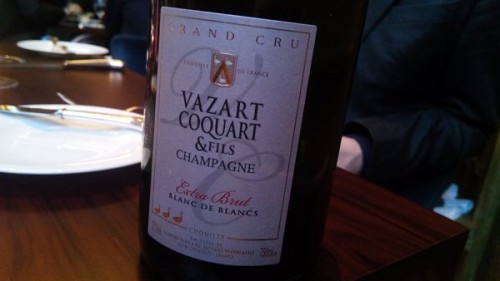
Talking of value, the Champagne Vazart Coquet Grand Cru Extra Brut Blanc de Blancs NV is quite beautiful, and really well priced. Served out of the Zalto sweet wine glasses, of course.

pignan 2008

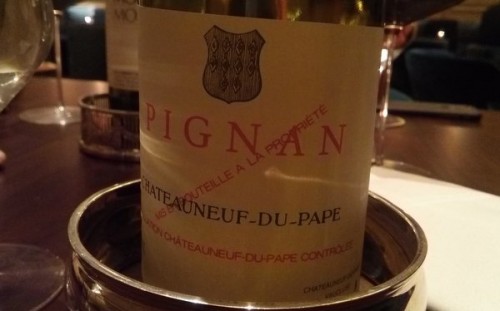
I was really impressed by the next wine: the Pignan 2008 from Rayas. This is a thrilling expression of Grenache with a truly Burgundian elegance to it. Such finesse and purity. This was a real star.

DSC_0279

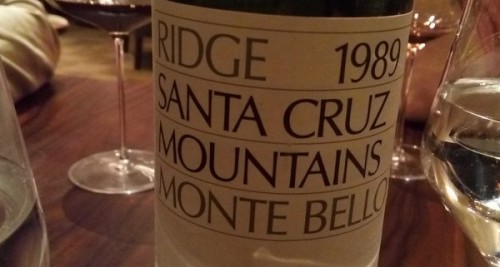
And to finish with, something great from California. The Ridge Montebello 1989, which has developed into a beautifully elegant maturity, but there’s no hurry to drink this up. Really fine. It’s always great when famous wines like these deliver.

  Find these wines with wine-searcher.com


from jamie goode’s wine blog http://www.wineanorak.com:/wineblog/northern-rhone/some-treats-at-67-pall-mall-pignan-montebello-villard-vazart-coquart

For Fine Wine Investment opportunities check out Twelve by Seventy Five: http://www.twelve-by-seventy-five.com/

from
http://twelvebyseventyfive.tumblr.com/post/144258394092

Wednesday, May 11, 2016

Black Elephant Vintners Semillon 2015 Franschhoek

landau du val semillon
This is an important wine, because of the vineyard that it is made from (pictured above). It’s a very old (1905) Semillon vineyard in Franschhoek owned by Basil Landau. Basil makes a wine from these vines, which are now over 100 years ol , called Landau du Val, but he is also selling some of these precious grapes, and for the first time Jacques Wentzel, the talented winemaker at newcomer Black Elephant Vintners, has some. This is their debut vintage with this wine, and it is really good, with lots of potential for further development.

Black Elephant Vintners Semillon 2015 Franschhoek, South Africa
This is the first vintage that Jacques Wentzel has made from Basil Landau’s famous old Semillon block, which is over 100 years old. And he’s done a great job. This is textured, fine and expressive with lemons, minerals, herbs and lovely pure fruit. It’s expressive, pure and mineral with real finesse, and huge potential for development. This once again demonstrates the potential for Semillon in the Western Cape. 93/100

Find this wine with wine-searcher.com


from jamie goode’s wine blog http://www.wineanorak.com:/wineblog/semillon/black-elephant-vintners-semillon-2015-franschhoek

For Fine Wine Investment opportunities check out Twelve by Seventy Five: http://www.twelve-by-seventy-five.com/

from
http://twelvebyseventyfive.tumblr.com/post/144191431087

Tuesday, May 10, 2016

New Zealand Sauvignon Blanc Seminar: classic versus alternative styles

newzealand sauvignonblanc

Yesterday I took part in a New Zealand Sauvignon Blanc seminar at New Zealand House in London. The aim of the seminar was to compare classic styled Marlborough Sauvignon Blanc with newer alternative styles, such as those that are barrel fermented, or fermented using wild yeasts.

My job was to make the case for the classic styles, and Melanie Brown of New Zealand Cellar was tasked with defending the newer, more experimental styles of Sauvignon. We had five wines each, and as well as tasting them, we had a broad-ranging discussion about Sauvignon, expertly chaired by Patrick Schmitt of The Drinks Business.

My point? Since the first vines went into the ground in Marlborough in 1973, this region has experienced amazing success. Now, with 22 000 hectares under vine, it’s the country’s largest region by far, and this success has been built on Sauvignon Blanc. Marlborough Sauvignon is a unique style that has won the hearts of wine lovers worldwide. It combines well integrated green aromas and tastes with lovely fruity aromatics: think passionfruit, grapefruit, tomato leaf, green pepper, lemons and gooseberries (if you know what these are).

The classic style of Marlborough Sauvignon has redefined this grape variety, and it has put New Zealand on the map. When people buy a bottle of wine that says New Zealand Sauvignon Blanc, they know what to expect, and the consistency of these wines has seen Kiwi wine get the highest per bottle average price in the UK by some distance, compared with other countries.

So don’t fix what isn’t broken. By introducing new and esoteric styles of Sauvignon, there’s a danger that consumers will be confused.

Melanie countered very well, and began by asking me what I thought of the alternative styles. My answer? I love them. I think that there are now some brilliant alternative Sauvignons coming from New Zealand: not relying on overt greenness and thiol lift for their impact, but having more texture, complexity and ageworthiness. I’m excited to see these styles. But I’m a geek, not the average consumer. She made a good argument that there’s room in the marketplace for these wines, and that she sells them to her customers all the time. Given the right communication to customers, these alternative wines add an extra facet to the New Zealand wine offering. They also represent a chance to break the price ceiling that exists for Marlborough Sauvignon made in the classic unoaked style.

We agree, I guess. There’s a place for the classic style (and these wines seem to be improving each year), but there’s also a place for alternative styles, too. It’s an exciting time for New Zealand wine, and Sauvignon is anything but boring.

The classics

Rapaura Springs Reserve Sauvignon Blanc 2015 Marlborough, New Zealand
Blend of Wairau, Rapaura and Awatere. Pungent green herbal nose with grassy green pepper notes. Lively and focused on the palate with broad texture and sweet melon and pear fruit. Textured and smooth, this is aromatic and polished with lovely weight. 91/100

Tiki Estate Sauvignon Blanc 2015 Wairau Valley, Marlborough, New Zealand
From upper Wairau. Fresh grapefruit and lemon nose with some passionfruit aromatics. Lively, bright, crisp and balanced with bright limey notes. Very pretty and balanced with some tropical notes but also citrus freshness. Pure. 91/100

Dog Point Sauvignon Blanc 2015 Wairau Valley, Marlborough, New Zealand
Lovely tension here between the fresh grapefruit and lemony flavours, and the detailed spice and passionfruit notes. Has detail and precision, with lovely freshness. Really classic and showing nice complexity. 93/100

Brancott Estate Terroir Series Sauvignon Blanc 2015 Awatere Valley, Marlborough, New Zealand
Lovely green tomato leaf and green pepper nose. It’s very green but it is well integrated with the fruity aromas. Vivid, green palate with some pear and melon richness and superbly integrated greenness. 92/100

Villa Maria Single Vineyard Graham Sauvignon Blanc 2014 Awatere Valley, Marlborough, New Zealand
Pungent and melony with some pear and citrus as well as a slight waxy edge. Nicely textural with appealing green notes well integrated into the rich melony fruit. Generous and delicious with some saline, mineral, chalky notes adding interest. 92/100

new zealand sauvignon

The alternatives

Fairbourne Sauvignon Blanc 2014 Marlborough, New Zealand
3 hectares, north facing slope. Slightly smoky edge to the tangerine and pear note. 3% of blend fermented in French oak. Some subtle toast here, too with ripe fruit. 89/100

Greywacke Wild Sauvignon 2014 Marlborough, New Zealand
Complex fig and herb notes on the nose with peach and fine citrus characters. Aromatic and quite intense. The palate is bold and generous with complex pear, peach and spice notes. Full flavoured and with potential for development. 93/100

Seresin Mārama Sauvignon Blanc 2013 Marlborough, New Zealand
Complex and broad with toast, nuts and pears and well as some spicy, waxy complexity. Bold and intense with lovely depth of flavour: it’s just so well integrated with a strongly savoury dimension and potential for development. 93/100

Giesen The Fuder Dillons Point Sauvignon Blanc 2012 Marlborough, New Zealand
Complex and intense with striking notes of green herbs, peppers and quince coupled with toast, nuts and spice. Lively lemony acidity keeps things fresh. Has depth to it, and a really broad spectrum of flavours. The toastiness is really prominent at the moment, but I think this will harmonize in time. 91/100

Pegasus Bay Sauvignon Semillon 2013 Waipara Valley, New Zealand
Lovely balance here between the fresh, citrus and green flavours and the more broad peach and subtle toast notes. Really inviting with a sweet fruity quality and subtle green notes. Has lovely balance and the potential for development. 92/100

Find these wines with wine-searcher.com

See also: Older New Zealand Sauvignon Blanc: can it age? Should we cellar it?


from jamie goode’s wine blog http://www.wineanorak.com:/wineblog/new-zealand/new-zealand-sauvignon-blanc-seminar-classic-versus-alternative-styles

For Fine Wine Investment opportunities check out Twelve by Seventy Five: http://www.twelve-by-seventy-five.com/

from
http://twelvebyseventyfive.tumblr.com/post/144141548987