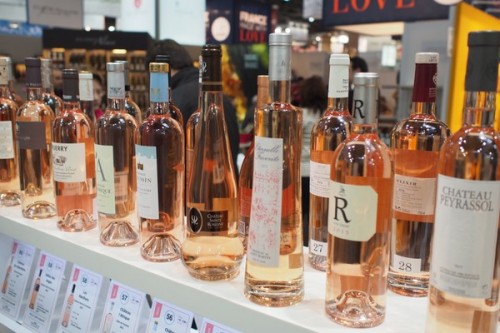
Well respected US author John Bonné has just written an article on Provence rosé for Punch. He’s a clever writer, and understands how to construct an article, but I felt on this occasion he’d just got it very wrong. So I thought I’d write a response.
According to Bonné, the success of Provence rosé is a problem. He’s struggling to find the real heart of Provence, as expressed in its wines, and feels that the huge momentum behind rosé is leading to a standard product winning out over more authentic wines that have a better connection to the soul of the place.
It’s a familiar narrative to any American wine lover who has grown up with Kermit Lynch, whose excellent book Adventures on the Wine Route has been hugely influential for a generation of US wine people (indeed, Bonné quotes Lynch in his piece). The narrative? Idealistic American (Lynch, in this case) travels to France looking to source wines. ‘Discovers’ (of course, they didn’t exist before they were discovered by said earnest American) amazing producers making wines traditionally. But they are in grave peril! Modernity is on the march! Stainless steel, cultured yeasts, filtration: all these things are looking to destroy the amazing wines that the American has discovered. But relax: the American will save the French from themselves.
Early in his piece, Bonné acknowledges the way that rosé seems to capture the essence of Provence quite well:
Its pink wines are an easily accessible totem of the Provençal good life—pure Mediterranean idyll in a bottle.
But, to him, this is a problem.
The net effect of the surging popularity is that Provence now represents little more than a lifestyle (or a simplified interpretation of a lifestyle). It’s not just that the wines have become boring; it’s that rosé’s deeper cultural relevance there has been whittled down to a vague fashionability.
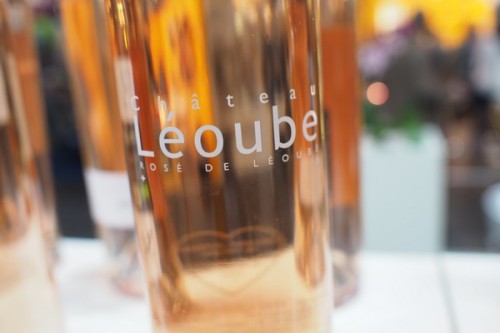
This is surprising, because when I visit Provence, I see one of the wine world’s few success stories. Provence has taken, whether deliberately or not, the wise choice to do one thing well, and to lead with this on export markets. There’s a wonderful concordance between the product – pink wine – and the ‘brand’ image of Provence, as Bonné points out above. This resonates with export markets. When we drink a bottle or Provence rosé, we are transported to this magical place of sun, sea, blue skies, large yachts, fashionable people, al fresco dining and glamour. And this is a problem?
And rosé is now much better than it used to be. Advances in pressing techniques, better vineyard work, and the fact that this is now a profitable wine so there’s a premium to be had for better quality, have resulted in much nicer wines. I’ve been visiting Provence since I was a child, and this new wave of rosé isn’t supplanting artisinally made authentic wine; it’s replacing cheap plonk.
Bonné complains:
A bowl of saffroned, garlicky fish stew or a tranche of the onion tart known as pissaladière, plus a glass of salmon-hued wine, used to be the sort of simple pleasure that transported foreigners. But 40 years of fetishization, then a final shove from the rosé craze, have pushed Provence into cliché territory.
But surely Bonné is fetishizing himself, trying to fit each wine region into his Lynchian narrative? Provence just won’t fit, so there must be something wrong here, right?
Americans like Bonné travel to France looking for a great, authentic cultural experience. They are looking to validate their aesthetic sensibilities by experiencing this connection between gastronomy and culture. They want to participate in the good life of the modestly poor people of southern Europe; eat where they eat, avoid fellow tourists, and immerse themselves in a rich culture of food and wine. They arrive, and are affronted when they find that things have changed. They are somewhat distressed when they find winegrowers driving expensive German cars rather than a beaten up 2CV.
Of course, this isn’t so much a piece about Provence wine, as it is about Bonné and his expectations. It is a lament that he can’t indulge his fantasy. He is at the center of this piece as much as he is in some of his other work, and I think this is a weakness. He’s clearly a very talented writer. He would be stronger if he could remove himself a little. The New California was a brave and important book, but he can give the impression that he thinks he was instrumental in bringing about a shift (in some small pockets of Californian wine) to more balanced styles, rather than chronicling this shift. In this sense, he seems like a surfer trying to take credit for a remarkable wave.
I’ve written this response, because I think that those of us in the wine world should be celebrating (and learning from) the great success of Provence rosé, instead of lamenting it. This is a region where innovation is welcomed. Rather than knock the producers who toy with unusual bottle shapes, we should be applauding them. Normal people are responding to these wines, and are prepared to pay good money for them. In a context where large swathes of the wine industry struggle to be profitable, this is something that needs to be welcomed.
from jamie goode’s wine blog http://www.wineanorak.com:/wineblog/provence/a-response-to-jon-bonnes-article-on-provence-rose
For Fine Wine Investment opportunities check out Twelve by Seventy Five: http://www.twelve-by-seventy-five.com/
from
http://twelvebyseventyfive.tumblr.com/post/143986624107

No comments:
Post a Comment