Wednesday, August 30, 2017

Pet Nat focus (1) Kindeli La Lechuza

kindeli la lechuza

I’m beginning a series on Pet Nats! This is an interesting style of wine that’s becoming more popular. Also known as Methode Ancestrale, Pet Nat stands for Pétillant Naturel, and refers to sparkling wines that are bottled while there is still some sugar, and they complete fermentation in the bottle, making them naturally sparkling. This is a good place to start: it’s from New Zealand producer Kindeli, which is the name of Alex Craighead’s project (he also has a label called Don). I found it on the list at the excellent Neo Bistro, near Bond Street station in London

Alex tells me that this is 100% Riesling from gravel soils on the flats in Hope, Nelson. There’s an overnight soak, the grapes are pressed, the must settles and then ferment begins. Then as ferment is near the finish, the wine is bottled with 10 g/l residual sugar and it is bottled the same day. The wine isn’t disgorged, so it’s naturally cloudy. No sulfur dioxide is added, so this is fully natural.

Kindeli La Lecheuza Pet-Nat 2016 Nelson, New Zealand
11% alcohol. Lively and fresh, this cloudy Pet Nat has lovely flavours of tangy citrus and pear fruit, with some fresh green apple character. It’s juicy, crisp, crunchy and detailed with a bit of spicy grip under the fruit. It didn’t take long to finish this one. 90/100

Find this wine with wine-searcher.com


from jamie goode’s wine blog http://www.wineanorak.com:/wineblog/new-zealand/pet-nat-focus-1-kindeli-la-lechuza

For Fine Wine Investment opportunities check out Twelve by Seventy Five: http://www.twelve-by-seventy-five.com/

from
https://twelvebyseventyfive.tumblr.com/post/164783371862

Tuesday, August 29, 2017

Let’s stop hiding behind subjectivity

In the Woody Allen film Midnight in Paris, there’s a wonderful interchange between the hero from the 21st Century, Gil Pender, and Ernest Hemingway, in 1920s Paris. Pender has written a novel and he asks Hemingway if he might read it for him and give his opinion. He’s told Hemingway the subject, a curiosity shop, and this follows:

HEMINGWAY
No subject is terrible if the story is true. If the prose is clean and honest and if it affirms courage and grace under pressure.

GIL
Would you do me the biggest favour in the world – I can’t even ask ···

HEMINGWAY
What?

GIL
Would you read it?

HEMINGWAY
Your novel?

GIL
It’s only about four hundred pages – if you could just give me your opinion.

HEMINGWAY
My opinion is I hate it.

GIL
You do? You haven’t even read it yet…

HEMINGWAY
If it’s bad I’ll hate it because I hate bad writing and if it’s good I’ll be envious and hate it all the more. You don’t want the opinion of another writer.

GIL
But there’s no one I really trust to evaluate it –

HEMINGWAY
Writers are competitive.

GIL
I could never compete with you –

HEMINGWAY
You’re too self-effacing – it’s not manly. If you’re a writer, declare yourself the best writer – but you’re not the best as long as I’m around. Unless you want to put the gloves on and settle it.

In the wine business, we hide too often behind subjectivity. We tell people to like what they like. We say that taste is personal, and everyone has to decide for themselves what they like.

Who am I to say that one wine is better than another? Who am I to confer greatness to some wines and not to others?

But if we wallow and hide in all this subjectivity, then all our opinions represent is autobiography. It’s of no real interest to others, and our judgements are in no way normative. We can’t expect them to be relevant to others.

But we are too self effacing, just as Hemingway observed of Pender. Also, that’s not how wine writers behave. Critics sell subscriptions to their websites which are packed with tasting notes and scores. If it were all so personal, then why would they expect others to be interested? They say one thing then do another.

The truth is, we expect that others will be experiencing something similar to us when we taste wine. And we each think that we have decent palates. Our experience as tasters (remember, tasters are made not born) and our exquisite ‘taste’ means that we think our opinions are worth something, and to some degree are normative.

So I have a particular taste in wine that I think is refined and relevant to others. I don’t expect everyone to share it. But I think my taste sensibilities are good, and that I can spot a good wine, and that if I think a wine is great then, if you have a normal-isa palate and good sensibilities, then I might expect you to agree. Not all the time, of course, but a good amount of the time.

There are some wines that are good, and some that are bad. Good writers pick out the good wines. There is good taste in wine, and bad taste. It’s not all subjective. So, if you write about wine, declare yourself the best taster, but…..


from jamie goode’s wine blog http://www.wineanorak.com:/wineblog/uncategorized/lets-stop-hiding-behind-subjectivity

For Fine Wine Investment opportunities check out Twelve by Seventy Five: http://www.twelve-by-seventy-five.com/

from
https://twelvebyseventyfive.tumblr.com/post/164744592947

Monday, August 28, 2017

Hambledon Classic Cuvée Rosé, one of England’s finest

hambledon rose

This is really good. It’s 90% Chardonnay, 10% Pinot Noir, with 95% of 2014 and 5% reserve wines, and retails at £35 in the UK. Dosage is 10 g/litre.

Hambledon Classic Cuvée Rosé NV England
12% alcohol. This is quite special. An attractive salmon pink with orange hues, it has aromas of lemons, sour cherries and cranberries, with just a hint of leafy sappiness. The palate is driven by high acidity, but it’s a well integrated acidity that works really well supporting the refined citrus and cherry fruit. There’s a tiny hint of creaminess, too, and excellent concentration of flavour. It’s dry and the acidity is pronounced, but the balance is really good. I think it’s right up there with the best from the UK. 93/100

Here’s a short selfie tasting video:


from jamie goode’s wine blog http://www.wineanorak.com:/wineblog/england/hambledon-classic-cuvee-rose-one-of-englands-finest

For Fine Wine Investment opportunities check out Twelve by Seventy Five: http://www.twelve-by-seventy-five.com/

from
https://twelvebyseventyfive.tumblr.com/post/164707460902

Sunday, August 27, 2017

The Lidl Prosecco giveaway, and why we need Minimum Unit Pricing for booze

Screen Shot 2017-08-26 at 19.27.01

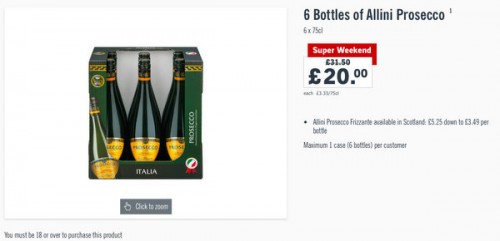
Yesterday people queued for hours outside branches of discount supermarket Lidl, all for a six-pack of cheap Prosecco.

If you were one of the lucky first 20 or so in the queue, you’d be able to get a six pack of an already cheap Prosecco for just £20. This is pretty much the cost of the duty and VAT on the wine, so Lidl were using this as a loss leader to get people into their stores.

It’s cheap advertising. If Lidl were limiting the quantities as much as reported, then taking their normal sale price of the wine (£5.79), the cost to them is going to be in the region of £150 000.

But limiting offers like this ends up upsetting customers who’d set their hearts on cheap bubbles. The newspapers were full of stories of unhappy queueing punters who went home empty handed (e.g. here and here).

What does this tell us?

First of all, people love a bargain. And they aren’t rational: once they sniff a bargain reason departs them. Getting hold of one of these six packs has saved them £14. And for that, they had to queue and lose their Saturday morning lie in.

Second, Prosecco has traction as a brand. It is seen as desirable, and clearly people feel that even cheap Prosecco delivers enough pleasure to queue outside Lidl for. It’s one of the wine world’s success stories.

Third, I think this sort of thing is both good and bad for wine. It is good that wine – even cheap Prosecco – gets mentioned and talked about in the mass media. The exposure of wine to normal people is good for wine sales. It normalizes wine drinking as something to be done that brings enjoyment. The wine trade wants people to turn to wine for their booze needs, and not spirits or beer. But it’s bad because it is part of the race to the bottom. Ever cheaper wine is bad because it means that wine producers get paid less, and then have to cut more corners in the production side. Ever cheaper wine is bad for wine quality. Supermarkets like this are the route to market for many producers, and if they are using cheap wine in a price war then eventually the margins for producers will be cut thinner and thinner.

Fourth, I think it strengthens the case for Minimum Unit Pricing (MUP). This would help take cheap booze off the shelves. There’s too much cheap alcohol out there, and I know from watching the behaviour of teenagers – many of whom have chaotic drinking patterns that is causing a lot of alarm on the part of public health officials – that there are some very cynical products that deliver a lot of alcohol for very little money, and which are sold through small convenience stores who don’t routinely age check, or who tolerate second hand buying on behalf of underage drinkers.

Decent wine would be untouched by an MUP of 50 p per unit. An average bottle of wine is 9-11.5 units (12%-14% alcohol), so would have to retail at £4.50-£5.75. This would provide extra margin for the producer/retailer for less expensive wine, and would take the pressure off in the race to the bottom of pricing. Would less wine be sold? Perhaps. But unless the wine trade supports MUP then it can have very little complaint about duty being used as a sin tax on the basis of public health concerns, which is what is happening now.

There is probably a fair bit of wine being sold below MUP pricing in the UK right now, but with the recent changes in exchange rates, and the effect of higher duty, this quantity is set to fall anyway. Aside from the addiction of selling very cheap wine, there are very few good arguments against MUP. There is just too much cheap alcohol for sale in the UK, and raising the price is just one of the few proven ways of reducing alcohol’s harm on a population level.


from jamie goode’s wine blog http://www.wineanorak.com:/wineblog/uncategorized/the-lidl-prosecco-giveaway-and-why-we-need-minimum-unit-pricing-for-booze

For Fine Wine Investment opportunities check out Twelve by Seventy Five: http://www.twelve-by-seventy-five.com/

from
https://twelvebyseventyfive.tumblr.com/post/164667384337

Saturday, August 26, 2017

From the road in Austria

Carnuntum vineyards

Carnuntum vineyards

My short but lovely trip to Austria is almost over. For the last few days I have, along with a fine group of international media and trade, been taking a deep dive into the wines of Carnuntum, and then the Danube areas (Kremstal, Kamptal, Wagram and Traisental).

Traisental

Traisental

Looking over the vineyards in Traisental

Looking over the vineyards in Traisental

This has been through focused tastings. The first day’s was a thorough look at Carnuntum, a small but emerging region to the very east, on the border with Slovakia. Then for the last two days we have had immersive tastings of the 2016 Rieslings and Grüner Veltliners from the ÖTW group of top Danube area producers.

OLYMPUS DIGITAL CAMERA

Grafenegg castle

Grafenegg castle

These were held in the lovely Grafenegg castle, which was a perfect setting for this tasting. I talked about the ÖTW and Erste Lagen concept in my last blog post, and the tasting was modelled on the VDP tastings which are held each year in Wiesbaden, Germany. They are highly organised. You sit at your table with five Zalto glasses, and request the five wines you want to taste in each flight by filling in a piece of paper. These are then brought to you. You taste. And repeat.

OLYMPUS DIGITAL CAMERA

So now I have notes on the 132 wines, but it will take a while to format them. It’s a great chance to not only get an overview of the vintage, but also the producer style and the characteristics of the vineyard (although this is a bit harder to tease out).

Grüner Veltliner, almost ready to harvest

Grüner Veltliner, almost ready to harvest

I’m a big fan of Riesling and Grüner, and I tasted lots of really good wines. I also love how they are taking soils and vineyards seriously. I’m going to get the Carnuntum notes up very soon, followed by all those from the Erste Lagen tasting. It’s geeky, I know, but that’s the joy of the internet.

The Czech Philharmonic

The Czech Philharmonic

We finished the trip with a concert at Grafenegg. It was Antonin Dvořák, played by the Czech Philharmonic orchestra. They did Concerto for Cello and Orchestra in b minor op. 104 (with cellist Truls Mørk), and then Symphony No. 8 in G major op. 88. Outdoors, in a beautiful amphitheatre, on a warm August evening, it was quite magical.


from jamie goode’s wine blog http://www.wineanorak.com:/wineblog/austria/from-the-road-in-austria

For Fine Wine Investment opportunities check out Twelve by Seventy Five: http://www.twelve-by-seventy-five.com/

from
https://twelvebyseventyfive.tumblr.com/post/164630838032

Thursday, August 24, 2017

In Austria: tasting exciting older 1er cru wines from the Österreichischer Traditionsweingüter members

Michi Moosbrugger, chair of the OTW

Michi Moosbrugger, chair of the OTW

Austria is making some wonderful wines at the moment, and this tasting was a chance to look back at some of the Rieslings from ‘Erste Lagens’ (which translates as ‘Premier Crus’) in the winegrowing area unofficially known as the Danube area, from the regions that are taking part in this exercise of delineating the top vineyards. It was presented by Michi Moosbrugger of Schloss Gobelsburg, who gave a very clear introduction to the project.

Winemaking in Austria is concentrated in the east of the country, with 18 specific regions. However, the vineyards can be divided into three broad growing areas: Steiermark in the south, then everything south of the Danube (including Burgenland, concentrating on red wine and some sweet wines), and then everything that is north of the Danube (focusing mainly on Riesling and Gruner Veltliner, the subject of this tasting). This Danube area is the most westerly, and it split into Kremstal, Kamptal, Wachau, Wagram and Traisental.

The main valley of the Danube is the Wachau, and then there are the side valleys: Traisen, Krems and Kam. The differences within the appellations are probably more significant than the differences between them. There are important differences between the lower ends of the valleys and the top, where winegrowing stops. It’s around 1-1.2 C, which is quite a lot.

Altogether the Danube area covers around 10 000 hectares of vineyards. (Austria in total is c 50 000 hectares, same as Burgundy.). In terms of planting, there is 55% Grüner Veltliner, 10% Riesling and 15% Zwiegelt (from the 2000s boom in red wine production).

Until World War II, most wines were field blends. The overall structure of Austrian vineyards was based on field blends, with many varieties mixed together. Everything was sold by village appellations, and very few single vineyards were mentioned on labels. After the war there was a dramatic change in Austrian vineyards, with a transition from field blends to varietal plantings, and wines were sold by grape variety. As people didn’t know what the future would bring, they decided to plant everything that they had in the field blends as single varietal wines. This began to be refined in the 1970s, and by the end of the 1980s only Grüner Veltliner and Riesling were left as significant plantings in the Danube area.

The current appellation system that is still under development began in the 2000s. It is a process that takes time, and all involved are showing the requisite patience. In 2002 Austria began with the first DAC appellation, and now there are some 10 of them, with more in the pipeline. In the Danube area a three-tier system has emerged: regional, village (Orstwein) and single vineyard (known as Ried), and within this single vineyard segment, the concepts of premier and grand cru vineyards are now being teased out. So far, Kamptal, Traisental and Kremstal are on board; Wagram is still developing the system for themselves; and Wachau is not yet involved.

In 1992 the Österreichischer Traditionsweingüter (OTW) was founded to help begin the classification of vineyard sites. There was a lot of tasting of wines, and consultation with geologists and scientists. In all, the process took 17 years to come up with the classification of the Erste Lagen (the premier crus). Now they are in a process of delineating grand crus (Grosses Lagen). This will take perhaps another decade, and then they will translate it into the legislation. The winegrowers are leading the process. ‘If we let politics into this game, a lot of shit will happen,’ says Michi. ‘We are taking a lot of time in order to do it properly. It’s a generational process.’

So the current structure is that there is an appellation system of region, village and single vineyards. Then, of these single vineyards, be Erste and Grosse lagen (the top 3-5%).

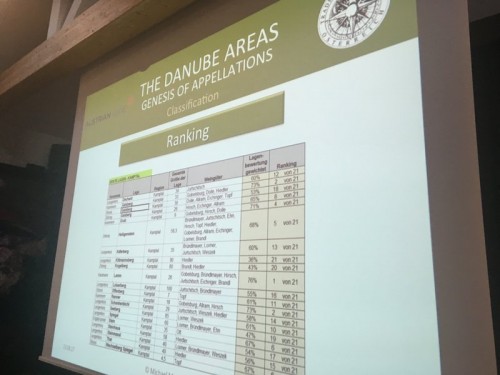
It is a thorough process. They have defined relevant factors for the classification, which they break down as content factors, economic factors and quality factors. Content includes historical records, subjective relevance (the individual grower’s assessment), intersubjective relevance (the collective assessment of the growers), varying relevance (the variance among the wines from the vineyard) and quantitative relevance (the number of producers making a separate wine from the vineyard). Economics include the price fetched for wines from each site. Quality factors include media and expert ratings for all wines out of the vineyard. The variation of these ratings and continuity are important, too. The producers also taste all these wines and this is considered.
IMG_9473

All these factors go into an evaluation sheet, and a system has been built up to process the data. There’s an average score for each vineyard, plus the variances and the sorting. This helps produce the classification strength.

In all, there are 5400 vineyards in Austria, with 2500 single vineyards in the Danube area. So this is a lot of work, potentially.

In 2009 they started with 53 vineyards as the base. In 2011 they began a collaboration with the VDP (in Germany) and the STK Steiermark to try to harmonise the process. Now we are looking at 61 single vineyards (Rieden) which is 16% of the production area. In order to use the Erste Lagen classification you need to be a member or an associate  of the TGW.

Wachau roducers have their own classification that’s not based on vineyards, but instead on must weights after pressing. For the moment they aren’t joining. ‘I am on good terms with most of the Wachau producers,’ says Michi. ‘We are doing our thing and they are doing their thing. They are not doing a vineyard classification at the moment.’ This is a bit of a shame, because the patient way that this vineyard classification is being developed is a model for emerging appellation systems worldwide.

THE WINES

Malat Ried Further Gottschelle Grüner Veltliner 2012 Kremstal, Austria
Nice density here with fresh citrus and pear fruit, with hints of pepper and a lovely mid-palate fruit sweetness. Has good concentration of flavour and fresh, mineral, citrus fruit on the finish. Lovely focus. 91/100

OLYMPUS DIGITAL CAMERA

Birgit Eichinger Ried Kammerner Lamm Grüner Veltliner 2012 Kamptal, Austria
Subtly waxy with a dense, mineral citrus core. White pepper and juicy acidity provide a supporting role with brightness, purity and focus. There’s a lovely sweet crystalline fruit core here. Very refined and nuanced. 93/100

Ehn Ried Langenloiser Spiegel Grüner Veltiner 2012 Kamptal, Austria
Aromatic with a slight creaminess, as well as detailed tangerine and pear fruit. Crisp and complex with finesse and delicate, refined citrus fruit. This is pretty harmonious and really pretty. 93/100

Johann Topf Ried Strasser Offenberg Grüner Veltiliner 2012 Kamptal, Austria
Fine and harmonious with a sweet pear and white peach core to the ripe fruit on the palate. Quite generous but not at all flabby with good acidity and a fresh, slightly citrus pithy finish. 91/100

Nigl Ried Senftenberger Pellingen Grüner Veltliner 2012 Kremstal, Austria
This is lovely: there’s some tangerine and canteloup melon richness, backed up by crystalline citrus fruit, a hint of pepper and good acidity. There’s a lovely depth to the palate with nice precision and brightness. Attractive stuff. 92/100

OLYMPUS DIGITAL CAMERA

Petra Unger Ried Further Oberfeld Grüner Veltliner 2012 Kremstal, Austria
This has a lovely white pepper edge to the pear and melon fruit, with some citrus brightness. There’s a good concentration of fruit here, and a sense of harmony. Developing beautifully with some subtle toasty richness. 93/100

Ott Ried Feuersbrunner Spiegel Grüner Veltliner 2012 Wagram, Austria
Harmonious with a mellow richness and concentration, showing pear and peach fruit overlaid on a citrus background. It’s dry, but there’s a sucrosity and generosity here that’s really appealing. 92/100

OLYMPUS DIGITAL CAMERA

Bründlmayer Ried Langenloiser Käferberg Grüner Veltliner 2012 Kamptal, Austria
Finely aromatic with some spicy pear and citrus fruit, as well as some peppery structure on the palate, under the fresh, slightly grippy fruit. This is serious and complex, with some fine toasty richness and a grainy, peppery finish. 93/100

OLYMPUS DIGITAL CAMERA

Türk Ried Kremser Frechau Grüner Veltliner 2012 Kremstal, Austria
Concentrated, fresh, vivid and very peppery, with lovely complexity and harmony. Tangerine, herbs and bright white pepper detail add interest to the palate. Finishes very lively and expressive. Lovely wine. 94/100

Karl Fritsch Ried Kirchberger Schlossberg Grüner Veltliner 2012 Austria
There’s some toasty, nutty richness here, with a sweet fruit core and some nice development. Has warmth on the mid-palate and generous pear and melon fruit. Seems a touch sweet. 91/100

OLYMPUS DIGITAL CAMERA

Jurtschitsch Ried Kammerer Lamm Grüner Veltliner 2007 Kamptal, Austria
Lovely development here with toast and pepper detail as well as crystalline citrus fruits and a hint of herbiness. Harmonious and broad with a hint of pith on the sweet, long finish. Mature and very attractive. 92/100

Buchegger Ried Gedersdorfer Vordenberg Grüner Veltliner 2007 Kremstal, Austria
Refined and peppery on the nose, with some lovely sweet citrus and pear notes. The palate is fresh and beautifully expressive with nice weight to the fruit. Showing some attractive sweet pear and melon fruit richness, but still very focused and fresh. 94/100

Leth Ried Felser Scheiben Grüner Veltliner 2007 Wagram, Austria
Very fresh with youthful citrus and pear fruit, as well as some peppery detail. Bright and juicy with good acidity. So primary for a 10 year old wine, and really delicious. 93/100

Neumayer Ried Inzersdorfer Zwirch Grüner Veltliner 2007 Traisental, Austria
From a screwcapped magnum. There’s a slightly plasticky, herby edge to the nose, and the palate is tight, pithy and primary. Lots of citrus pith here. Not very harmonious, but still youthful. 89/100

OLYMPUS DIGITAL CAMERA

Sepp Moser Ried Rohrendorfer Gebling Grüner Veltliner 2007 Kremstal, Austria
Complex, slightly smoky, and surprisingly youthful, with a fresh, juicy, herb and pepper-tinged citrus fruit core. Complex and bright with nice precision. Developing very nicely with a good future ahead of it. 93/100

OLYMPUS DIGITAL CAMERA

Hirsch Ried Zobinger Heiligenstein Riesling 2012 Kamptal, Austria
Beautifully focused with concentration and richness. Has lovely, concentrated sweet citrus fruit with hints of melon and honey, some spice, and crisp acidity. Really lovely wine, drinking beautifully. 94/100

Stadt Krems Ried Steiner Grillenparz Riesling 2012 Kremstal, Austria
Fresh and intense with lovely citrus fruits. There’s some grapefruit pith adding a savoury detail, but the core is generous citrus tightly framed by keen acidity. There’s finesse to this wine. Harmonious. 93/100

Brandl Ried Zobinger Kobelberg Riesling 2012 Kamptal, Austria
Taut, primary and fresh with a hint of pithiness and keen, dry citrus fruits. Has some herbal characters on the finish. Bright, linear, lemony and primary. 92/100

Stift Göttweig Ried Further Silberbichl Riesling 2012 Kremstal, Austria
Pronounced tangerine, lemon and grapefruit pith here. Youthful and still compact and bright, with the fruit tightly furled and waiting to come out. Lovely purity. 92/100

Hermann Moser Ried Rohrendorfer Gebling Riesling 2012 Kremstal, Austria
Lively and a bit spicy with crisp, focused citrus fruits. Linear but with a bit of crystalline fruit richness. Still compact and a bit backward, with keen acidity. A precise style with potential for development. 93/100

Weszeli Ried Langenloiser Seeberg Riesling 2012 Kamptal, Austria
Fresh, bright, pure, vivid and lemony with keen acidity. Still primary and youthful, with lovely dense fruit, and yet a sense of lightness. Very acidic. 91/100

OLYMPUS DIGITAL CAMERA

Fred Loimer Ried Langenloiser Steinmassl Riesling 2012 Kamptal, Austria
Linear, pure and focused with taut, compact citrus fruit and hints of wax and herbs. There’s a lovely complexity to this wine, with some pithy bitterness on the finish. Give it time to open out and show its best. 93/100

OLYMPUS DIGITAL CAMERA

Allram Ried Zobinger Heiligenstein Riesling 2012 Kamptal, Austria
Delicate tangerines and lemons on the nose. Very harmonious and elegant on the palate with nice acidity supporting pretty fruit. There’s a precision and purity to this wine: it’s generous, but still tightly focused. Juicy, fine finish. Quite lovely. 94/100

OLYMPUS DIGITAL CAMERA

Markus Huber Ried Reichersdorfer Berg Riesling 2007 Traisental, Austria
Complex, spicy, lively and intense with hints of pepper and citrus zest, as well as a core of pure citrus fruits. Lovely purity and precision here with amazing focus. Still quite youthful with a bit of a sweetness to the fruit with a touch of development. Lovely wine. 95/100

Dolle Ried Strasser Gaisberg Riesling 2007 Kamptal, Austria
Compact with nice dense citrus fruit, with a hint of honey and toast. Nice weight and balance here. Not as evolved as you might expect with a delicious weight to it. 92/100

Schmid Stratzinger Sunogeln Riesling 2007 Kremstal, Austria
Fresh and bright with a good concentration of citrus and pear fruit. Pure and bright with some spicy complexity. The acidity is beautifully integrated into the wine. Very impressive stuff, with a fresh, linear citrussy finish. 94/100

Proidl Ried Senftenberger Ehrenfells Riesling 2007 Kremstal, Austria
This is really fresh, with deliciously focused, pure citrus fruit. Some crystalline fruit complexity and richness. Delivers a pure, long stream of lemon and mandarin fruit that just keeps on going. Ageing beautifully. 94/100 

Wess Ried Steiner Pfaffenberg Riesling 2007 Kremstal, Austria
Nut, spice, wax and pepper complexity here complementing the green apple and citrus fruit. Linear and delicious, and showing the first stages of complexity from the ageing process. Very appealing with a pithy, slightly bitter finish. 92/100 

Mantlerhof Ried Gedersdorfer Wieland Riesling 2007 Kremstal, Austria
Generous with honey, nuts, spice and lemon curd flavours. Showing a bit of development here. Rounded but with good acidity and some spiciness. Very interesting. 92/100

OLYMPUS DIGITAL CAMERA

Schloss Gobelsburg Ried Kammerner Gaisberg Riesling 2007 Kamptal, Austria
Crisp, tight and expressive with lovely intensity to the bright citrus fruit. Intense, fresh and really complex with lovely acidity and a fresh, long lemony finish. This has a long way to go but is already showing some real complexity. 95/100 

Salomon Ried Steiner Kögl Riesling 2007 Kremstal, Austria
Concentrated and with some density to the pithy, crystalline, lemony fruit. Has a brightness under the sweet fruit. Real finesse with a bit of development. 93/100 

Hiedler Ried Zöbinger Heiligenstein Riesling 2007 Kamptal, Austria
Some nutty, waxy, slightly toasty development here along with some generous honeyed citrus fruit. It’s quite delicious in a broader style with a fresh lemony, spicy finish. Lovely. 93/100

Geyerhof Ried Oberfucha Goldberg Riesling 2007 Kremstal, Austria
Marmalade and toast on the nose with a bit of apple and pear richness, alongside some spicy citrus fruit. Showing a little development, and drinking very well now. 92/100

Find these wines with wine-searcher.com


from jamie goode’s wine blog http://www.wineanorak.com:/wineblog/austria/in-austria-tasting-exciting-older-1er-cru-wines-from-the-osterreichischer-traditionsweinguter-members

For Fine Wine Investment opportunities check out Twelve by Seventy Five: http://www.twelve-by-seventy-five.com/

from
https://twelvebyseventyfive.tumblr.com/post/164553907757

Tuesday, August 22, 2017

72 hours in Kuala Lumpur, Malaysia

kuala lumpur petronas

I’ve just spent a lovely long weekend in Kuala Lumpur with my Kiwi winemaker friend Natalie Christensen. We’d been looking for a half-way point to meet up, and for both of us this was around 12 hours flying. It’s a great city for short break, and without trying too hard to fill all our time, we ended up doing a lot of fun things. Hopefully our adventures will provide some useful tips for anyone thinking of spending a short break in Kuala Lumpur.

Some general information

  • Currency: the Ringit, MYR (5.5 MYR = 1 GBP; 4.3 MYR = 1 USD). With current exchange rates, everything seems pretty cheap. Kuala Lumpur is home to some of the world’s cheapest 5 star hotels, so it’s a great opportunity to splurge on a swanky city centre hotel. We stayed at the 5* G Tower Hotel, right in the centre, and it cost GBP£63 per night.
  • Plug sockets: A bonus! No adaptors needed for me: they are English-style with three large rectangular pins.
  • Weather: it’s hot and humid all the year round, just like neighbouring Singapore. It can rain heavily with little notice, so pack an umbrella. Be prepared to get sweaty as you wander round – it takes a few days to get used to the humidity. Because it’s on the equator, it gets dark every evening around 6.30 pm.
  • Getting around: we used mostly ubers, with some taxis. Uber is pretty good here, but not quite as polished as in some countries. Select the pay by cash option on the app to get a wider take-up from the drivers (this is an option here, and the drivers seem to prefer it). Taxis are a bit more expensive than uber, but metered rates are fine. Before you get in, do check that the driver is using the meter, or you could get stung. There are good public transport options, but cabs and ubers are so cheap it’s not worth the hassle, especially if there is more than one of you. The Uber fare from the airport to Kuala Lumpur centre (c 50 km) is about 80 Ringit, which is very reasonable.

Day 1

Petaling Street, Chinatown

Petaling Street, Chinatown

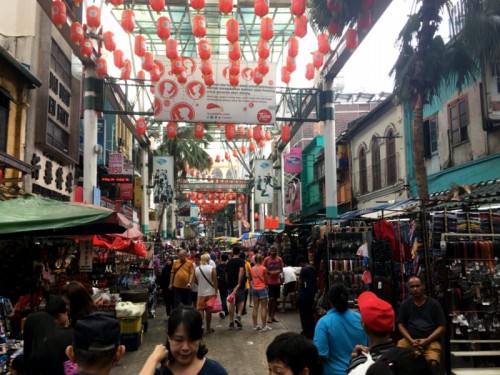
We began in Chinatown, and walked down the bustling Petaling Street, which is a large market area. Nearby, there’s a hawker food area, which is completely local dominated (we stuck out as tourists), where we lunched. Food is delicious and cheap.

IMG_9335

IMG_9319

Then we wandered over to the central market, which is housed in a building dating to 1880. This is a place to buy handcrafts, if that’s your thing, and it’s quite fun to browse around. Next to it is the Katsuri Walk, a covered market area.

Merdeka Square

Merdeka Square

A short walk from Chinatown is one of the famous areas of the city, Merdeka Square. On our visit, this was being prepared for the national day parade: this month, Malaysia is 60 years old. There are lots of interesting, historic buildings around the square, such as the dramatic neo-Moorish Sultan Abdul Samad Building, and the quaint Anglican cathedral.

Merdeka Square

Merdeka Square

Then we headed over to the Lake Gardens. This is where the botanic gardens are located, and also the Bird Park. At 50 RMB per head this is expensive by local standards, but it’s quite an experience. It’s the world’s largest enclosed aviary, and there are all sorts of exotic birds here. It was lots of fun. We didn’t explore the botanic gardens or the orchid park, but this is something for next time.

OLYMPUS DIGITAL CAMERA

OLYMPUS DIGITAL CAMERA

OLYMPUS DIGITAL CAMERA

OLYMPUS DIGITAL CAMERA

OLYMPUS DIGITAL CAMERA

For dinner, we took an Uber over to Jalan Alor. This is quite an experience: it’s a long, wide street with a large concentration of restaurants, and it has plenty of energy. Wander up and down and choose a restaurant that appeals, and sit outside and people watch. You can get beer here, too. Food is tasty and very cheap. Highly recommended.

OLYMPUS DIGITAL CAMERA

OLYMPUS DIGITAL CAMERA

OLYMPUS DIGITAL CAMERA

IMG_9338

Day 2

We left quite early and took an Uber out to the famous limestone Batu Caves (it’s around 20 RMB from the city centre). This is a must visit, as long as you can handle the 272 stairs you need to climb to get to the top. When you do, the huge interior cavern is quite something. There are two main areas of this cave system, one with a roof and the other open to the sky, and it’s a Hindu holy place. Currently there’s quite a bit of construction going on inside the main cave, so it looks a bit messy. But it’s hard to describe the impact of this natural wonder. Free entry, but if you are female and you have uncovered legs, you have to rent a drape to cover them! Men are allowed to show their legs… Prepare to get very sweaty climbing those steps. And there’s an added bonus here: lots of monkeys, who are keen to take your food if you have any.

batu caves

IMG_9376

IMG_9377

IMG_9366

OLYMPUS DIGITAL CAMERA

OLYMPUS DIGITAL CAMERA

OLYMPUS DIGITAL CAMERA

OLYMPUS DIGITAL CAMERA

OLYMPUS DIGITAL CAMERA

Afterwards we headed back for lunch in Little India at Chat Masala. Little India, also known as Brickfields, is a characterful area that’s worth exploring. Chat Masala was busy and a bit rough round the edges, but the vegetarian food here is delicious, and cheap. It’s dry, like most of the restaurants round here, so alas no beer to wash it down.

IMG_9369

Little India (Brickfields)

Little India (Brickfields)

After a break we headed out for dinner at Fuego, part of Troika Sky Dining. Troika is a set of three restaurants and a cocktail bar on floor 23 of a skyscraper, and all have stunning views. Mind you, they would have had even more stunning views a year ago before a new skyscraper popped up rather inconventiently blocking what would have been a stunning view of the Petronas towers. From Fuego you still get to see one of the beautifully lit towers, together with the rest of the KL skyline.

kuala lumpur night

Fuego was a lovely surprise. The outdoor dining area is informal, but the food, with a South American theme, is beautifully presented and really imaginative. There’s a whole page of Guacamole dishes, and likewise for ceviche. Soft shell crab was delicious. There’s also some lovely meat here. The wine list is pretty good considering the challenge of getting wine here, but it’s expensive even by London standards. We drank cocktails, and the cocktails here are just brilliant. We started with a beautifully textural Pisco Sour, followed it up with a Margarita that was really incredible, with a smoked lemon and some intense, edgy flavours. Then we finished with a refreshing Mojito. Thoroughly recommended, but booking is essential and a strict two sittings policy is in operation.

IMG_9430

IMG_9435

Fuego: ceviche

Fuego: the margarita!

Fuego: the margarita!

Day 3

KLCC mall 

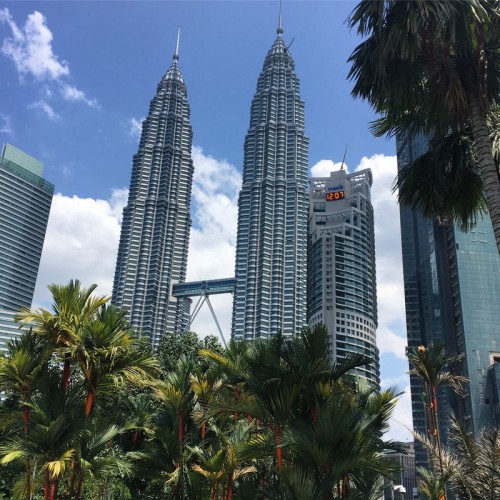
We began by heading over to the KLCC shopping mall, which sits under the Petronas Twin Towers. The towers are Kuala Lumpur’s iconic feature, and for a while after their construction were the tallest buildings in the world. They are still the tallest twin towers. The mall is a huge multi-storey affair, and if you like malls, then this is a good one. We wandered back through the KLCC park, which gives great views of the towers.

KLCC park

KLCC park

Sharif, Pie, Natalie and me

Sharif, Pie, Natalie and me

Then we lunched with our new friends Pie and Shairf. They own a winery in Chile, and we were put in touch with them by Matt Wilson, a photographer who lives in Chile and whose wife, Andrea Leon, makes wine at Casa Lapostolle. And Pie is a princess! Her grandfather was the first King of Malaysia and his face appears on all the bank notes. We had lunch at Cantaloupe, which is part of Troika Sky Dining, where we’d been the night before. The lunch, a multicourse tasting menu, was superbly executed and a steal at RMB 140 a head. The wine list is excellent here: we had a bottle of Agrapart’s Mineral 2009, a stunning grower Champagne, and then BK Wines rather funky but delicious red blend from McLaren Vale. This was followed with a beautifully done Whisky Sour, a Negroni and an Espresso Martini, all of which were perfect. Then we headed across to Fuego to have a spot of early dinner, revisiting the brilliant Margaritas that we’d been introduced to the night before.

Cantaloupe

Cantaloupe

Fuego: the bar

Fuego: the bar

Whisky sour, Canteloupe

Whisky sour, Cantaloupe

It was a lovely end to a memorable long weekend. I’m really glad we chose Kuala Lumpur over the other options, and I’d be happy to go back any time.


from jamie goode’s wine blog http://www.wineanorak.com:/wineblog/travel/72-hours-in-kuala-lumpur-malaysia

For Fine Wine Investment opportunities check out Twelve by Seventy Five: http://www.twelve-by-seventy-five.com/

from
https://twelvebyseventyfive.tumblr.com/post/164510288277