Monday, July 30, 2018

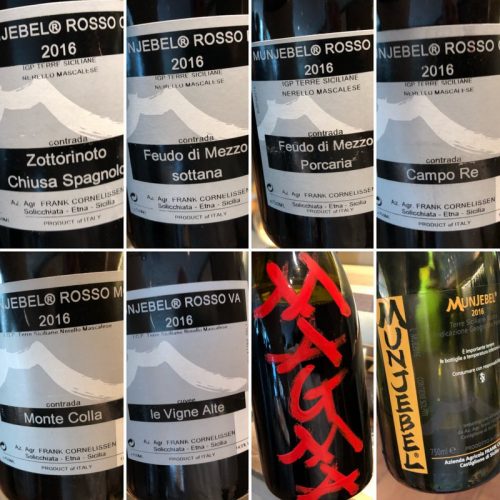
New releases from Frank Cornelissen: single-vineyard Etna wines

Frank Cornelissen

Frank Cornelissen was in town showing off his new wines. It’s a series of single-vineyard wines from his 25 hectares and 19 plots on Mount Etna. ‘It’s the focus of my work,’ he says, ‘but less than 10% of my production.’ He’s held off making these wines before, because his winemaking wasn’t good enough to show all the nuances. ‘It took me 10 years to vinify in a better way to make this quality,’ says Frank. ‘I still have some fine tuning to do, but this will take time and money. The last 5-10% of quality costs as much as the previous 90%.’

Frank uses epoxy-lined amphorae to make these wines, and his goal is to produce wines that allow us to taste the vineyard. He’s convinced that the future of Etna is parcellation. ‘It is a booming area to the professionals,’ he says, ‘but for the consumer it is not yet known. This will come.’

He points out that very few wine regions have the potential to show the single vineyard diversity that he’s hoping to show, and he’s thinking in terms of Barolo, Barbaresco and Burgundy, where the single vineyard approach makes sense. ‘Etna still isn’t known for this, but the potential is there.’

Above all, Frank is a wine geek. ‘I started making wine because of a passion for wine. I like drinking wine and it is fascinating making these single vineyard wines, even though commercially it is a headache.’

In terms of winemaking, he rarely uses stems. ‘I’m not a fan of stems: the tannins of the stems and the skins rarely fuse.’ He’s been doing some experiments with carbonic maceration. But most of the wines are made in the normal red wine way. ‘I like ripe fruit and I take a classical approach,’ he explains. ‘I destem and do long extractions, protecting the wine from oxygen.’

All of the wines are made without any sulphite additions, but over time he has softened his approach. ‘I drink wine with sulfites,’ says Frank. ‘I’m not religious about it. This year, if I’d faced the same difficulties as 2003, 2010 or 2015, I’d use sulfites.’ He says he is looking for wines that are microbiologically stable, so he will filter with wines he thinks might give him problems later.

‘When I started I made wine in an unorthodox way, but if the wild side of the wine overwhelms the territory, it’s sad,’ he explains.

In an interesting twist, Frank has taken on a sparring partner: an enologist who is now working with him. ‘After 17 years I have come to 90% of my vision and capacity as a winemaker. I need a technical sparring partner.’ So decided to seek help ‘where the serious stuff is done: Bordeaux.’ He’s now working with Guillaume Thienpoint, son of Alexandre of Vieux Châteaux Certan in Pomerol. ‘He’s an incredibly good taster, and he’s good at microbiology.’ To take on a Bordeaux consultant at this stage shows the humility of Frank, and how open he is to learn, improve and change. ‘If you want to improve you have to question what you are doing.’

It’s interesting, because Cornelissen has always been considered to be a natural winemaker, yet he doesn’t like the term. ‘I love the idea and the concept, but if you analyse it there is no natural wine,’ he says. ‘It is entirely related to culture. You won’t find enough grapes in a forest even to fill a demijohn!’

He thinks that to make wine, you need an aesthetic model. ‘What does my wine mean?’ he asks. ‘I like wines that are full bodied, rich and profound, not just a fragrant wine. I also like single vineyard wines.’ In warm vintages, he can struggle with high level of ripeness, whereas those known for their earlier picking can do better in those years.

It’s always enlightening talking with Frank, and it was lovely to taste through these wines, each with their individual personalities. Nerello Mascalese on volcanic grit, with no chemicals, additives of flavour-active vessels. An expression of place, but a personal interpretation of place, too.
Frank Cornelissen Munjebel Blanco 2016 Etna, Sicily, Italy
Very detailed. Has a complex mineral streak with lemons, lemon peel and some canteloup melon. Rich but tangy with lovely acid structure. Harmonious and pretty with edges. Lovely. 94/100

Frank Cornelissen Munjebel CS Chiusa Spagnolo 2016 Etna, Sicily, Italy
1.1 hectares planted ungrafted in 1925 at 620m. Supple and sweetly fruited, this is warm and ripe, with fine herbs and some spicy warmth. Lovely sweet spiciness here with some volume in the mouth. Grainy structure, with herbs, cherries and a bit of lift. 93/100

Frank Cornelissen Munjebel FM Feudo di Mezzo Sottana 2016 Etna, Sicily, Italy
0.6hectares planted in 1965 on large terraces at 610 m. This is a pure, intense with with lots of tannin. Vivid, bold and sweetly fruited with lovely raspberry and cherry fruit, with a hint of blackcurrant. Very lively, and tannic and crunchy, too, showing herbs, spices, tea and drying, grippy tannin. 93/100

Frank Cornelissen Munjebel PA Pocaria 2016 Etna, Sicily, Italy
2.1 hectares planted in 1952 at 680 m. Grainy and textured with lovely sweet, pure cherry and raspberry fruit. Very pretty, but has good structure with an expressive, elegant personality. Lovely brightness, too – a stunning wine. 95/100

Frank Cornelissen Munjebel CR Campo Re 2016 Sicily, Italy
0.7 hectares planted in 1910 and then grafted in 1950, at 750 m. Beautifully perfumed with tea, herbs and sweet, slightly stewed cherry and plum fruit. Nice fine-grained tannins. Ripe and sweet but elegant still with nice definition. 94/100

Frank Cornelissen Munjebel MC Monte Colla 2016 Sicily, Italy
1.3 hectares plnated in 1946 and 1948 at 740 m. Warm and spicy with some lift. Grainy and grippy with firm tannins and some volatility. Warm, grainy and spicy. 92/100

Frank Cornelissen Munjebel VA La Vigne Alte 2016 Sicily, Italy
1.3 hectares planted in 1925, ungrafted, at 840-1000 m. Floral and expressive with lovely supple, elegant cherry and plum fruit. Fine grained and a bit spicy with juicy brightness and grip. Lively acidity and good precision with a bit of wildness, too. Really expressive. 94/100

Frank Cornelissen Magma Barbabecchi 2016 Sicily, Italy
2.2 hectares, ungrafted, planted in 1910 at 900m. Complex, spicy and vibrant with sweet cherry and raspberry fruit. Warm, spicy and quite tannic, with good structure under the berry fruits. Structured and fine. 95/100

Find these wines with wine-searcher.com


from Jamie Goode’s wine blog http://www.wineanorak.com:/wineblog/italy/new-releases-from-frank-cornelissen-single-vineyard-etna-wines

For Fine Wine Investment opportunities check out Twelve by Seventy Five: http://www.twelve-by-seventy-five.com/

from
https://twelvebyseventyfive.tumblr.com/post/176458099322

Sunday, July 29, 2018

Some nice high-end rosés

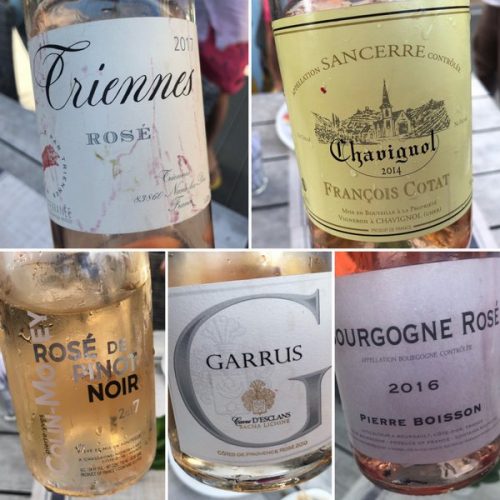
Had these nice high-end rosés yesterday afternoon, with friends.

Triennes Rosé 2017 Provence, France
Pure delicate and aromatic – very bright with tangerine and lemon and red currant. So fresh. 90/100

Francois Cotat Sancerre Rosé Chavignol 2014 Loire, France
Edgy and reductive. Spicy and detailed with a sappy edge. Cherries and minerals. So good. 92/100

Pierre-Yves Colin Morey Rosé de Pinot Noir 2017 Burgundy, France
Linear and detailed with nice fresh pure citrus pear and cherry fruit. Lovely 91/100

Chateau d’Esclans Garrus Rosé 2010 Provence, France
Nutty, spicy and minty. Pear, wax and herbs. Complex and exotic. Some cedar hints. 91/100

Pierre Boisson Bourgogne Rosé 2016 Burgundy, France
Deep pink with bright raspberry and cherry fruit. Lovely fruit 89/100


from Jamie Goode’s wine blog http://www.wineanorak.com:/wineblog/rose/some-nice-high-end-roses

For Fine Wine Investment opportunities check out Twelve by Seventy Five: http://www.twelve-by-seventy-five.com/

from
https://twelvebyseventyfive.tumblr.com/post/176404805137

Friday, July 27, 2018

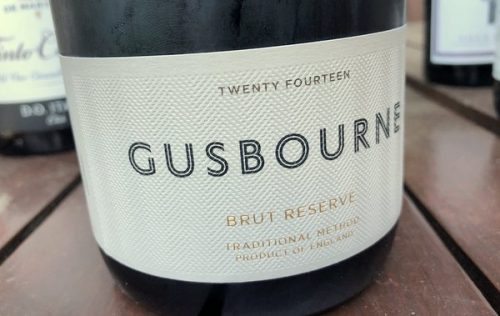
Gusbourne Brut 2014, one of England’s finest

This is the latest release of the Brut Reserve from Gusbourne, one of the UK’s top sparkling wine producers. 2014 saw an early budburst with good weather through to the end of June. This is always the critical bit of the vintage in the UK because good flowering means good yields, and in this year there was enough warmth to ripen the crop.

Gusbourne Brut Reserve 2014 England
12% alcohol. 60% Pinot Noir, 22% Chardonnay, 18% Pinot Meunier. Clay and sandy loam soils on a south-facing escarpment in Appledore, Kent. Harvested in September and October, this was whole bunch pressed an settled naturally, before fermentation with selected yeasts in stainless steel, with a bit in barrel for complexity. The bottling was in April 2015, with three years on lees. pH 3.12, dosage 8 g/litre, acid 8 g/litre. This is rich and very refined with citrus, pear and peach fruit, as well as a touch of toastiness. There’s a hint of sweetness from the dosage, which rounds out the palate, which finishes with lemony brightness. There’s a hint of cherry from the Pinot, and also some bakery notes of brioche and apple pie, but the wine is honest and focused. It would be lovely to see this with a little less make-up (lower dosage), but it’s really good just as it is. 91/100 (£35 Oddbins, Berry Bros & Rudd, Selfridges, Harvey Nichols, Fortnum & Mason)


from Jamie Goode’s wine blog http://www.wineanorak.com:/wineblog/england/gusbourne-brut-2014-one-of-englands-finest

For Fine Wine Investment opportunities check out Twelve by Seventy Five: http://www.twelve-by-seventy-five.com/

from
https://twelvebyseventyfive.tumblr.com/post/176348288332

We like the smell of geosmin in the air, but not in our wine

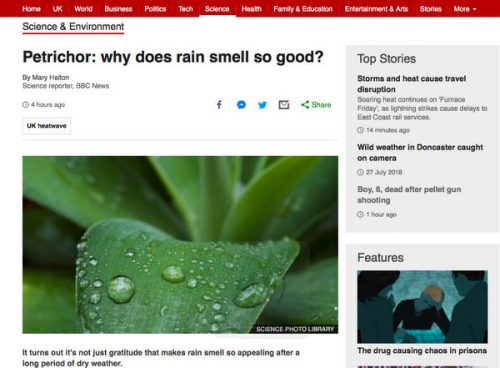
There’s a really interesting article on the BBC News site discussing why rain smells so good.

The smell of rain hitting the ground releases a smell that has been dubbed ‘petrichor’. It was named by Australian researchers in the 1960s, and the smell is produced by bacteria in the earth.

But here’s the twist that will interest wine lovers: Petrichor is the same as Geosmin, which is a wine fault. The same bacteria that produce it in the soil also invade grape clusters during wet weather and can produce this off-flavour. While we like it when the rain falls on dry ground, but it’s a problem when it’s in our wine.

Geosmin smells a bit musty and earthy, like beetroot and freshly turned earth.

It was first identified geosmin as a wine fault back in 2000. Darriet and colleagues studied a set of wines with doors they described as smelling of freshly tilled earth and damp cellars in red and white wines of different origins. They used gas chromatography−mass spectrometry to identify the chemical culprit as geosmin (trans-1,10-dimethyl-trans-9-decalol), which is a sesquiterpene. Penicillium expansum was the main microbial culprit in geosmin production, but on its own it can’t produce geosmin in grapes: it needs to have the complementary action of Botrytis in order to do this.

(For more, see Darriet P, Pons M, Lamy S, Dubourdieu D 2000 Identification and Quantification of Geosmin, an Earthy Odorant Contaminating Wines. J Agric Food Chem 48:4835–4838 and La Guerche S, Chamont S, Blancard D, Dubourdieu D, Darriet P 2005 Origin of (-)-geosmin on grapes: on the complementary action of two fungi, botrytis cinerea and penicillium expansum. Antonie Van Leeuwenhoek 88:131–139)

But things are never simple. What can smell nice in one context, smells bad in another. And geosmin is being used now as a component in some fragrances.


from Jamie Goode’s wine blog http://www.wineanorak.com:/wineblog/wine-science/we-like-the-smell-of-geosmin-in-the-air-but-not-in-our-wine

For Fine Wine Investment opportunities check out Twelve by Seventy Five: http://www.twelve-by-seventy-five.com/

from
https://twelvebyseventyfive.tumblr.com/post/176345514197

Thursday, July 26, 2018

In Niagara, Canada: Leaning Post

Ilya Senchuk, Leaning Post

Ilya Senchuk has been making wines in Niagara for a while now. He started off with Daniel Lencko, then went to Foreign Affairs, and then started his own virtual winery, Leaning Post, specializing in making wines from interesting vineyards across the region. Seven years ago he and his wife Nadia purchased a property in Winona, which is the first town in Niagara, near Hamilton, which is now the physical home of Leaning Post. It’s an interesting site, 800 metres from the Lake and 800 metres from the escarpment, and is cool and windswept. They planted a vineyard here of 2 hectares (Pinot Noir and Chardonnay), and the now 6 year old vines are producing wine, which is a very exciting development. There’s another couple of hectares that are plantable.

I visited here back in 2015, so it was nice to be back to see the progress. The production has more than doubled from 1400 cases to 4000, and in 2018 it should hit 5000. And as well as the first wines from the home vineyard, there is also a range called ‘Freaks and Geeks’, with more off the wall and experimental wines.

Pinot Noir in the home vineyard

I think that Ilya is a smart, thoughtful winemaker and that Leaning Post is one of Niagara’s most exciting wineries.

Leaning Post Wismer Foxcroft Vineyard Riesling 2016 Twenty Mile Bench, Niagara, Canada
12% alcohol, 10 g/l sugar, then aged on lees for 9 months, all in tank. Inoculated. Very fine and fresh with lovely purity to the intense limey, lemony fruit. Pure and fine. 92/100

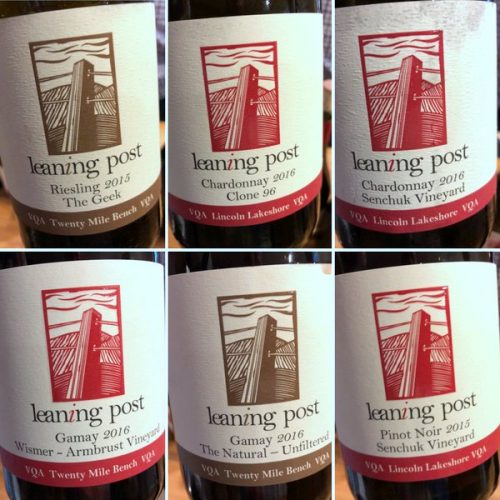
Leaning Post The Geek Riesling 2015 Twenty Mile Bench, Niagara, Canada
The inspiration for this came at 2 am in the morning. Ilya created a tank in the winery to capture all the white wine lees. He used Riesling to keep the lees, and these lees are kept two years. Then the Riesling is bottled adding back in the lees from previous vintage of this wine. Bone dry and linear with fresh citrus fruit. Subtle waxy and nutty notes here alongside the fine-grained, textured citrus fruit. Long finish. 92/100

Leaning Post Sauvignon Blanc 2017 Niagara Peninsula, Canada
Half in barrel for 3 months. Two vineyards. Exotic tropical fruit nose with some fine herb and grapefruit notes. Fresh with lively citrus fruit on the palate and nice grassy edges, some herbs, and good texture. Deliciously expressive, in between old and new world in style. 91/100

Leaning Post The Fifty Chardonnay 2016 Niagara Peninsula, Canada
Barrel fermented then stainless steel aged on lees, made in a fresher style. Fruit forward with pear and apple notes, and a subtle nuttiness. Quite rounded and grainy with nice richness, but stays fresh and detailed. Great value at $22. 89/100

Leaning Post Wismer Foxcroft Chardonnay 2015 Twenty Mile Bench, Niagara, Canada
Nutty and complex with a nice rounded character. Ripe peach fruit with some straw/hay character. Has depth but also good focus with fine spiciness. Big but balanced. 92/100

Leaning Post Senchuk Vineyard Chardonnay 2016 Lincoln Lakeshore, Niagara, Canada
The plan was to make 180 cases from 9 barrels, but when they came to blend the wine, they looked at the barrels together and didn’t like it. So they ended up making two bottlings, largely along clonal differences. They have 548 clone and 96 clone, and Ilya bottled them separately, and the two wines were different but excellent on their own. The 96 is from the siltier, gravelly soils. This is 75% 548 and 25% 96. Complex and nutty with lovely citrus fruit and a fennel-like savouriness. Waxy and mineral with a slight saline twist. Lovely complexity here. 94/100

Leaning Post Clone 96 Chardonnay 2016 Lincoln Lakeshore, Niagara, Canada
Fresh, open, expressive and quite detailed with some sweetness to the tangerine and apple fruit. Has a hint of marmalade even. Lively and bright with a very open character. Tangy finish. 92/100

Unnamed Sauvignon skin contact wine
Whole cluster ferment on skins for 33 days. Tangy, juicy and intense with a bit of lift. Has some green herby notes. Really tight with refined structure and good acidity. Has some weedy notes. Very interesting. 90-92/100

Leaning Post Wismer Armbrust Vineyard Gamay 2016 Twenty Mile Bench, Niagara, Canada
Destemmed. Pale in colour. 1.3 acre block looking over Balls Falls. Has a slight lift on the nose, as well as floral, spicy red fruits. Rounded, smooth and fresh with lovely texture and elegance. Has a fine, savoury spiciness. Such lovely weight. Has a warmth on the mid palate. Delicate. 93/100

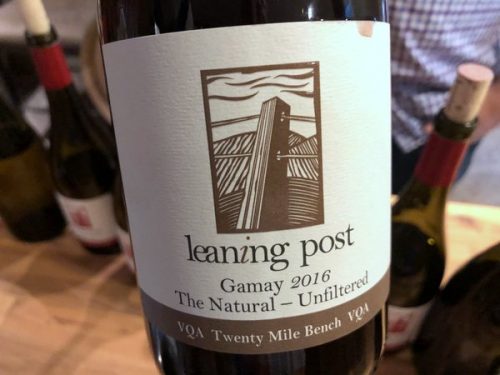
Leaning Post The Natural Gamay 2016 Twenty Mile Bench, Niagara, Canada
No sulfites, no filtration, whole cluster. From Wismer Armbrust vineyard. Cloudy. Savoury, spicy and tangy with a sour cherry edge. Earthy and murky with nice savoury detail and keen acidity. Distinctive and natural. 90/100

Leaning Post Senchuk Vineyard Pinot Noir 2015 Lincoln Lakeshore, Niagara, Canada
First wine from the vineyard. Two barrels. Pale in colour. Fine, delicate and textured with lovely elegance but also a broad, quite rich midpalate. Supple red cherries with slight sappy greenness hiding under the fruit. Nice acidity and mouthfeel. 93/100

Leaning Post Senchuk Vineyard Pinot Noir 2016 Lincoln Lakeshore, Niagara, Canada (tank sample of final blend)
85% new oak, which integrates really well. 10% whole cluster. Pale in colour but rich, sweetly fruited and quite dense with nice grainy, mineral structure. Sweet red cherries, strawberries and plums, with nice sweet, mouthfilling flavours on the midpalate. Very appealing. 92-94/100

Leaning Post The Freak Pinot Noir 2016 Lincoln Lakeshore, Niagara, Canada
Naturally made with 50% whole cluster. Lifted nose. Juicy, grainy and cloudy with some spiciness and hints of earth, as well as sour cherries and plums. Grippy and grainy, and quite distinctive with a very savoury twist. Some green tea character with freshness and structure. 90/100


from Jamie Goode’s wine blog http://www.wineanorak.com:/wineblog/canada/in-niagara-canada-leaning-post

For Fine Wine Investment opportunities check out Twelve by Seventy Five: http://www.twelve-by-seventy-five.com/

from
https://twelvebyseventyfive.tumblr.com/post/176295867832

Wednesday, July 25, 2018

Four affordable, lighter reds for summer smashing

Back to the UK and I’m working through some samples on a balmy summer evening. I’m really into lighter red wines at the moment and these four fit the bill for some summer smashing. And they are affordable, too.

Villa Blanche Piquepoul Noir 2016 IGP Pays l’Herault, France
13% alcohol
£8.49 Waitrose
Part of Calmel and Joseph’s Cepages Anciens range. Piquepoul Noir is an ancient Languedoc grape variety, and here it has created a supremely fresh, bright juicy red wine with citrus fruit penning in the red berries. It has a bit of crunch, but the dominant theme is bright fruit, and this is perfect summer drinking, lightly chilled. 88/100

De Martino Tinto Chileno Old Vine Cinsault Pais 2015 Itata, Chile
13% alcohol
£12.99 Virgin Wines
70% Cinsault and 30% Pais, from old unirrigated vines on rolling granitic hills. It’s a tribute to the old-style wines of Chile. Pale red in colour, this is quite sappy and green, but in a nice way, with lovely redcurrant and cherry fruit, with nice acidity. Supple and fresh, this is a lighter red wine with a juicy appeal, but also something a bit more serious if you look for it. A wine of fine-grained ease and elegance. 89/100

Pfaffl St Laurent Granat 2017 Niederosterreich, Austria
£7.99 Lidl
13% alcohol
This is crunchy and dense with a slightly reduced, angular, grippy palate showing focused raspberry and black cherry fruit with some hints of tar and spice. Grainy and intense, this has lovely summer fruits freshness, and enough grunt to take on rich dishes like roast duck or pork ribs. Great value at this price. 88/100

Morrisons Beaujolais Villages 2017 France
13% alcohol
£7 Morrisons
Deeply coloured, but really fresh and vivid, with pure flavours of raspberries, cherries and blackberries. Fresh, pure, vivid and crunchy with real focus and nice acidity. This is Gamay in a fresh, direct, fruity guise, but it has a hint of grippy seriousness, too. very impressive for supermarket own-label. 88/100


from Jamie Goode’s wine blog http://www.wineanorak.com:/wineblog/austria/four-affordable-lighter-reds-for-summer-smashing

For Fine Wine Investment opportunities check out Twelve by Seventy Five: http://www.twelve-by-seventy-five.com/

from
https://twelvebyseventyfive.tumblr.com/post/176258012832

Monday, July 23, 2018

Gamay 40, Leaning Post Wismer-Armbrust and Natural Gamays, Niagara, Canada

Two very interesting Gamays from boutique Niagara producer Leaning Post. They come from the same vineyard, but are made differently: one is whole bunch, no added sulphites, no filtering, and it is quite natural tasting. I liked it but preferred the elegance of the regular Gamay.

Leaning Post Wismer-Armbrust Vineyard Gamay 2016 Twenty Mile Bench, Niagara, Canada
Destemmed. Pale in colour. 1.3 acre block looking over Balls Falls. Has a slight lift on the nose, as well as floral, spicy red fruits. Rounded, smooth and fresh with lovely texture and elegance. Has a fine, savoury spiciness. Such lovely weight. Has a warmth on the mid palate. Delicate. 93/100

Leaning Post The Natural Gamay 2016 Twenty Mile Bench, Niagara, Canada
No sulfites, no filtration, whole cluster. From Wismer Armbrust vineyard. Cloudy. Savoury, spicy and tangy with a sour cherry edge. Earthy and murky with nice savoury detail and keen acidity. Distinctive and natural. 90/100

Find these wines with wine-searcher.com


from Jamie Goode’s wine blog http://www.wineanorak.com:/wineblog/canada/gamay-40-leaning-post-wismer-armbrust-and-natural-gamays-niagara-canada

For Fine Wine Investment opportunities check out Twelve by Seventy Five: http://www.twelve-by-seventy-five.com/

from
https://twelvebyseventyfive.tumblr.com/post/176209991552

A weekend of Chardonnay in Niagara: the i4C 2018 edition

Flights of Chardonnay, the Friday night event

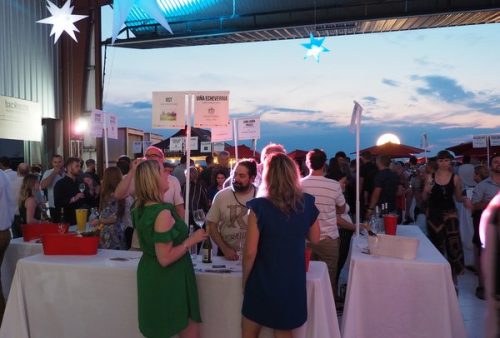
I first came to Canada in 2013 for the i4C, the International Cool Climate Chardonnay Conference (here’s my blog post on it). My trip then was to make a lasting impression on me, and I have been back numerous times. This year I returned for the 2018 edition of this Chardonnay celebration, and it was the best yet. I had a lot of fun, met a lot of really great people, and learned quite a bit.

Here are two short films (of the Friday and Saturday nights), plus some pictures.


Josh Horton, Lightfoot and Wolfville, Nova Scotia

Rajat Parr, Sandhi and Evening Land

David Patterson, Tantalus

John Bonné

Saturday night: Chardonnay tasting and dinner at Ridley College

Anthony Hamilton Russell and Paul Cluver, representing South Africa

Paul Cluver and Simon Fell

Michael Godel and Magdalena Kaiser

Ryan Zanette and John Szabo

Pier-Alexis Soulière

Roberto Echeverria and Thomas Bachelder


from Jamie Goode’s wine blog http://www.wineanorak.com:/wineblog/canada/a-weekend-of-chardonnay-in-niagara-the-i4c-2018-edition

For Fine Wine Investment opportunities check out Twelve by Seventy Five: http://www.twelve-by-seventy-five.com/

from
https://twelvebyseventyfive.tumblr.com/post/176206529777

Sunday, July 22, 2018

Niagara: Flat Rock

Nice to revisit Flat Rock, which has one of the prettiest cellar door views in Niagara. On this stunningly clear day we could see over Lake Ontario to Toronto.

Owner Ed Madronich hosted us, together with relatively new winemaker David Sheppard, who was hired when Jay Johnston left for Hidden Bench. Dave finished up the 2016 wines and is responsible for the 2017s. He has plenty of experience: he’s been making wine in Niagara for 35 years, moving to the region to work with Inniskillin after working in Germany and Burgundy. He was then winemaker at Coyote’s Run for 14 years.

Ed and Dave

Ed first met Dave when Ed was director of marketing at Inniskillin, and he purchased Flat Rock when his dad sold an apple farm. 2003 was first vintage (20 tons), but 2004 was the first main one (100 tons). The vineyards are located on Twenty Mile Bench in one property of 80 acres (35 hectares), and all the wines are from the estate except for Twisted.

Flat Rock have three emphases: Chardonnay, Riesling and Pinot Noir. Indeed, they were one of the first really to commit to Pinot Noir. ‘The challenge with Pinot in Niagara is the grape marketing board, which sets the price for grapes,’ says Ed. ‘Most wineries historically purchased grapes from growers. The grower is given a set price for a ton of grapes.’ He explained that if the price of Pinot was set at $2000 a ton, this incentivizes the grower to get high yields, because they are not getting paid more for higher quality. ‘If you crop higher you get very poor Pinot: it makes light coloured bad wines. No one knew Pinot could be great because people weren’t farming it well.’ He adds that with Pinot Noir, quality doesn’t just diminish with higher yields: it falls off a cliff.

Flat Rock Cellars Pinot Noir 2016
Fresh with an iodine and blood edge to the sweet cherry and plum fruit. Sappy, fruity and nicely savoury. Great value at CA$20 a bottle. Fleshy and attractive but with a nice savoury edge. 90/100

Flat Rock Cellars Gravity Pinot Noir 2014
Complex with a savoury, mineral, ferrous edge to the sweet cherry and berry fruits. Has nice structure with some lovely grip sitting nicely under the fruit. A stony, mineral expression of Pinot. 93/100

Flat Rock Cellars Riddled Sparkling 2011
100% Chardonnay. Barrel-fermented, then spends 6 years on lees. 11 g/l dosage. Crown-capped. Fresh and focused with lovely taut citrus fruit. Linear and expressive with subtle toasty notes. Lots of presence here. 90/100

Flat Rock Cellars Unplugged Chardonnay 2017
Unoaked, partial malolactic. Fresh and lively with rich pear and white peach fruit, with a citrussy edge. Vibrant and fruit-driven with lovely fruit expression. Some pineapple on the finish. 88/100

Flat Rock Cellars Chardonnay 2016
Supple and nicely weighted with delicate peach and pear fruit. Has a nice weight: open and expressive with fine toast and bread notes as well as sweet fruit. Very easy and accessible, with a hint of seriousness. A rich style. 89/100

Flat Rock Cellars The Rusty Shed Chardonnay 2015
12.5% alcohol. Complex and nicely weighted with sweet pear and pineapple fruit, coupled with subtle oak. Spicy framing with nice sweetness to the fruit. Lovely freshness here. Easy but with some complexity. 91/100

Flat Rock Cellars The Rusty Shed Chardonnay 2006
Bold and rich, but still with some freshness: there’s toast, hazelnut, spice and honey, alongside focused citrus and peach fruit. Mature but with lots of life in it still. Sweetly fruited and richly toasty, but with freshness. 90/100

Flat Rock Cellars Nadja’s Vineyard Riesling 2017
Bright and linear with keen citrus fruit. So juicy and focused with tangerine, lemons and some fine herby hints. Dry, pure and intense: needs time to develop. High acidity. 91/100

Flat Rock Cellars Riesling 2016
Perfumed, open and lemony on the nose. Some elderflower. Lovely weight on the palate with the acidity countered by some sweetness. Supple and expressive with lovely pure fruit. 91/100

Flat Rock Cellars Twisted Riesling 2016
A white blend made of Gewurztraminer, Riesling and Chardonnay. Now has some bought-in fruit. Off-dry and rounded. Soft and sweetly fruited with a soft texture, with some grape and lychee fruit as well as a bit of citrus. Very attractive and detailed, with some softness. 88/100

And some notes from July 2017

Flat Rock Nadja’s Riesling 2007 Twenty Mile Bench, Niagara, Canada
This is a drier style of Riesling made from a higher portion of the vineyard where the dolomitic limestone is close to the surface. Complex and a bit waxy with some nuts and lanolin. Lively with a bit of pithiness and nice evolution with a lovely mineral character and great acidity. Lovely complexity with an amazing finish. 93/100

Flat Rock Nadja’s Riesling 2004 Twenty Mile Bench, Niagara, Canada
There’s a subtle creaminess here. Some mineral character under the citrus fruit, and lovely lemony delicacy. Has sweet fruit with good textured and delicacy, showing refined acidity. 93/100

Flat Rock Nadja’s Riesling 2013 Twenty Mile Bench, Niagara, Canada
Very linear and pure with delicacy and precision. Lovely fine, pure lemony fruit. Lots of potential here. 92/100

Flat Rock Estate Riesling 2006 Twenty Mile Bench, Niagara, Canada
This is 19 g/l sugar and pH 3.24. It has lovely weight. Off dry with a seamless purity and hints of honey and lemon. Quite mineral with lovely citrus fruit. 92/100

Flat Rock Estate Riesling 2008 Twenty Mile Bench, Niagara, Canada
37 g/litre sugar, pH 2.8. Amazing acidity here: lemony and intense with a fine spiciness. There’s some sugar here but it tastes just off dry because of the acid. So intense and pure, and quite lovely. 93/100


from Jamie Goode’s wine blog http://www.wineanorak.com:/wineblog/canada/niagara-flat-rock

For Fine Wine Investment opportunities check out Twelve by Seventy Five: http://www.twelve-by-seventy-five.com/

from
https://twelvebyseventyfive.tumblr.com/post/176159180142

Friday, July 20, 2018

In Niagara, Canada: Hidden Bench

Hidden Bench is one of Niagara’s leading boutique wineries. Owner Harald Thiel bought the Locust Lane vineyard, where the winery is located, in 2003 after selling a successful audiovisual business he ran with his brother. A year later, he added the Rosomel Vineyard, and then in 2007 the Felseck Vineyard. All are on the Beamsville Bench, and are certified organic, and the total vineyard area now stands at 35 hectares.

Harald Thiel, Magdalena Kaiser (of Wines of Ontario) and Jay Johnston

The soils here are glacial till, and have varying amounts of clay and limestone. Way back, the whole area was covered by a lake which disappeared 450 m years ago. Subsequently, there were four glacial periods, and the related geological events pulled the base of the lake up depositing it on the Niagara escarpment. As a result, the soils here are diverse, with limestone, clay and silt all mixed together. Different vineyards here have more clay and more limestone. This is why, Harald says, the wines from the bench area tend to have more complexity, because the soils are not homogeneous.

Hidden Bench is a 10 000 case winery, but they haven’t quite reached that production level yet. They have planted an extra 5 hectares that will be coming into production in 2021. More than half production is Pinot Noir, with quite a bit of Chardonnay, some Riesling, and then a few other things such as Sauvignon Blanc and Cabernet Sauvignon.

Just over a year ago, long time winemaker Marelize Beyers left and was replaced by Jay Johnston from Flat Rock Cellars. We tasted with him and Harald, but most of these wines would have been made by Marelize. One exception was a skin-contact Chardonnay trial that was quite beautiful, but that’s not an official release.

Hidden Bench Blanc de Blanc 2013
This has 9 months in barrel and 48 months on the lees afterwards. Zero dosage. There’s some tightness here with a nice citrus twist. This has delicacy and focus with very subtle toast and a lovely gentle, textured mid-palate. Dry and balanced with lovely fruit expression. A really lovely wine. 92/100

Hidden Bench Natur 2013
Zero dosage. A blend of 70% Chardonnay, 30% Pinot Noir. 7 months in barrel and 47 months on lees. Lively and bright with some cherry and citrus fruit. Lovely weight and intensity with good acidity. Has richness but it’s still balanced and fine. 91/100

Hidden Bench Roman’s Block Rosomel Vineyard Riesling 2014
11 g/l acid, pH 2.84, 10.5% alcohol, 10 g/l sugar. Intense and quite limey with lovely concentration and high acidity balanced out by some sugar. Striking with lovely weight and complexity. 91/100

Hidden Bench Felseck Vineyard Riesling 2015
11% alcohol, 8.3 g/l acid, 9 g/l sugar, pH 2.87. Delicate and expressive with a nice lemon and lime core and some appealing texture. It’s really expressive with nice weight on the palate, with just a twist of sweetness. 90/100

Hidden Bench Estate Riesling 2016
11% alcohol, 8.5 g/l acid, 11 g/l sugar, pH 2.88. Powerful and lively with exuberant lively citrus fruits, with good balance between the sugar and the acid. Fruity and delicious with nice weight. 90/100

Hidden Bench Rosomel Vineyard Fumé Blanc 2016
Barrel-fermented Sauvignon Blanc. Delicate and textural with grapefruit and pear fruit. There’s a twist of oak here that’s really well integrated, and the palate has some subtle waxiness. Really good balance here. 91/100

Hidden Bench Nuit Blanche Rosomel Vineyard 2016
94% Sauvignon, 6% Semillon, barrel fermented, 13% new oak. Complex and taut with well integrated oak and delicious freshness. Citrus fruits dominate with a waxy edge and a bit of grapefruit. Subtle hazelnut, too. A serious effort. 93/100

Hidden Bench Tête de Cuvée Chardonnay 2014
Linear and textured with some mealy, bready notes alongside smooth white peach and citrus fruit. Has freshness and poise with a bright finish. Subtle nuttiness and spiciness on the finish. 92/100

Hidden Bench Felseck Vineyard Chardonnay 2014
Fresh and expressive with bright citrus, pear and white peach fruit. Has nice texture with a bright, spicy, nutty finish. Good structure here with freshness and focus. 92/100

Hidden Bench Estate Chardonnay 2016
From a warmer vintage. Rich, fruity and expressive with some peachy depth and a hint of melon. Has a fruit sweetness to it. Supple and appealing with nice smoothness, with very nice fruit. 89/100

Hidden Bench Locust Lane Rosé 2017
Direct pressed with 20% saignee. 93% Pinot Noir, 7% Viognier. Dry, bright and quite stony with some citrus and apricot characters. Juicy and lively with nice strawberry and cherry hints. Really delicious in a dry style. 90/100

Hidden Bench Estate Pinot Noir 2016
Warm vintage. Lighter colour with smooth, sweet cherry fruit and a hint of strawberry softness. Has a bit of bite and a smooth texture. Lovely approachable, friendly style with elegance and accessibility. 90/100

Hidden Bench Felseck Vineyard Pinot Noir 2015
20% new oak. Supple and textural with some nice structure under the sweet cherry and plum fruit. Sweetly fruited but structural with nice graininess. Quite mineral with some ferrous notes. 94/100

Hidden Bench Rosomel Vineyard Pinot Noir 2015
First release of this, with Pinot Droit, 828 and 667 clones. 26% new oak. Distinctive with a nice savoury, mineral twist to the finely structured cherry and berry fruits. Has lots of detail and complexity with a liquorice and tar character under the fruit. Well structured with good concentration, but also nicely balanced. 94/100

Hidden Bench Locust Lane Vineyard Pinot Noir 2015
8% new oak. Locust Lane is the vineyard next to the winery. There is a bit more clay here and less limestone. Really fresh and vibrant with some grippy structure under the bright raspberry and red cherry fruit. Good acidity and structure to this wine, with some spiciness under the fruit. Structured with good potential. 93/100

Hidden Bench Terroir Caché 2015
A Bordeaux-style blend, 25% new oak. Lovely sweet, vivid blackcurrant fruit here with good freshness and acidity. Exuberant fruit and good structure with lovely immediacy, and some gravelly, spicy hints adding interest. Lovely weight here. 93/100


from Jamie Goode’s wine blog http://www.wineanorak.com:/wineblog/canada/in-niagara-canada-hidden-bench

For Fine Wine Investment opportunities check out Twelve by Seventy Five: http://www.twelve-by-seventy-five.com/

from
https://twelvebyseventyfive.tumblr.com/post/176087306992

Wednesday, July 18, 2018

Deliciousness at Bar Raval, Toronto

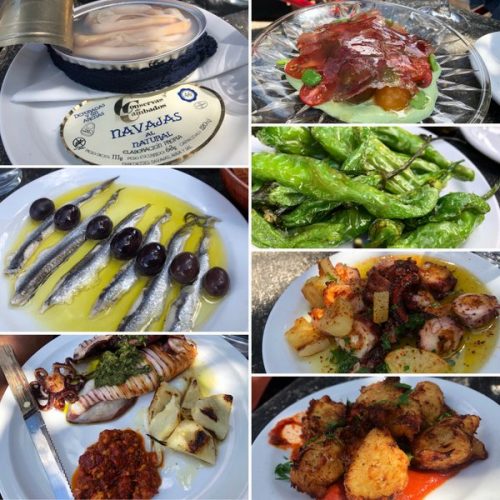
Had a lovely lunch yesterday at Bar Raval, Toronto. This is a beautiful tapas bar on College St, with a design that’s channelling  Gaudi.

We ate very well, including tinned razor clams! The food here is beautifully done. To drink: two wines that I really like. The mineral, textured 2016 Trenzado from Suertes del Marques, and the intense, fresh, focused, crunchy 2016 Albahra from Envinate.

We finished with an impossibly complex old sherry.


from Jamie Goode’s wine blog http://www.wineanorak.com:/wineblog/canada/deliciousness-at-bar-raval-toronto

For Fine Wine Investment opportunities check out Twelve by Seventy Five: http://www.twelve-by-seventy-five.com/

from
https://twelvebyseventyfive.tumblr.com/post/176046215812

Monday, July 16, 2018

Champagne Salon 1985

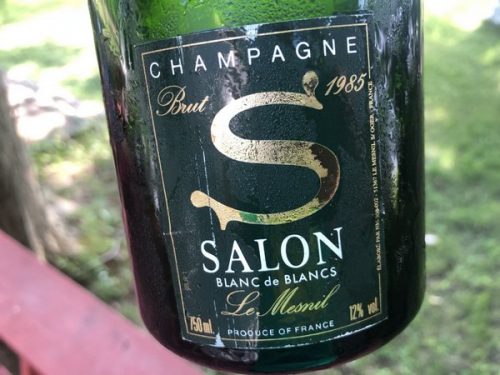
A real treat to drink this tonight after a lovely boat ride and swim in Muskoka cottage country. It’s mature and delicious. Thank you Steven Campbell for opening this.

Champagne Salon Le Mesnil 1985 France
Golden colour. Lovely aromas of toast, nuts, honey and apples with a faint cheesiness. The palate is intense and concentrated with a lovely crystalline citrus core, which expands into more toast, apple pie and honeycomb notes. This has great intensity and depth, and a lovely acid core. Mature but still very much alive, with gentle fizziness and a vinous character. 96/100

Find this wine with wine-searcher.com


from Jamie Goode’s wine blog http://www.wineanorak.com:/wineblog/champagne/champagne-salon-1985

For Fine Wine Investment opportunities check out Twelve by Seventy Five: http://www.twelve-by-seventy-five.com/

from
https://twelvebyseventyfive.tumblr.com/post/175948164197