Sunday, September 30, 2018

Asterley Bros Dispense Amaro, where England meets Sicily

Had this the other night at the fab Luca. It’s an English Amaro from Asterley Bros.

I nurture a secret affection for Amaros. It stems from my time with the Canadians, judging the National Wine Awards for the last five years, and visiting often. The Canadian crew have a big thing about Amaros, and in particular, Fernet Branca. Fernet is an acquired taste, but thanks to them, I acquired it. We even drink it on the bus, heading out or back from evening events.

There’s no tight definition for an Amaro. It’s a herbal liqueur, based around bitterness, and the whole category is very well explained in this article in Saveur. Notice that Fernet Branca is last. Avoid Fernet Menthe unless you are a bit crazy in the head. It’s mintier (if that were possible) and sweeter than Branca.

The most famous Amaro is Campari, which is a sort of Amaro for cowards, but which is perfectly fine as a base for a negroni, as is the new Bitter from Martini.

This Asterley is really good. It’s made by two brothers in Forest Hill, London. One of them is married to a Sicilian, hence the desire to produce this most Italian of drinks. In the mix are 24 botanicals including gentian, hops and wormwood. It’s blended with their signature vermouth made from English Pinot noir grapes. The result is pretty compelling.

How do you drink it? In Argentina, where Fernet Branca is like a religion, it’s mostly blended with coke, which is a travesty. Instead, pour over ice and sip after a meal. Or if you are like the Canadians, share a bottle on a bus.


from Jamie Goode’s wine blog http://www.wineanorak.com:/wineblog/uncategorized/asterley-bros-dispense-amaro-where-england-meets-sicily

For Fine Wine Investment opportunities check out Twelve by Seventy Five: http://www.twelve-by-seventy-five.com/

from
https://twelvebyseventyfive.tumblr.com/post/178601591237

Saturday, September 29, 2018

Some highlights from the Wine Society (2 of 2)

Some more highlights from The Wine Society tasting on Thursday.

Barbadillo Solear Manzanilla NV Spain
£5.95 The Wine Society
15% alcohol
This is such a bargain. Salty, tangy and yeasty this has nice bright fresh apple and citrus fruity notes, in an elegant, bright style. Nice purity. 91/100

Avaniel 2017 Ribeira del Duero, Spain
£8.25 The Wine Society
13.5% alcohol
Fine, fresh, aromatic and pure with lovely fruity cherry notes. Floral, bright and juicy with nice weight and some seriousness as well as fun. Who needs oak? 90/100

Château Fontestau 1996 Haut-Médoc, Bordeaux, France
£18.50 The Wine Society
This has aged really nicely. It has a slightly faded colour with a brick-red rim. Lovely classic nose of herbs, spice, undergrowth. Restrained and elegant on the palate with some cherry fruit and nice maturity. So good to be able to get well aged Bordeaux at this price. 93/100

Prophet’s Rock Home Vineyard Pinot Noir 2014 Central Otago, New Zealand
£26 The Wine Society
14% alcohol
This is pretty special: it’s not your fruit-bright New Zealand style, but instead has some savoury complexity. Supple and refined with spicy cherry and strawberry fruit and some fine savoury notes, with minerals and herbs. Understated and fine. 94/100

Domaine Le Noblaie Chinon ‘Temps des Cerises’ 2017 Loire, France
£10.95 The Wine Society
13% alcohol
Lovely floral nose with some chalk and fine herb notes. Linear, juicy and fruity on the palate with brightness, freshness and poise. A classic Loire Cabernet Franc of some class. 91/100

Château La Dornie Saint-Chinian 2016 Languedoc, France
£9.50 The Wine Society
13.5% alcohol
Supple, bright and slightly smoky with a mineral edge to the stylish cherry and plum fruit. Some herb/garrigue complexity. Grown-up Languedoc red with nice personality. 90/100


from Jamie Goode’s wine blog http://www.wineanorak.com:/wineblog/uncategorized/some-highlights-from-the-wine-society-2-of-2

For Fine Wine Investment opportunities check out Twelve by Seventy Five: http://www.twelve-by-seventy-five.com/

from
https://twelvebyseventyfive.tumblr.com/post/178565620352

Friday, September 28, 2018

Some highlights from The Wine Society (part 1 of 2)

Some lovely wines, as usual, at The Wine Society press tasting yesterday. Here’s my first six-pack of good buys. Lots to like in the £10-15 range, which is handy.

Domaine Sylvain Pataille Bourgogne Aligoté 2016 Burgundy, France
£12.50 The Wine Society
13% alcohol
Fermented in 500 litre barrels. Fine and lemony with lovely pear fruit richness and a subtle nuttiness. Stylish and complex with a hint of baked apple, and lemony focus. 92/100
(available 28 Sept)

Deltetto Langhe Favorita Servaj 2017 Piedmont, Italy
£12.50 The Wine Society
13% alcohol
Favorito is the local name for the Vermentino grape variety, and Servaj translates as wild. Delicate and pure with nice fruit. Expressive tangerine and pear notes, with real focus and delicacy. 90/100
(available 22 Oct)

Von Kesselstatt Niedermenniger Herrenberg Riesling Kabinett 2016 Mosel, Germany
£10.50 The Wine Society
9.5% alcohol
This is from the steep Herrenberg vineyard in the Saar, and it’s a bargain. Off-dry and juicy with grapefruit, apricot and pear fruit. Very fruity and linear. 91/100
(Available 19 Nov)

Jean-Paul Brun Terres Dorées Beaujolais L’Ancien 2016 France
£11.95 The Wine Society
12.5% alcohol
Very floral with a green sappy and beetroot edge to the cherry and raspberry fruit. Bright, fresh and sappy with raspberries to the fore. Light and expressive and quite pure. 92/100

Martin Wassmer Spätbrugunder Markgräflerland 2015 Baden, Germany
£14.95 The Wine Society
13.5% alcohol
Juicy and linear with nice sappy freshness and some mineral undercurrents. Appealing cherry and plum fruit with well integrated oak. Really refined. 93/100
(available 28 Sept)

Clos Alivu Patrimonio Rouge 2017 Corsica, France
£14.95 The Wine Society
13% alcohol
100% Nielluccio, which is the same as Sangiovese. Very floral, bright and fruity with expressive, pure red cherry and raspberry fruit. Linear, with a bit of structure. Quite delightful. 91/100


from Jamie Goode’s wine blog http://www.wineanorak.com:/wineblog/uncategorized/some-highlights-from-the-wine-society-part-1-of-2

For Fine Wine Investment opportunities check out Twelve by Seventy Five: http://www.twelve-by-seventy-five.com/

from
https://twelvebyseventyfive.tumblr.com/post/178538113952

Thursday, September 27, 2018

Werlitsch Ev Vero, an amazing wine from Styria, Austria

Had this delicious wine from southern Styria winery Werlitsch at Newcomer Wines in Dalston. Newcomer has a brilliant selection of wine, focusing on Austria but taking in interesting natural/authentic wines from elsewhere, too. And you drink in for a £10 corkage fee, which makes this place one of the best for drinking great wine in London. It’s not a restaurant, but there are nice charcuterie and cheese options.

Weingut Werlitsch Ex Vero II+ 2012 Sudsteirmark, Austria
12.5% alcohol. This is really special. A blend of Sauvignon and Chardonnay aged in big ‘Pauscha’ barrels, it’s Daganeau meets Raveneau, as my drinking companion observes. From limestone/clay-rich soils, this is the late bottling that has spent four years in barrel. Minerally with a matchstick edge, this is very fine and fresh with linear citrus fruit and a bit of toastiness. So mineral and expressive with a saline edge, nice citrus notes and fine spiciness. Detailed, taut and compact. 96/100


from Jamie Goode’s wine blog http://www.wineanorak.com:/wineblog/austria/werlitsch-ev-vero-an-amazing-wine-from-styria-austria

For Fine Wine Investment opportunities check out Twelve by Seventy Five: http://www.twelve-by-seventy-five.com/

from
https://twelvebyseventyfive.tumblr.com/post/178516342907

Tuesday, September 25, 2018

Wine Mechanics, an urban winery in Gothenburg, Sweden

I arrived at an industrial estate in Gothenburg, in search of Wine Mechanics, an urban winery. The Uber driver didn’t know where it was, but when I spotted a grape conveyor and a receival bin, I reckoned we were at the right place. This was the meat packing district, a bit out of town, and the building housing the winery really was a pig sty in a previous life.

Kenneth Gustavsson, Wine Mechanics

I wandered round the front, and here we were. Wine Mechanics. This is a very stylish bar, restaurant and winery. It’s the first urban winery in Sweden, and it has only been open a few months (opening date was April 18). The man behind it is Kenneth Gustavsson, a former professional footballer who caught the wine bug and has never looked back.

Kenneth was born and raised in Gothenburg but moved to Malmo aged 15, and went on to play for the local team. This is where he played with, and became friends with Zlatan Ibrahimovic. Kenneth’s career didn’t take off in the same way as Zlatan’s, but he had a good career as a professional, playing in Norway, Iceland and Finland as well as Sweden. He ended up playing for 15 years, initially as a central midfielder, but later dropping back into central defence.

Eric Johansson, winemaker

So how come wine? Kenneth’s parents never drank wine, but during his career he had some older team mates who were into their wine. During pre-season training trips to Spain and Italy they’d visit vineyards. One of his team mates even bought a bottle for €2000, which intrigued Kenneth. ‘It got me interested, and wine took over my life.’ He founded an import company, Fine Wines Sweden, and this urban winery and restaurant is the latest stage in the journey.

I had a look into the winery where Eric Johnsson, winemaker, was busy at work. He’d just received 15 tons of Riesling from Burklin-Wolff in the Pfalz, and was busy punching down a skin ferment of some of these grapes. Soon to arrive is some Syrah from Pierre Gaillard in Saint-Joseph. They’ll be sourcing from five sites, all with granitic soils. And they are getting grapes from Hungary, too.

In all, they will be making 11 different wines in 2018, and production is expected to be around 35 000 bottles. ‘We are trying out new stuff,’ says Kenneth. ‘We don’t want to compete with our producers. We want to make different wines.’ Another benefit is that a winery in Sweden is quite novel. ‘Many Swedish people have never been to a winery before,’ he says. ‘Now they cab take a train and see one.’

The first vintage is now on sale. There are three wines, but these were made at the wineries where Kenneth sourced the grapes. The first is a Pfalz Riesling, the second a rosé Spätburgunder, and the third is a northern Rhône Syrah. They are all really good, and as well as being sold in the restaurant, they are also being supplied to the trade and even exported. I was genuinely impressed by these wines: the Riesling was taut, dry and mineral, the Spatburgunder very gastronomic and dry, and the Syrah was polished and seductive yet also fresh and floral. In Sweden they retail for around 200 Krone, or 600 in a restaurant.

The front part of the restaurant is more of a wine bar, with excellent quality charcuterie and small plates, while the back is more of a standard restaurant with a proper menu. The wine list is cool and eclectic with a strong focus on the northern Rhône, which is Kenneth’s passion. Pretty much everything on the list is good and interesting, which is encouraging.

‘Some people have been sceptical about it,’ says Kenneth. But I think it’s a great idea, and it will be interesting to see how the 2018s, the debut vintage in the winery, turn out. Especially that skin-contact Riesling.


from Jamie Goode’s wine blog http://www.wineanorak.com:/wineblog/restaurants/wine-mechanics-an-urban-winery-in-gothenburg-sweden

For Fine Wine Investment opportunities check out Twelve by Seventy Five: http://www.twelve-by-seventy-five.com/

from
https://twelvebyseventyfive.tumblr.com/post/178441567387

Monday, September 24, 2018

Aperitivo with Luca x Martini

I was at Luca again tonight. The second time in a week, and I really love this restaurant. Tonight it was a chance to capture the Aperitivo moment, in a collaboration between Luca and Martini. I am quite a fan of vermouths and bitters, and cocktails based on these, so this was a fun prospect.

The aperitivo moment is the time in the day when you wake up your appetite while spending time with friends in the early evening. It’s a niche that Vermouth filled pretty well in Italy, in Turin where Martini was born.

People would gather and have their small glass of Vermouth while passing time before dinner. Now, people want lighter ways of drinking rather than neat Vermouth, which is the concept behind this special Luca x Martini aperitivo menu. Cocktails were created by Martini and Luca’s Rob Simpson, while the food was devised by Robert Chambers of Luca and Matteo Baronetto of Turin’s Del Cambio.

Classic Martini Negroni Cocktail — a blend of Martini Riserva Speciale Rubino, Martini Riserva Speciale Bitter and Bombay Sapphire Gin. The botanicals have been chosen by the same herbalist to blend together well. This was tasty: not too showy, quite grown up.

An Italian twist on a classic British theme, the Scotch olive combines a time-honoured aperitivo option, green olives, encased in succulent rabbit sausage meat, seasoned with summer savory and Calabrian chilli and coated in breadcrumbs.

Amalfi Spritz: made made with classic Italian Limoncello and herb soda, complimented with the Martini Riserva Speciale Ambrato vermouth.

Lettuce leaf with citrus mayonnaise and dried green olives. A spread of crisp lettuce leaves doused at the ends with a creamy, citrus-infused English mayonnaise and a grating of traditional Italian dried green olives adding extra flavor and crunch.

Piedmonte Fizz, made with Martini Riserva Speciale Ambrato, Bombay Sapphire gin, lemon juice gomme syrup and absinthe, topped with soda and a sprinkled olive/salt rim.

Veal marinated in chestnut honey, served with English pickled radishes. A seasoning traditionally used for preserving food in North-Eastern Italy, the sweetness of chestnut honey, which the veal is marinated in for four days, presents strong and aromatic notes, whilst also keeping the meat firm and tender. Served with pickled English radishes.

The San Pietro is a unique mix of samphire-infused Martini Riserva Speciale Ambrato and tomato skin-infused Bombay Sapphire gin, making the notes match perfectly with the seasoned tomato dish. This was quite savoury and delicious.


Tomato tart, with salted green peach and gentlemen’s relish. A reimagining of tomato and anchovies tart, this dish uses the old British seasoning called gentlemen’s relish, based on anchovies, and under-ripe green peaches, which have been brined and treated like traditional Italian olives.

The Pedlar: Martini Riserva Speciale Bitter topped with grape cider, served over ice.

The aperitivo is  available until 4th October, priced at £35

The Martini Riserva Speciales:

Ambrato Vermouth: complex, rich, sweet and very spicy with a bit of bite and fine herbal notes. Lovely intensity here with citrus, apple and pear fruit.

Rubino Vermouth: Nebbiolo-based but quite deep in colour, with some sweetness offset by fine spicy notes and some orange peel character. This has lovely smooth raspberry, strawberry and cherry fruit as its core.

Riserve Speciale Bitter: cherry red in colour, this has beautiful floral notes, and is sweet and concentrated. But then on the palate lovely fine, spicy bitterness unfurls. It’s really harmonious, and the bitterness integrates really well. Finishes long and spicy.


from Jamie Goode’s wine blog http://www.wineanorak.com:/wineblog/restaurants/aperitivo-with-luca-x-martini

For Fine Wine Investment opportunities check out Twelve by Seventy Five: http://www.twelve-by-seventy-five.com/

from
https://twelvebyseventyfive.tumblr.com/post/178428087432

Sunday, September 23, 2018

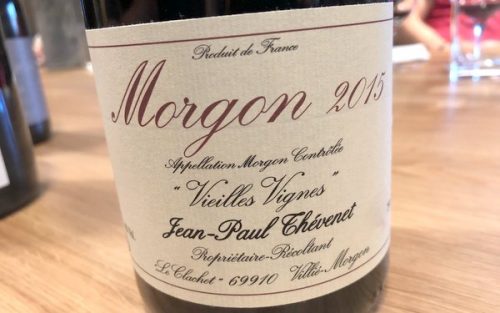
Gamay 43, Jean-Paul Thevenet Morgon Vieilles Vignes 2016

Had this with a bunch of other Beaujolais wines at Wine Mechanics in Gothenburg. It’s such a lovely wine: dense, concentrated, yet elegant.

Jean-Paul Thevenet Morgon Vieilles Vignes 2016 Beaujolais, France
Complex and dense, but pure with lovely black cherry and plum fruit. Brooding and quite structured with some grip, with fresh acidity. This is a beautifully complex wine showing great concentration and intensity. Lovely density to this wine: structured, pure and quite fine, with lovely weight. A very bold expression of Gamay. 95/100

Find these wines with wine-searcher.com


from Jamie Goode’s wine blog http://www.wineanorak.com:/wineblog/beaujolais/gamay-43-jean-paul-thevenet-morgon-vieilles-vignes-2016

For Fine Wine Investment opportunities check out Twelve by Seventy Five: http://www.twelve-by-seventy-five.com/

from
https://twelvebyseventyfive.tumblr.com/post/178389111067

Friday, September 21, 2018

Two lovely Syrahs from Dard & Ribo

Dard & Ribo are one of the top producers of the Northern Rhône, but unless you hang in natural wine circles you probably won’t have heard of them. The hallmark of their wines is incredible purity of fruit, and massive drinkability. René-Jean Dard and François Ribo began working together in the early 1980s, and launched their winery in 1984. They now own 8.5 hectares of vines, with half in Crozes-Hermitage, a little less in Saint Joseph, and a small plot on the hill of Hermitage. Their production is 35% white wine, which is very high for the region.

When they began, they accidentally became known as natural winemakers: they commonly don’t use any sulphites at all, although they are not religious about it, and the launch of their domaine coincided with the emergence of the first natural wine bars in Paris. So initially they’d sell most of their production to these bars, and they became known for making natural wine, even though they were just trying to make wines they wanted to drink. To this day, they keep a low profile, and rarely accept visits. The secret to these wines? Massive attention to detail in the vineyards and the cellar.

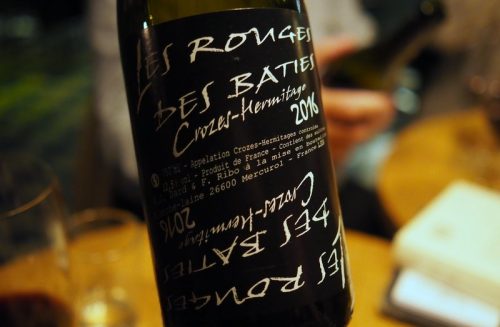
I tried these two wines last night in a natural wine bar in Stockholm. It’s Tygge & Sessil, and it has an amazing wine list. Drinking out isn’t cheap in Stockholm, though, when compared with London.

Dard & Ribo Crozes-Hermitage Les Rouges Des Barties 2016 Northern Rhône, France
Blood, iodine and pepper as well as fresh black cherry fruit. Meaty and intense with lovely purity and some floral notes. There are some dry tannins here but the amazing vivid, floral fruit is quite beguiling. So expressive with some lavender notes. It really grows and develops in the glass: a beguiling, enchanting wine. 95/100

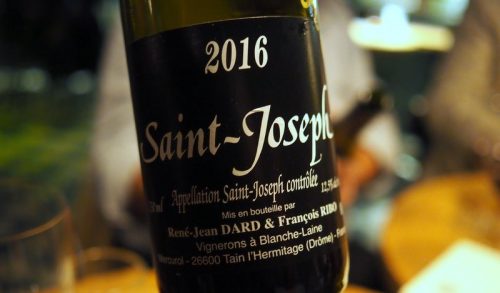
Dard & Ribo Saint-Joseph 2016 Northern Rhône, France
Dense, brooding and intense with salty iodine notes and taut, dense black fruit. Nice bloody notes add interest. This is a backward, intense expression of the Northern Rhône, with sweet linear black cherry and blackberry fruit. There’s lively acidity and a grippy finish. A wine of admirable concentration and purity. 94/100

Find these wines with wine-searcher.com


from Jamie Goode’s wine blog http://www.wineanorak.com:/wineblog/northern-rhone/two-lovely-syrahs-from-dard-ribo

For Fine Wine Investment opportunities check out Twelve by Seventy Five: http://www.twelve-by-seventy-five.com/

from
https://twelvebyseventyfive.tumblr.com/post/178308619682

Cape Wine (6) exploring Italian grape varieties in South Africa

What is it with Italy’s grape varieties? They are really interesting in Italy, but seldom travel well. Still, they attract their devotees, and they are planted in a range of different locales globally. This tasting focused on Italian varieties grown in South Africa, and it was hosted by Roberta Bottega who is from the family that owns the Idiom winery.

It was intended to be partly a benchmarking exercise, including some Italian wines in each flight. ‘It gives us some sort of reference point to see how the Cape terroir influences the outcome,’ explained Bottega. He pointed out that Stellenbosch is 34 degrees South and Sicily is 34 degrees North. Sicily is about the same size of the Cape winelands.

Italian varieties are niche in South Africa, making up 1% of plantings in the Cape. This includes 367 ha of Pinot Grigio, which makes the biggest contribution, although this is not strictly an Italian variety. The other significant varieties are:

  • Sangiovese 70 ha
  • Barbera 32 ha
  • Nebbiolo 26 ha
  • Primitivo 24 ha

Many of the Italian varieties currently grown were smuggled back after what has become an infamous tour by some South African winemakers to Italy back in 1992. Since then, more official imports have followed. Nursery owners the Bosmans have brought in 11 varieties from Italy, with climate change one of the considerations, and have released the first South African Nero d’Avola.

Some of the winemakers

It was an important tasting, but on the basis of many of these wines I wouldn’t be rushing to plant Italian varieties here. However, there were some very encouraging wines that showed that if viticulture and winemaking are spot on, some of the varieties could make something quite serious.

Flight 1

Terra del Capo Pinot Grigio 2018 Franschhoek
Decomposed granite, two clones. Whole bunch pressed and cold fermented, 6 months on fine lees in steel. Zippy, lively and citrussy with a slight pithy edge to the focused lemony fruit. Nicely compact with good acidity. A bit chunky. Has presence. 89/100

Idiom Bianco Di Stellenbosch 2017
Two blocks, one in Banghoek, one in lower Stellenbosch. Cold fermented after whole-bunch pressing, left on light lees after ferment. 9000 litres, 1000 of this is in barrel. Bright, fruity and expressive on the nose with a slight mintiness to the compact citrus fruit on the palate. It’s a bit smoky, mineral and very dry on the palate. 87/100

Nederberg The Winemaster’s Pinot Grigio 2018 South Africa
Grapes come from Darling and Paarl, 9 g/l sugar, 15 C fermentation for three weeks. Light, fruity, attractive and quite mineral with bright citrus fruit. Dry and appealing with nice fruitiness and a hint of spice, and a subtle nuttiness on the finish. 86/100

Zenato Pinot Grigio delle Venezie 2016 Italy
Dry, lively and fruity with good acidity and a hint of citrus pith. Linear and quite stony with nice fruit: it’s quite a gastronomic wine, and really appealing, if not all that complex. 88/100

Morgenster Vespri Vermentino 2018 Swartland, South Africa
Whole-bunch pressed and fermented in stainless steel. Exotic and lively with intense citrussy fruit and some nice spiciness. There’s a bit of grapefruit here as well as a hint of green tea and mint. So zippy and expressive with lots of personality and freshness. Very appealing. 92/100

Ayama Vermentino 2017 Paarl, South Africa
The owners come from the Friuli region. Aged in used 500 litre barrels. Quite rich, dense and pithy with lively citrus fruit. There’s some pear and peach here, and it’s dense and full flavoured. Bold style. 87/100

Sella & Mosca Vermentino di Sardegna 2016 Sardinia, Italy
Very bright and lively with a tangerine and fine herb twist to the lemony fruit. Delicate, fresh and drinkable with nice fruit. Juicy and vital with some green tea hints. 88/100

Volpaia Prelius Vermentino 2015 Maremma, Tuscany
Dense and structured, but well balanced herb-tinged pear, peach and citrus fruit. Some nuttiness and depth with some nice freshness. Quite gastronomic with nice depth. 89/100

Flight 2

Bosman Family Wines Nero d’Avola 2015 Wellington, South Africa
The only Nero d’Avola in SA. 3 hectares planted: it took 14 years after bringing it in until the first commercial release (this wine, 6000 bottles made). Fermented in tank and aged in old oak. Bright, juicy and lively with nice berry fruits. There’s some freshness here. It’s juicy and attractive with good acidity. Uncomplicated but tasty with nice brightness. 88/100

Tasca d’Almerita Sallier de la Tour d’Avola 2015 Sicily, Italy
This is quite generous and ripe with sweet cherries and plums, and a hint of meatiness, as well as some tea notes. Has a savoury edge to it. Satisfying stuff. 89/100

Idiom Zinfandel 2015 Stellenbosch, South Africa
Concentrated and dense with nice compact, stony, grainy blackberry and black cherry fruit. There are some herb and tea notes, too. There’s a silkiness and fleshiness to this wine, and it handles its ripeness really well, finishing fresh. 91/100

Feudo S. Croce Imperio LXXIV Primitivo di Manduria 2015 Puglia, Italy
Sweet and ripe with nice density. Grainy structure with black cherry fruit and nice structure. Has black tea and a nice chalkiness. Ripe and rich but balanced. 91/100

Flight 3

Arcangeli Nebbiolo 2016 Bot River, South Africa
Made in 500 litre barrels, with a stainless steel lid that can open and close. Whole bunch. ‘I wanted to make a wine with infusion and not extraction,’ says Krige Wisser. Very natural with a total sulfur of 16. Taut and complex with a savoury, spicy, waxy edge to the compact raspberry and cherry fruit. Floral rose petal and herb overtones. Nice grippy structure. Primary and dense with lovely focus to the wine. Serious effort. 93/100

Steenberg Nebbiolo 2016 Constantia, South Africa
Planted in 1994, the oldest Nebbiolo vineyard in the country. Suitcase clone, just over a hectare. All destemmed. Ripe and sweet with a green herbal edge to the sweet berry fruits. Leather and herb complexity, with nice density, but there’s some greenness here that’s a little overpowering. 86/100

Domaine des Dieux Nebbiolo 2013 Hemel en Aarde, South Africa
Maiden release, 0.5 ha of vines. 15% alcohol. Sweetly aromatic, with some floral cherry and berry fruits on the nose. The palate has nice juiciness and a bit of grip. Spicy on the finish. There’s some richness here, with a bit of lushness to the fruit. Attractive. Dry finish. 88/100

Enrico Serafino Roero 2013 Piedmont, Italy
Savoury and grippy with firm structure under the red cherry fruit. Some herbs, tar and leather hints, too. Grippy and fruity with nice weight. Quite savoury. 89/100

Du Toitskloof Nebbiolo 2015 Breedekloof, South Africa
Deep sandy loam soils. 26 Brix harvest, rotor tanks, cold maceration for 3 days, then inoculated, fermented at 24 C. This is a fruit-driven yet elegant style of Nebbiolo. Very approachable with sweet red cherries and plums, with a really silky texture and some liqueur-like richness. There’s some nice waxy, spicy complexity, too, with great balance and integrated structure. The tannins have been managed really well. 90/100

Idiom 900 Series Nebbiolo 2015 Stellenbosch, South Africa
First Nebbiolo vineyard was planted here in 1999, in a windy area, but Nebbiolo hates wind. So they have struggled to get a good crop. Have done quite a bit of work in the vineyard. Ferment in 500 litre barrels open at one end. Lively aromatics on the nose with floral red fruits and some plums. Some oak is evident, too with a vanilla sheen. The palate has sweet, lush fruit with nice raspberry and cherry. Quite liqueur-like in character. An attractive, fruity wine in a modern style. 89/100

Morgenster Nabucco Nebbiolo 2014 Stellenbosch, South Africa
First planted in 1999, with two clones. Nebbiolo has brittle canes that break quickly in wind. It also has low basal bud fruitfulness so needs to be cane pruned. Lovely freshness with pure, sweet black cherry fruit. Dense and compact with nice purity and good acidity. Lovely grippy structure. Primary still, even after five years, with pure fruit. Vivid and linear. 91/100

Vietti Nebbiolo Perbacco 2015 Piedmont, Italy
Modern but really good, with a spicy, leathery underpinning to the floral black cherry and plum fruit. Nice grippy structure, but it is carried by the slightly fleshy black cherry and tea fruit. Savoury finish. Satisfying stuff with good balance. 92/100

Fairview Barbera 2014 Paarl, South Africa
Open oak fermenter, worked gently. Older French oak barrels. Sweet, ripe, creamy and dense with lush black fruits and some oak, as well as a slightly bitter twist on the finish. A ripe, bold style. Modern and a bit flashy. 87/100

Idiom 900 Series Barbera 2012
One of the varieties that’s easy to work with and it always has lots of colour. 40% new oak, 24 months. Nicely dense and sweet with fresh black cherry and blackberry fruit. Lovely acidity with a slightly bitter twist. Nice focus here with good acidity and nice brightness. Lovely sweet and sour character with pure fruit. Impressive with plenty of impact, but also balance. 91/100

Braida Montebruna Barbera d’Asti 2015
Savoury, grippy and quite dense. Has a leathery, spicy edge to the raspberry and plum fruit. Good acidity and a nice grainy structure. 88/100

Flight 4

Morgenster Sangiovese 2018 Stellenbosch, South Africa
Bright, juicy, gluggable and fruity. Nice red cherries and raspberries. Very fruity and easy and drinkable. Joyful glugger. 86/100

La Vierge Satyricon Sangiovese 2017 Hemel-en-Aarde, South Africa
11 year old vines, 0.8 ha. Fleshy and bright with nice juicy raspberry and cherry fruit. Supple and lively with a bit of grip. A juicy style that’s easy drinking and not too complex. Good acidity. Nice fruit purity here. 88/100

Idiom Rosso Di’Stellenbosch 2016 Stellenbosch, South Africa
Has a bit of Barbera (3%) in the blend. Nice fruit here: bold and quite spicy with sweet, lush black cherry and plum fruit. Good density and concentration, but also a nice fine structure. Modern and fruit forward, but with freshness and nice structure. Stylish. 90/100

Idiom Sangiovese White Label 2015
Concentrated, dense and spicy with lots of tannin, well integrated oak, and vibrant blackcurrant, blackberry and damson fruit. Powerful and convincing with real impact and a nice bitterness on the finish. Good acidity, and nicely savoury. 92/100

Terra del Capo Sangiovese 2015 Swartland, South Africa
Fleshy and attractive with sweet berry fruits. Modern and quite lush with appropriate structure. A sweetly fruited style that’s very approachable with nice freshness. Smooth mid-palate. 88/100

Domaine des Dieux Sangiovese 2015 Hemel-en-Aarde, South Africa
No new oak here. Convincing style: quite dense and grippy with some sweet and sour character. Vibrant red fruits with some plum and a bit of tar and herb complexity. Good structure with some damson bitterness on the finish. Structured with high acidity, showing good varietal character. 90/100

Badia e Coltibuono Chianti Classico 2015
Good balance here. There’s a nice blend of the sweet cherry and plum fruit with some savoury earth and spice notes. Fine-grained with a nice waxiness. Seamless and integrated, this has some generosity but also nice savouriness. 91/100

Bouchard Finlayson Hannibal 2016
Aromatic. Juicy and lively with sweet berry fruits. Plummy and open with a bright, grippy edge. There’s a bit of tangy spritziness here on the finish. A ripe yet fresh drinking wine. Grippy finish. 87/100

Morgenster Tosca 2015 Stellenbosch, South Africa
Sangiovese with Cabernet Franc and Cabernet Sauvignon. Concentrated and quite spicy with some bitter damson sitting under the cherry and plum fruit. Has nice structure and a savoury complexity. Nicely balanced with potential for development. 90/100

Nederburg Ingenuity Italian Blend 2014 
Sangiovese, Barbera and a splash of Nebbiolo. Fermented in open fermenters plus open barrels. All new oak. Sweet, ripe and fleshy with modern, forward black fruits and some creaminess on the mid palate. Lush and seductive with nice ripeness, but also showing some oak. 88/100

Fairview Homtini 2014 Darling, South Africa
Sangiovese with Cabernet Sauvignon, Shiraz and Merlot. Ripe and generous but fresh at the same time with good structure supporting the raspberry and cherry fruit. Grippy and quite savoury but with nice fleshiness. Has a slightly spicy finish. Nice. 90/100

Dalla Cia Teano 2014 Western Cape, South Africa
Supertuscan-style blend. 12 barrels (4000 bottles). 30% Sangiovese with the rest Bordeaux varieties. Ripe and concentrated with tar, blackcurrant, damson and plum. Grippy and grainy with some chalk, gravel and tar, with a twist of herbaceousness. Finishes drying and firm. Nice balance: ripe and fruit forward but with good savouriness. 92/100

 Find these wines with wine-searcher.com


from Jamie Goode’s wine blog http://www.wineanorak.com:/wineblog/italy/cape-wine-6-exploring-italian-grape-varieties-in-south-africa

For Fine Wine Investment opportunities check out Twelve by Seventy Five: http://www.twelve-by-seventy-five.com/

from
https://twelvebyseventyfive.tumblr.com/post/178306668477

Wednesday, September 19, 2018

Tasting 2015 Barbarescos and 2014 Barolos with Gaia Gaja

The articulate Gaia Gaja was in town to showcase her 2015 single vineyard Barbaresco releases, as well as the 2014 Barolos.

Perhaps Gaja’s greatest achievement as a producer has been to raise the status of Barbaresco, which has emerged a little from the shadow of its big brother Barolo. Langhe has two prestigious sub-regions: within the 10 000 hectares of vines in the region, there are 700 hectares of Barbaresco (with c. 180 producers), and 2000 hectares of Barolo (with c. 350 producers). ‘All the most respected wineries have been from Barolo, not Barbaresco, which was seen as a lesser version of Nebbiolo,’ says Gaia. ‘It took us three generations to show that Barbaresco has a beautiful potential. It is potentially more elegant, and it can still age.’

In a nice, rather un-Italian way, with the success of these two prestigious subregions, their borders haven’t grown. But the number of producers has increased, as more and more growers have begun bottling their own wines. Gaja were early adopters of this transition. ‘My family has always been growing grapes,’ says Gaia, ‘but 150 years ago they started becoming bottlers (in 1859). Every time they made some money they bought more land.’

They make wine only from their own vineyards. Gaia loves Nebbiolo, but acknowledges that it does have a difficult side. ‘Drinking Nebbiolo is like being hit in the face by a ballerina,’ she says, repeating one of her favourite quotes about the variety.

Gaia has now been working with her father for 15 years; he’s now 78 years old. She describes him as an instinctive optimist. ‘For him, improvement comes with change,’ she says. ‘It is a great opportunity to go forward.’ From May 2018 her brother has just started working in the winery, so there are five family members working together. They don’t have specific responsibilities, but share them all.

One of the slight clouds on the horizon is the way that land values have been pushed up so much, with vineyards in Barolo now hitting €4m/ha and those in Barbaresco €1.5 m/ha. ‘Investment has changed the climate,’ says Gaia.

In the vineyard, the goal is to have balanced, low vigour vines. How do they do this? ‘One way is old vines that are wise and disciplined,’ she says. ‘So we try to keep the vines alive as long as possible.’ Biodiversity in the vineyard is also a focus, with the goal of looking after the life in the soil. ‘Wine regions have become monoculture, and we are trying to cultivate biodiversity. Climate change isn’t helping because of dry conditions.’

Gaja have done lots of experimentation. They have planted 250 cypresses, which are now 10 years old. ‘The idea is to plant trees that are more compact: they can become a shelter for many birds,’ says Gaia, pointing out that even though they can be naughty and eat grapes, they are another element of biodiversity. ‘In 1999 we started composting, feeding the soil and not only the vines.’ The compost is based on cow manure. ‘It creates a ‘

bomb of life’, says Gaia. They have also been encouraging bees. ‘They pollinate plants; they colonize the place and keep other things out; and we are trying to understand the connection between the yeasts on the bees and the fermentation: they have Saccharomyces cerevisiae in their guts.’

And they have tried lots of different ways to manage the plants growing around the vines in the vineyard: it’s wrong to call them weeds. They are trying to avoid ploughing of the soils, because there’s good evidence that this reduces microbial diversity by disturbing the communities. ‘The idea is to end up with so many grasses [plants] their roots plough the soil,’ says Gaia.

In the past the main issue was too much water in the clay-rich soils, and so plants were grown and then cut to remove water from the soil. That’s not a problem now: seven vintages in 10 are warm and dry. Normally 800 mm rain a year: in this year so far they have had 1200 mm, so they cut the plants to remove the water. They use different cover crops depending on the need of the vineyard. Cereals remove vigour while legumes increase it. Mustard repels nematodes.

2014

‘I love the structure and freshness of the 2014,’ says Gaia. ‘People have been less confident in promoting it. It was a challenging year, beginning with a warm spring and early flowering. Without this the grapes wouldn’t have ripened. From June the temperature dropped and three cold months followed. The average temperature in August 2014 was 19 C, not 27. There were 22 rain showers in July. Everyone had to work more in the vineyard and we had to drop fruit. In Piedmont, starting from September there was no more rain, and the grapes ripened in cool weather in the fall. All the sites we had attained phenolic ripeness, which is rare. The berries were bigger than usual, and so there’s a lightness of mouthfeel, but the spine is straight. What I love is the perfume.’

2015

‘The 2015 is riper, with more approachability, and also structure. In Piedmont, 2015 was quite normal, with one abnormal month – July. It was extremely hot in July. Then in August things cooled down. The month of July characterizes these wines, concentrating the grapes (the berries stayed small), there was a very fruity character in the wines, but don’t expect what you’d normally expect from a warm year. It has a body that is mid-weight. The bad side is that the crop was small; the good side is that we had pure, precise and ripe fruit expression. It’s not a hot vintage because the vineyards all express quite differently: in a typically hot year the wines converge more.

Winemaking

These days, everything is destemmed, with fermentation in stainless steel tanks. ‘We have recently bought some 6000 litre wooden fermenters,’ says Gaia, so these will be used for top wines this year. Full berries are used, punched down at the beginning then with pump overs. Some of the berries are still intact at the end of primary fermentation, so they push down the cap for 10-14 days. Wine is then moved to 225, 500 and some 700 litre barrels with a good amount of lees. ‘The lees can help to give a juiciness,’ she says. ‘They are antioxidant too. The tannins eat oxygen and reduce the wine quickly so we rack often. Then after a year the wine goes to big casks (2000-5000 litres). In the first year the proportion of new oak ranges from 15-40%

Gaja Barbaresco 2015
This is quite pretty, but there’s also a nice savouriness. As well as the sweet red cherry fruit, there are some herbs and thyme, with some orange peel and a bit of grip. It’s quite citrussy with good tannin, but it’s well behaved tannin. Pure and expressive, and quite elegant, in a ripe, sweetly fruited style. Delicious already, but will mature into a lovely harmony. This is really fine. 94/100

Gaja Costa Russi Barbaresco 2015
Fine and expressive with iodine, blood, raspberry, fine herbs and cherries on the nose. There’s lovely concentration on the palate. There’s pure, sweet red cherry and plum fruit, with nice silky texture and smoothness in the mouth, but also fine-grained and firm tannins that integrate beautifully. Fine, balanced, complex and ethereal, and surprisingly approachable now. Profound. 96/100

Gaja Sori San Lorenzo Barbaresco 2015
Closer to the river, so the winter is milder and the flowering is earlier. There are leafy, sappy notes here, with sweet raspberry and cherry fruit. There’s a strong savoury character here, with herbs, sweet cherries, some raspberry and real freshness. The distinctive feature here is the herbal character, and it’s elegant, fine and pure. The structure is present but well integrated. Very fine. 95/100

Gaja Sori Tildin Barbaresco 2015
A vineyard at the top of the hill with lighter soils, more sand, and limestone. This has very high density planting (6000 vines/hectare). It makes darker-fruited wines with more garrigue, and meaty and spicy characters. This shows real density with grippy, tannic structure evident under the red and black cherry fruit. There’s a freshness and grip to this wine which has notes of rose and tar, and some detailed herbal hints. Backward and structured, with lots of potential. 95/100

Gaja Sperss Barolo 2014
This is a bold, grippy wine with firm structure. There’s nice fresh but dense fruit with herbs, earth and iodine. It’s really dense and expressive at the same time, showing a lot of grip. Pure and fine with a linear trajectory on the palate: quite primary and classic, but with good fruit. Should age really well. Backward but beautiful. 96/100

Gaja Contesia Barolo 2014
Very fresh and pretty with fresh red fruits. Medium weight with lovely red fruit purity with fine-grained tannins. Foral and expressive with nice weight and focus. Notes of tea and sappy green leaves. Has a really pretty, fresh character. Nice grainy, grippy finish, but not at all austere. 94/100

UK agent is Armit

 Find these wines with wine-searcher.com


from Jamie Goode’s wine blog http://www.wineanorak.com:/wineblog/italy/tasting-2015-barbarescos-and-2014-barolos-with-gaia-gaja

For Fine Wine Investment opportunities check out Twelve by Seventy Five: http://www.twelve-by-seventy-five.com/

from
https://twelvebyseventyfive.tumblr.com/post/178249035942

Tuesday, September 18, 2018

A Sherry seminar: eight epic biologically aged Sherries

Yesterday I did a seminar on biological ageing and the importance of vineyard site in Sherry. It involved eight different, and rather beautifully aged biologically aged Sherries. These are sherries matured under a layer of yeast known as the flor, that sits on the surface of the wine in an incompletely filled barrel. Flor is a very interesting subject. Palomino Fino is the grape variety here (it’s an interesting variety!) and the soils are very interesting too, with high active limestone content. Together, the combination is a powerful one. Here are my notes on the wines:

Tio Pepe Fino Muy Seco Palomino Fino NV
From Carrascal and Macharnudo. So fresh, delicate and expressive with a lively nutty, tangy edge to the salty lemon and apple fruit. Full flavoured but delicate. 90/100

Barbadillo Manzanilla Sanlucar de Barrameda NV
This is very rounded and complex with a saline thread supporting fine pear and apple fruit. Has some nutty, almond-like character and a long, soft finish. Very refined. 91/100

Lustau 3 en Rama Fino de Jerez de la Frontera NV, Spring 2018 release
Complex, fine, spicy lemony nose with some nuttiness and a bit of matchstick character. Really complex palate with some mineral, spicy matchstick reduction. Profound, salty and complex, this is a remarkable, characterful Fino. 94/100

Tio Pepe Fino en Rama NV, 2018 release
This is complex, lemony and quite thrilling, with almond, marzipan, spice and bright citrus pith notes. Finishes vital and limey with amazing freshness. Notes of bread, grapefruit and wax. Thrilling. 94/100

Hildago La Gitana Manzanilla Pastrana Single Vineyard NV
Comes from the Pastrana vineyard in the Miraflores district of Sanlucar, and this is a collaboration with Cristiano van Zeller. It’s aromatic with bread, nuts and a bit of honey. The palate is concentrated and bold with lots of textural richness. There are some tangy, salty notes but also some depth, as well as a lemony brightness on the finish. Pure and refined, in a rich style. 93/100

Valdespino Inocente Fino Single Vineyard Macharnudo Alto NV (magnum)
Refined, bright citrussy nose with some salty, seaside hints. The palate is pure, sealmess, elegant and quite profound. Lovely focus and freshness with a faint hint of seaweed, some candle wax and a refined, saline, lemony core, as well as some green apple. Just beautiful. 95/100

Bodegas Tradicion Fino Tradicion NV (magnum)
Aged for a long time under flor (8 years), this is profound. It has some salty, marine currents, swirling with notes of bread, nuts, citrus peel and crisp apple, as well as some old wood richness. So harmonious and complex, this has layers of flavour, and it’s pretty irresistible. 95/100

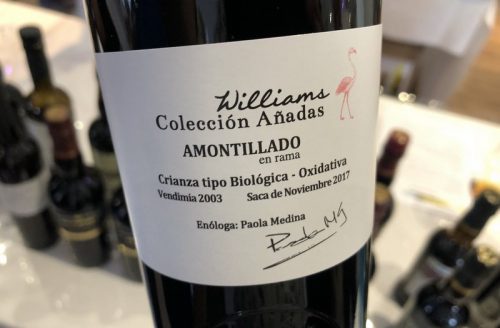
Williams & Humbert ‘Williams’ Collección Añadas Amontillado 2003
Bottled November 2017, Crianza Tipo Biológica. Yellow/gold colour. This is amazingly spicy and vivid with marmalade, lemon peel and almond characters. So powerful and complex, with some salty hints and a long citrussy finish. Very subtle wood notes with an amazingly powerful, complex personality. This is astonishing stuff. 97/100

Find these wines with wine-searcher.com


from Jamie Goode’s wine blog http://www.wineanorak.com:/wineblog/spain/a-sherry-seminar-eight-epic-biologically-aged-sherries

For Fine Wine Investment opportunities check out Twelve by Seventy Five: http://www.twelve-by-seventy-five.com/

from
https://twelvebyseventyfive.tumblr.com/post/178207924247

Sunday, September 16, 2018

Cape Wine (5) more highlights, including Craven, Alheit, Savage, Testalonga, JH Meyer

Some more stunners from Cape Wine.

Craven The Firs Vineyard Syrah 2017 Devon Valley, South Africa
12.5% alcohol. From a heavy clay outcrop: the clay gives some black fruit bass end even at low potential alcohol. Peppery and supple with black cherry and black pepper on the nose. Nice purity and elegance with amazing texture, purity and depth. So fine grained and elegant. 95/100

JH Meyer Mother Rock Liquid Skin 2017 Swartland, South Africa
This has 9 weeks skin contact, and is made like a red wine, with 100% stems. This bottling has no added sulfites, and is fermented in eggs. Cloudy and lively with lovely brightness. Shows pretty floral passionfruit, apple and pear notes. Fresh, appley and pure, and nicely intense with a grainy structure. 95/100

Savage Girl Next Door Syrah 2017 Coastal Region, South Africa
From a 0.38 hectare vineyard on the Stormhaven Estate where Duncan lives. He took over this small block and rehabilitated it, and it’s hands on viticulture to the degree that even though this isn’t a cheap wine, he makes no money from it. In 2017 he got one 600 litre barrel, and this year he got a 600 litre barrel plus a 225. So pretty and fine with a bit of meat and some black pepper. Smoothly textured but also with good structure. Very fine and balanced with freshness and finesse. Profound. 96/100

Alheit Huilkrans 2017 Skurfberg, Citrusdal Mountain, South Africa
This is the first bottling of this wine, from the Oudam farm, owned by the Visser family who the Alheits have been working with since 2011. The label pays homage to their son, Kallie, who died in 2017. From red clay soils at 450 m. Chris says that this is a caricature of Skurfberg Chenin, loaded with citrus and acid. There’s a faint hint of mint on the nose, and it’s fresh, linear and powerful with linear citrus and pear fruit. Concentrated and very fine with real precision. 96/100

Testalonga Lords of Dogtown Chenin Blanc 2017 Swartland, South Africa
Alas just 500 bottles of this made: a Chenin Blanc with no added sulfites from 14 rows of 36 year old vines on the Paardeberg. It’s salty, bright and refined with citrus and apple fruit. Vital and complex with lovely acidity. Structured, refined and complex. 95/100

Find these wines with wine-searcher.com


from Jamie Goode’s wine blog http://www.wineanorak.com:/wineblog/syrah/cape-wine-5-more-highlights-including-craven-alheit-savage-testalonga-jh-meyer

For Fine Wine Investment opportunities check out Twelve by Seventy Five: http://www.twelve-by-seventy-five.com/

from
https://twelvebyseventyfive.tumblr.com/post/178140192787

Friday, September 14, 2018

Cape Wine (4) some more very exciting wines: Rall, Leeu Passant, Loggerenberg, Kanonkop, Badenhorst

Some more thrilling wines tasted at Cape Wine. For me, these are very high ratings indeed!

Leeu Passant Chardonnay 2016 Stellenbosch, South Africa
Andrea Mullineux is trying to make this Chardonnay in an older, saltier style. She describes the winemaking as ‘death and resurrection’, and she allows juice hyperoxidation with no sulfites present, and then allows the wine to oxidise a bit again after fermentation. This is the death. Then the redox potential changes during the ageing and the wine ends up salty. ‘You need cajones,’ she says. ‘it’s a winemaking style, but you need a spectacular vineyard to be able to make this style.’ With the second vintage of Leeu Passant, they’ve gone down to just one Chardonnay from a vineyard in the Helderberg planted in 1980 at 400 metres. It’s fine, linear and salty with a mineral edge. Some pear and citrus pith notes. So focused , with lovely citrus fruit and good natural acidity, as well as some nice graininess. 96/100

Leeu Passant Dry Red Wine 2016 Western Cape, South Africa
This includes some of the oldest vineyards in the Cape. Two Cinsault blocks, planted in 1900 and 1932 make up 30% of the blend. Then there’s Cabernet Sauvignon from a mother block in Stellenbosch, and some Cabernet Franc also from Stellenbosch. The Cinsault and Cabernet Franc are done whole bunch. This is intensely floral and fine with lovely blackcurrant and red cherry fruit. The palate is fresh and focused, and really expressive, with fine tannins. Good structure and freshness with amazing precision and purity. This has a long life ahead of it but it’s delicious now. 96/100

Rall AVA 2017 Swartland, South Africa
This, for me, is the best new-release South African red wine I have tried to date. It comes from a schist-dominated vineyard (the same one Donovan Rall sources his Chenin from) that looks a bit like Priorat! The drought on the schist was horrible, and he had yields of 6-7 hl/ha from this 2.5 hectare block. The wine shows interesting, aromatic, floral black fruits. It’s concentrated and bold and tannic but also really fresh. Astonishing concentration and purity with hits of meat, olives, spice and pepper. Thrilling. 97/100

Van Loggerenberg Wines Graft 2017 Stellenbosch, South Africa
55% Cinsaut, 45% Syrah from the Polkadraai. 100% whole bunch then matured in old oak. Vivid, floral and peppery on the nose. Amazing perfume with notes of olives and herbs. Complex and vital with some garrigue-like notes, coupled with lots of pure fruit. Quite amazing. 96/100

Kanonkop Paul Sauer 1995 Stellenbosch, South Africa
A blend of 68% Cabernet Sauvignon, 21% Merlot and 11% Cabernet Franc, aged 24 months in French oak, 60% new. This has aged very well. Aromatic blackcurrant fruit with spicy framing on the nose. Lovely concentration on the palate, with lots of fruit still, showing berry notes, fine spices and real elegance. This is a simply made wine that has emerged so well from its youthful rusticity, and is now singing. 96/100

Kanonkop Paul Sauer 2015 Stellenbosch, South Africa
70% Cabernet Sauvignon, 15% each Merlot and Cabernet Franc, matured for two years in entirely new oak. Concentrated, taut and spicy with some real grip to the blackcurrant and blackberry fruit, supported by fresh acidity. There’s a compact, primary character to the black fruits with firm structure. The winemaking is still evident, but it would be daft to drink this now. Hide it in the cellar for at least a decade. 94/100

Badenhorst Family Wines Ramnasgras Cinsault 2017 Swartland, South Africa
Adi Badenhorst says that he loves Cinsault, and is planting more. This is a stunner. Grippy and peppery with lovely weight. It has intensity with raspberries, cherries and plums and some spiciness. Real concentration here. Smashable yet serious with lovely detail and complexity. 95/100

Find these wines with wine-searcher.com


from Jamie Goode’s wine blog http://www.wineanorak.com:/wineblog/south-africa/cape-wine-4-some-more-very-exciting-wines-rall-leeu-passant-loggerenberg-kanonkop-badenhorst

For Fine Wine Investment opportunities check out Twelve by Seventy Five: http://www.twelve-by-seventy-five.com/

from
https://twelvebyseventyfive.tumblr.com/post/178101331497