There’s a very interesting article on Jancis Robinson.com today, in which she reports on a recent Institute of Masters of Wine (IMW) seminar on mineralogy. It deals with some very interesting issues. In her piece, she reports on Maltman’s talk, but I think she jumps to too-hasty a conclusion about its implications.
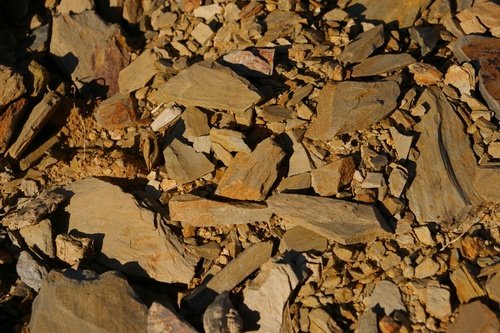
As geologist Alex Maltman explained forcefully, in a reasoned, well-illustrated talk, there can be no direct link between what is below the surface of a vineyard and the flavours found in the resulting wine. This despite the fact that soil type has long been held to be one of the fundaments of the sacred notion of terroir – and today one of most common activities among vine growers the world over is to dig a soil pit in their vineyards to show what type of rocks lurk below.
Just because there is no direct link between the soil and the flavour of wine doesn’t mean that soils don’t influence the flavour of the wine. Soil pits are cool. We shouldn’t feel bad about them.
Despite what Jancis implies here, soil type remains one of the fundaments of terroir. While some definitions of minerality – namely that minerals from the soil end up in the wine and flavour the wine – are now in peril, Maltman’s thesis doesn’t question the notion that soils alter the flavour of the wine, in the way that Jancis implies.
[As an aside, I think we should keep the door open slightly for a direct effect of soil minerals on wine flavour, as I argue here in this piece on the mystery of soils and wines. But that’s a discussion for another time.]
The key here is the word directly. Those of us who taste curiously and widely know how important soil type is. Wines from a particular soil type often share similar characters: the same variety grown on clay, schist, granite, sand or limestone will often taste quite different, even if the climate is identical. And you can often spot the imprint of the soil type on wine style, even across varieties and climates. I don’t think this is controversial.
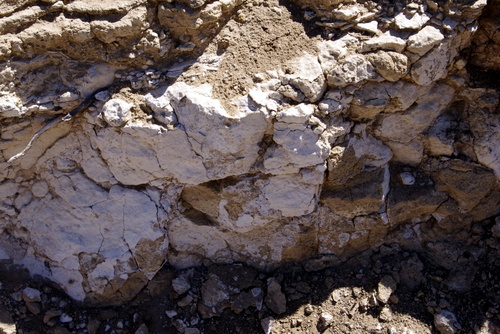
The soil is having an indirect effect on wine flavour, facilitated through plant physiology and microbial activity. Teasing apart the mechanisms of this is likely to prove super-complicated. Yes, water holding capacity is important, but so is soil chemistry, although that’s disputed by some.
I understand the frustrations around the use of the term ‘mineral’. Attempts to identify the ‘mineral’ component of wine through sensory analysis, lexical analysis and chemical analysis are, I suspect, doomed to failure. We should just stop trying. Let people use the descriptors they like to use. If I say that a wine is silky, I don’t have to prove to a scientist that there’s silk in the wine. So if I say a wine is mineral, why should MWs and scientists demand proof that I’m referring to a chemical that is soil- or rock-derived?
But I feel that in the face of this criticism, Jancis is backing down, giving in all too easily. She should fight her corner. Why should we have to abandon the idea that soils influence wine flavour? They do. It’s just a question of how, and that is likely to be very hard to prove scientifically, even though it’s not a controversial idea to those who taste lots of wines from around the world, and spend time obsessing over soil pits.
So, the death of terroir has been greatly exaggerated.
Coincidentally, I just got this question from a reader today:
I’ve been reading Alex Maltman’s Minerality in Wine: A Geological Perspective, and have just finished your article More on Terroir: A Geologist Speaks. I have a question and if you haven’t time to answer, I totally understand.
In your article, you say that for some vineyards planted on deep, fertile soils, there will not be much of a terroir effect. However, if I’ve understood Maltman’s observations correctly then if said soils had a high CEC then surely those deep, fertile soils could produce grapes with a mineral nutrient rich juice, in which which yeasts and other bacteria could flourish during fermentation to make an interesting wine, regardless of the lack of bedrock influence on the soil?
Or is it the LACK of certain mineral nutrients in less fertile, shallower soils that would produce less nutritionally balanced juice, thus forcing yeasts to metabolise, for e.g., sulphur compounds, that would lead to a wine with potentially more interesting/site specific flavour compounds?
I suppose the simple question is: would the fertile soil produce an overly nutritionally balanced must that would in turn produce a boringly over balanced wine?
I think it’s the latter – it’s the less fertile soils producing a nutritionally less balanced juice, which causes the yeasts to do interesting things during fermentation, such as producing volatile sulfur compounds. Let’s not forget about the importance of microbes, be they local indigenous bugs, or cultured yeasts and bacteria.
The other effect of deep soils is to cause more vigorous growth of the vine, which then concentrates less on fruit production and is less in balance. This can affect the flavour of the wine quite significantly, and usually detrimentally.
from jamie goode’s wine blog http://www.wineanorak.com:/wineblog/wine-science/terroir-the-rumours-of-its-death-have-been-greatly-exaggerated
For Fine Wine Investment opportunities check out Twelve by Seventy Five: http://www.twelve-by-seventy-five.com/
from
http://twelvebyseventyfive.tumblr.com/post/152521246252

No comments:
Post a Comment