Sunday, April 29, 2018

Takaki Okada’s after-vintage hangi

I landed in New Zealand just in time to catch Takaki Okada’s (Folium Vineyard) after-vintage hangi. For the last few years Takaki has hosted this event. A hangi is a traditional Māori way of cooking, and it involves burying the food in a pit after lighting a fire. A few hours later, the hangi is unearthed and the food is removed. The result is beautifully tender meat and vegetables with a distinctive smoky taste. Here’s a short film of the hangi:


People brought wine, and we drank really well. I didn’t take any notes, but from memory these were some of the wines we enjoyed.

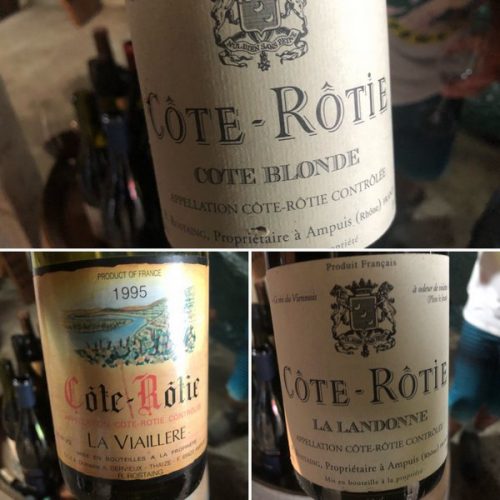
A nice trio of 1995 Côte Rôties from Rostaing. The Landonne was dense and firm, with good structure and some developing still to do. The Blonde, in contrast, was really floral and open, with some wildness. A nice treat to try these.

Takaki’s reserve Pinot from 2014. A lovely, balanced wine. (See write up here.)

A blend of Pinot and Gamay. Not complex but beautifully drinkable and delicious.

This is a nicely mature Brunello with lovely savoury complexity and drinkability.


from Jamie Goode’s wine blog http://www.wineanorak.com:/wineblog/videos/takaki-okadas-after-vintage-hangi

For Fine Wine Investment opportunities check out Twelve by Seventy Five: http://www.twelve-by-seventy-five.com/

from
https://twelvebyseventyfive.tumblr.com/post/173425965637

Saturday, April 28, 2018

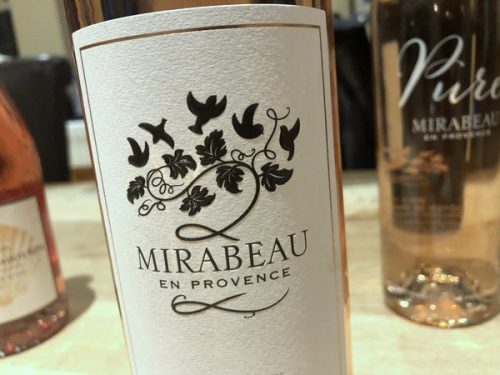
New rosés from Mirabeau en Provence

I’ve written before here about rosés from ambitious, innovative new negociant Mirabeau. Here are the latest releases: now four wines in the range, and they each have their place.

Mirabeau en Provence 2017 Côtes de Provence, France
13% alcohol
Screwcapped (tin/saran liner). Pale salmon pink in colour with a nice rounded, slightly creamy texture and appealing redcurrant and strawberry hints. This is textured but also has some brightness, with a touch of mandarin, too. 87/100

Mirabeau en Provence Pure Rosé 2017 Côtes de Provence, France
13% alcohol
Sealed with a DIAM 3. Beautifully packaged this has a slight smoky, spicy framing to it that’s really attractive. Delicate, nicely focused and seamless, with tangerine, fine herbs, a twist of black plum and some cranberry brightness on the finish. Lovely wine. 91/100

Mirabeau en Provence Etoile Rosé 2017 Côtes de Provence, France
13% alcohol
Very pale in colour. Bright, focused and quite mineral, with a smoky, savoury, finely spicy framing to the lemon and mandarin orange notes. Crisp, dry and quite stylish with a hint of pepper on the finish. 90/100

Mirabeau La Folie Sparkling Rosé NV Provence, France
Very pale in colour. Bright and lemony with some pear and peach notes. A really pretty, pure wine with moderate fizziness. 87/100


from Jamie Goode’s wine blog http://www.wineanorak.com:/wineblog/provence/new-roses-from-mirabeau-en-provence

For Fine Wine Investment opportunities check out Twelve by Seventy Five: http://www.twelve-by-seventy-five.com/

from
https://twelvebyseventyfive.tumblr.com/post/173394217267

Friday, April 27, 2018

Pierre Cotton, an exciting young winegrower in Brouilly, Beaujolais

Pierre Cotton’s family domaine is perched next door to the vineyards heading up the slope of Mont Brouilly. He’s one of the talented next generation of winegrowers in the region, and came to winemaking at the family domaine after a spell as a motorcycle mechanic and then two years working in the Loire.

He began in 2014 with a hectare of the family’s Côte de Brouilly vineyards, and then added another couple of hectares of Brouilly. He purchased 0.8 hectares of Regnié and another of Beaujolais in 2016. In 2017 his father stopped, and Pierre is now in charge of the whole family domaine, with 3 ha in Brouilly and 5 ha in Côte de Brouilly. It will be exciting to see what he does with these vineyards.

Farming is organic: the soil is worked using old over-row tractors that date back to the 1960s. We look at the vineyards: the slopes heading up the mont have blue diorite stones in them. Heading down further, past the road, he points out that the soils change and the sites are much sunnier. Terroir is everything here.

Winemaking is natural. It’s 100% carbonic in concrete tanks, starting at 10 C and only rising to 17 C, and then he goes to big barrels after fermentation. These large, old foudres are located in the cellars. In the large barrels at low temperatures he says that the wines keep changing day by day. ‘Gamay moves all the time, not like Pinot,’ says Cotton. They are often a bit reduced. ‘In big barrels we always have reduction, but it is better for us.’

Every cuvée is made the same way, with no added sulfites, so it’s just the soil that is different: this is what causes the wines to taste different. We taste in the cellar from the foudres, then do some tasting from bottle.

First, a white that has had 7 days carbonic maceration. It’s Beaujolais blanc from limestone soils, and hasn’t yet seen sulfites. Linear and quite mineral with some oxidative notes. Almonds, nuts, white peach. Detailed and complex: this is a proper wine made in an oxidative style.

Pierre Cotton Regnié 2017
From large foudre. This comes from a small parcel of yellow granite. Supple and fine and very elegant, with hints of spice, herbs and pepper. Light, supple and fine with lovely balance. Some slight funky hints but it’s really nice. Reductive. 91-93/100

Pierre Cotton Brouilly 2017
From pink granite soils. Very fresh with some raspberry and cherry with a nice red fruit focus. A bit of reduction here. Nicely spicy with freshness and elegance, and a bit of bite. 92-94/100

Pierre Cotton Côte de Brouilly 2017
From blue stones. South-facing slope, old vines. Supple and finely spice with nice detail and sweet, elegant black cherry and blackberry fruit. Hints of meat and spice, with good grip and a bright raspberry edge. Vital. 92-94/100

Pierre Cotton Côtes de Brouilly Les Grilles 2017
From yellow stones, which are a blend of the pink granite and blue stones. This is a warm site. Warm, dense, rich and spicy with a bit of lift. Lively acidity on the palate which is warm and rich with some meat and cheese savouriness. Structured and powerful on the finish. 91-93/100

Bottled wines

Pierre Cotton Côte de Brouilly 2014
This was the debut wine, and it has no added sulfites. Tightly focused, fresh and spicy with a forward raspberry and cherry fruit nose. A little bit reductive. The palate is concentrated and fresh with linear red cherry fruit and good acidity. There’s a sort of wild spiciness here and good structre, with a vital finish. Lovely wine. 93/100

Pierre Cotton Côte de Brouilly 2015
Fresh, vivid, complex and expressive with lovely open raspberry and red cherry fruit. Has a bit of lushness to the fruit on the mid-palate. A sappy fresh finish with nice structure as well as sweet lush fruit. Really interesting with hints of blackcurrant and olive. 92/100

Pierre Cotton Côte de Brouilly 2016
Lovely raspberry and cherry aromatics. So supple and fresh with lovely purity and focus, and nice grainy structure sitting under the supple, elegant fruit. Bright, juicy and very fresh with a nice presence to the palate. Pretty, complex and detailed. 94/100

Pierre Cotton Côte de Brouille ‘Les Grilles’ 2016
Expressive, vital nose of raspberries, red cherries and some floral notes. The palate is supple and fresh with nice raspberries to the fore. Quite grainy and structured with nice grip. Structured and taut. 93/100

Pierre Cotton Regnié 2016
First wine from his 0.8 hectares here, on yellow granite soils. Spicy and tight and mineral with some reductive notes. Grainy with grippy red fruits. Very stony and bright with some fresh mineral notes. Such a different wine. 93/100


from Jamie Goode’s wine blog http://www.wineanorak.com:/wineblog/beaujolais/pierre-cotton-an-exciting-young-winegrower-in-brouilly-beaujolais

For Fine Wine Investment opportunities check out Twelve by Seventy Five: http://www.twelve-by-seventy-five.com/

from
https://twelvebyseventyfive.tumblr.com/post/173354800622

Wednesday, April 25, 2018

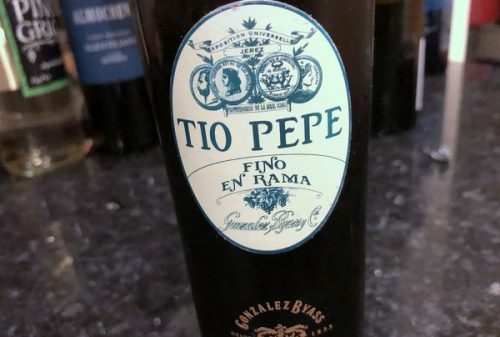
Gonzalez Byass Tio Pepe Fino En Rama – 2018 release

I’m really enjoying this. It’s the latest release of the Tio Pepe Fino En Rama. Now produced every year, this is Fino sherry fresh from the cask, and it has amazing flavour and aroma. [Read more about it in the links below if you aren’t familiar with the style.]

Gonzalez Byass Tio Pepe Fino En Rama NV Spain
15% alcohol. This 2008 is the ninth release of the en rama from the Tio Pepe solera, and it’s a real cracker. It’s incredibly fresh, aromatic, pretty and detailed with tangy lemony fruit, some rich spiciness, a bit of bite and a lovely salty edge. This has an almost electric feel in the mouth, with brightness and focus. It’s vivid, refreshing and utterly compelling. Perhaps the best yet? 94/100 (£15.50 Tanners, Direct Wines, Majestic, The Wine Society)

See also:


from Jamie Goode’s wine blog http://www.wineanorak.com:/wineblog/spain/gonzalez-byass-tio-pepe-fino-en-rama-2018-release

For Fine Wine Investment opportunities check out Twelve by Seventy Five: http://www.twelve-by-seventy-five.com/

from
https://twelvebyseventyfive.tumblr.com/post/173303244852

Tuesday, April 24, 2018

The long-awaited first sparkling wines from Rathfinny, Sussex, UK

Mark Driver, owner, Rathfinny

Today, after lots of anticipation, the first sparkling wines from Rathfinny were launched. It’s an ambitious project, and one that has been much talked about, and so it was great to finally get to taste these wines. The long and short of it is that they are very good, and this sizeable estate is a very welcome addition to the English and Welsh wine scene. We need more top quality, professional, ambitious players, and if Rathfinny’s subsequent releases are as good as these first ones, they are playing at the top end, along with the likes of Nyetimber, Hambledon, Ridgeview and Gusbourne.

The first vines were planted here in 2012, and the original plantings were all with high grafts, which helped things along a bit. The first crop was in 2014, and was around 15 tons. Last vintage some 200 tons were harvested, and that looks set to increase in 2018.

The soils are all chalk with varying depths of top soil, ranging from 30 cm at the top and 50 cm at the bottom. They are very free draining, and although they aren’t managed organically, they are treated sympathetically. There’s some herbicide use under the rows, but some of the under vine areas are managed manually. The wind is the main viticultural challenge, but this also has the side-benefit of keeping the vineyard relatively disease free.

Harvest is as late as possible, to get full flavour maturity. There’s no problem with acidity. The 2014 was picked in the last week of October, for example, just before the leaves fell off. ‘The revelation here is Pinot Meunier,’ says owner Mark Driver. ‘It’s 10%, but we are planting more. If you ripen it, it has great aromatics and balance of flavours.’

Future releases will be a Blanc de Noirs next year, and then the following year a classic cuvée blend that initially will be vintage, but then may go non-vintage in the future. These two initial wines will be sold through Gonzalez Byass, and 90% will go to high-end on-trade, beginning with a month exclusivity to the Savoy. Retail will be c. £35.

Rathfinny Blanc de Blancs 2014 Sussex, England
Dosage 4 g/litre. Very precise and delicate. Pure and linear with clean, crisp fruit. Refined and pure showing some pear, citrus and white peach fruit with incredible delicacy. The acid is so well integrated into the wine it doesn’t stick out at all. Lovely elegance and precision here: spot on for the first release. 93/100

Rathfinny Rosé 2015 Sussex, England
2.5 g/l dosage. 50% Pinot Noir, 40% Chardonnay, 10% Pinot Meunier. Red wine is Pinot Noir Precoce, aged in barrels. Pale pink colour. Delicate and focused with nice crisp citrus fruit as well as faint hints of strawberry and red cherry. Has lovely focus and purity with good acidity. Tight and quite fine with nice grip. A really assured, composed wine. 92/100


from Jamie Goode’s wine blog http://www.wineanorak.com:/wineblog/england/the-long-awaited-first-sparkling-wines-from-rathfinny-sussex-uk

For Fine Wine Investment opportunities check out Twelve by Seventy Five: http://www.twelve-by-seventy-five.com/

from
https://twelvebyseventyfive.tumblr.com/post/173267826497

New Zealand Sauvignon Blanc: a great dinner celebrating this variety at Tredwells

Chantelle Nicholson introduces the food, with some of the dishes

Last night I went to a brilliant dinner at Tredwells. Food by the talented Chantelle Nicholson was paired with a fabulous range of 12 Sauvignons from New Zealand, selected by Mel Brown of The New Zealand Cellar.

The great things about this selection is that explored just about all the major regions of the country. Of course, Marlborough is the home of Sauvignon and made the variety famous with its distinctive style. But here we had wines from Waiheke Island, Central Otago, North Canterbury, Nelson and Martinborough joining in the party. And these wines were all really good.

Marlborough was represented by some very interesting wines. Dog Point’s Section 94 is a complex, barrel-fermented style that really works and ages beautifully. Greywacke’s Wild Sauvignon is also made in a more complex style with lovely intensity, as is Seresin’s thought-proving, detailed wine. Perhaps more typical but still nicely complex is the Kim Crawford Spitfire, and Villa Maria’s Clifford Bay really captures that lovely Awatere Valley intensity and perfume.

The most European-styled of the bunch is Rippon, from Wanaka. This is so linear and mineral. I also really liked the bright, focused style of Man O’War from Waiheke. The most decadent of the bunch was the Pegasus Bay Sauvignon Semillon, with lovely sweet fruit.

Nelson seems to make tight, bright Sauvignons, and the Seifried Aotea and Neudorf were both very linear and pure. Martinborough was well represented with the complex, linear Ata Rangi and the very aromatic, pure Craggy Range. I didn’t take any notes, alas, but I really enjoyed experiencing the diversity of Kiwi Sauvignon matched with such good food. Sauvignon is a superb variety.


from Jamie Goode’s wine blog http://www.wineanorak.com:/wineblog/new-zealand/new-zealand-sauvignon-blanc-a-great-dinner-celebrating-this-variety-at-tredwells

For Fine Wine Investment opportunities check out Twelve by Seventy Five: http://www.twelve-by-seventy-five.com/

from
https://twelvebyseventyfive.tumblr.com/post/173255551492

Sunday, April 22, 2018

Quinta do Montalto, a Lisboa producer experimenting with amphorae and medieval wine

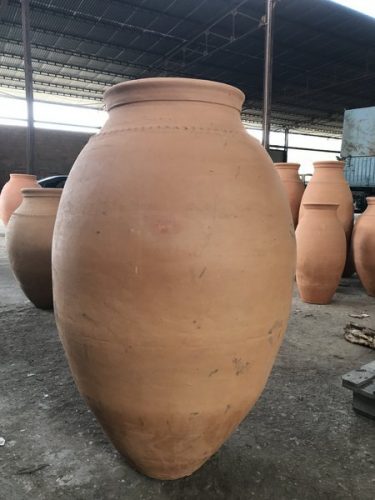
Montalto is an organic producer in the Lisboa region of Portugal. The family domain consists of 15.5 hectares of vines, and the current proprietor is fifth generation André Valério (pictured above). He’s taking quite an experimental approach, and is now working with amphorae (know locally as Talhas).

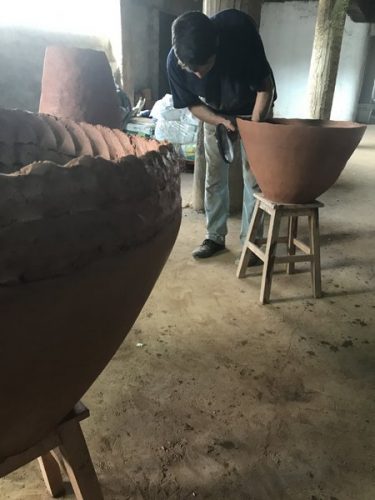
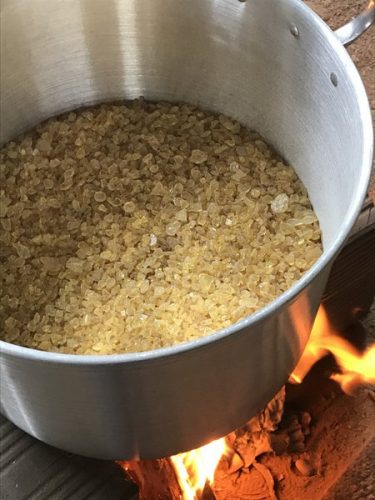
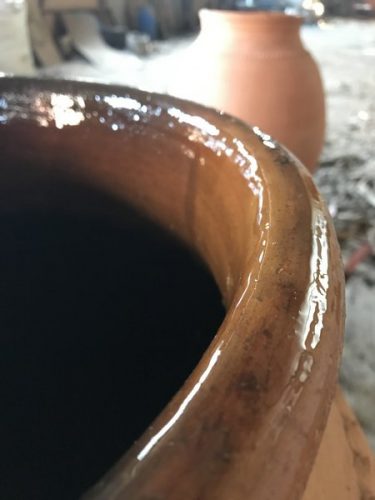
He tells me that some people are painting the insides of their amphorae with epoxy resin, which he regards as absurd because it makes them largely inert containers. Instead, his 250 litre amphorae, made by a local producer, are coated with natural resins. He takes the amphorae, heats the inside of them over a flame, and then puts the resin inside. As it melts, he rolls the amphorae.

‘Everyone says to me you can’t do this and it will make the wine bitter,’ he says. ‘I want to prove it is possible.’ The result is that the inside of the amphora is covered with a natural resin glaze. The resin is extracted from pine trees in Spain.

Quinta do Montalto Fernão Pires Talha 2017 Lisboa, Portugal
Made in amphora, fermented on skins and aged for 3 months. Beautifully pure and textured with fresh nuttiness and fine spices. Has tangerine and a hint of marmalade, and lovely pure citrus fruits. Juicy, linear and expressive with a salty tang. Lovely texture and not grippy or resiny at all. 93/100

Quinta do Montalto Touriga Nacional Talha 2017 Lisboa, Portugal
This has 3 months on skins and is fermented in 250 litre amphorae. Lovely texture here: generous and pure with smooth tannins. Nice fine grained structure and good acidity. Modern, clean sweet berry fruits with a compact, focused personality. 92/100

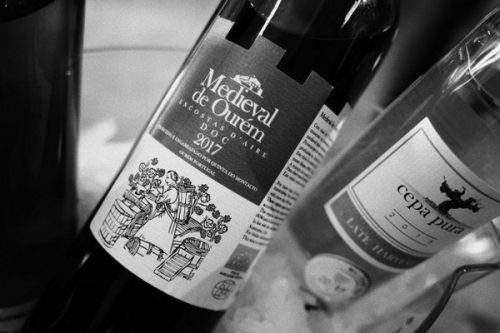
The second interesting wines is a blend of 80% white and 20% red, based on a 12th century recipe. The wines at the time, apparently, were made by blending the red and skins to the white. When Portugal entered the EU it became illegal to make wine this way. In 2015 Montaldo was part of an association to form rules and create a new subregion for this blending of red and white.

Medieval de Ourém 2017 Encostas d’Aire DOC, Portugal
A blend of 80% Fernão Pires and 20% Trincadeira. This is a bright red colour like a very deep rosé, crossing over to a red wine. It’s supple and juicy with lovely red cherry and raspberry fruit, as well as some grip but also bright citrus fruit. Crunchy and detailed with a juiciness. 89/100

Quinta do Montalto Cepa Pura Baga 2016 Lisboa, Portugal
Distinctivem grippy and spicy with nice weight. Has firm, slightly spicy tannins. Vivid and focused with bright cherries, raspberries and some herbs. 90/100

Quinta do Montalto Cepa Pura Late Harvest 2015 Lisboa, Portugal
Fernão Pires, dehydrated on the vine, with no botrytis. Vivid and intense with sweet straw and vanilla notes as well as bold peach and melon fruit. Smooth and rich. 91/100


from Jamie Goode’s wine blog http://www.wineanorak.com:/wineblog/portugal/quinta-do-montalto-a-lisboa-producer-experimenting-with-amphorae-and-medieval-wine

For Fine Wine Investment opportunities check out Twelve by Seventy Five: http://www.twelve-by-seventy-five.com/

from
https://twelvebyseventyfive.tumblr.com/post/173200210952

Saturday, April 21, 2018

Taittinger Comtes de Champagne 2007

Lovely to be able to taste this – a pre-release bottle of the new vintage of Comtes de Champagne (read more about Taittinger’s Comtes here). It’s a really cracking vintage of this prestige cuvée.

Taittinger Comtes de Champagne 2007 France
This is quite beautiful. There’s lovely concentration of citrus fruit with some subtle hazelnut and toast, as well as good structure and fine acidity. Compact and dense, but at the same time it’s pretty and delicate. There’s a touch of grapefruit and a refined spiciness, as well as riper notes of apricot and peach. But the main theme here is beautifully focused, pure citrus fruit. Just beautiful. 96/100

UK agent: Hatch Mansfield – will be available from May 2018


from Jamie Goode’s wine blog http://www.wineanorak.com:/wineblog/champagne/taittinger-comtes-de-champagne-2007

For Fine Wine Investment opportunities check out Twelve by Seventy Five: http://www.twelve-by-seventy-five.com/

from
https://twelvebyseventyfive.tumblr.com/post/173158169747

Friday, April 20, 2018

Lovely wines with Daniel and Eric at 67 Pall Mall

Had a lovely dinner last night with Daniel Primack and Eric Solomon at 67 Pall Mall. We enjoyed some really nice wines, and these are brief notes from memory: I was too busy chatting to take notes (although I did manage one on my phone for the last wine). All three of us like to talk, and we come at wine from slightly different perspectives. We had lots of good ideas: I should have left a recorder running on the table. After all the wines, I worry that we’ve forgotten some of the best ones. I spent a lot of time browsing the wine list, and this is one of the very best (and definitely the cheapest) places to drink fine wine in London.

We began with the two wines above. First, Rodrigo Mendez Tras da Canda Caiño Blanco 2015 Rias Baixas, Spain. This is very taut and crisp with lovely purity and good acidity. Laser sharp and lovely. Then the unicorn Prieuré Roche 14 Roses 2014 Bourgogne, France. This is a deep coloured, concentrated rosé with bold, complex flavours. Just 1184 bottles produced.

On the list, this was hidden away a bit. It was listed as Ulysse Collin, but without the Perrières detail, and we really wanted that wine. So we were happy when it came! This is just lovely – our bottle was the 2012.

I recently reviewed the Daterra Viticultores wines on this site, and Daniel kindly brought along a bottle of the Azos da Villa 2015, which I hadn’t yet tried. This is an incredible wine: dark and brooding, but also elegant and refined. Served blind, we’d have guessed super-refined northern Rhone Syrah. Thrilling stuff.

And finally, off the list (thank you Eric), a wine that Daniel reckons is in his top 3 for the year. Normally, this would be a modest endorsement, but I know how well that boy drinks. And it was thrilling, textural, beguiling, still fresh, and just delicious.

Fourrier Gevrey Chambertin 1er Cru Champeaux VV 2007 Burgundy, France
Textured and bold with sweet black cherry and blackberry fruit. Concentrated and dense with a fine green note and some grainy structure. So ethereal and expressive with lovely fruit driving the palate. Beginning to enter its peak drinking window, but no hurry at all. 95/100


from Jamie Goode’s wine blog http://www.wineanorak.com:/wineblog/uncategorized/lovely-wines-with-daniel-and-eric-at-67-pall-mall

For Fine Wine Investment opportunities check out Twelve by Seventy Five: http://www.twelve-by-seventy-five.com/

from
https://twelvebyseventyfive.tumblr.com/post/173129543622

Thursday, April 19, 2018

Video: a day at the International Wine Challenge 2018

A short film of a day’s judging at the International Wine Challenge.


from Jamie Goode’s wine blog http://www.wineanorak.com:/wineblog/videos/video-a-day-at-the-international-wine-challenge-2018

For Fine Wine Investment opportunities check out Twelve by Seventy Five: http://www.twelve-by-seventy-five.com/

from
https://twelvebyseventyfive.tumblr.com/post/173090023872

Wednesday, April 18, 2018

Visiting Yvon Métras, Beaujolais star

Yvon Métras

Getting a visit with Yvon Métras was quite a big deal. He doesn’t normally see UK press, and regularly turns down requests for visits. One of the gang of five pioneering natural winegrowers in the region (along with Thevenet, Lapierre, Foillard and Breton), he counts Jules Chauvet and Jacques Neauport as his inspirations. Métras is now widely seen as one of the very top producers in the region, if not the top, and his wines fetch quite a premium over those of others. But they are in relative short supply: he farms just under 6 hectares of vines.

The Métras farmhouse

After a GPS failure, he came to meet us at the top of the road that led down to a large farmhouse, which he moved to in 2011, on the borders of Fleurie (which is over a hill), in an area that counts as Beaujolais Villages. Métras points out that 10-15 years ago all the hilly land around here was covered by vineyards. But the chemical farming wasn’t working, and to work the soils manually like he does was too difficult for most, so some farmers have given up their plots.

The old farm has 35 hectares of land. When he bought it, it wasn’t a wine domaine, but had been abandoned after the war, and was in disarray. Before, he’d been in Moulin-à-Vent, then Fleurie, and he says he isn’t moving again! Back in 1850 the domain had been some 400 hectares, with 30-50 ha planted to vines. Métras is trying to get back the polyculture on his farm and as a start now keeps sheep, which roam the vineyards in the winter.

Overall, Yvon says he has 5.5 hectares of vines and his son, who started in 2014, has 3 hectares. These are farmed meticulously by hand, organically. It was back in 1988 that he made his first wine with out sulfites. At the time it was experimental, and he didn’t sell the bottles made this way – he drank them. The first commercial sans soufre Métras wine was in the 1994 vintage.

We began tasting, with some 2017 samples.

Yvon Métras Beaujolais 2017
This is from a vineyard at 500 m in Fleurie, but the parcel was taken out of the cru by the authorities because it was too high up. (Why? Because they are idiots.) It’s very fresh and juicy with lovely focus. Fine-grained and supple. So elegant and ethereal with nice insensity, crisp red cherries and some fine herbs. This still has some CO2 from fermentation, which he likes to keep to protect the wine. 92-94/100

Métras says that 90% of his cuvées are bottled without any added sulfites. He often adds a bit to his Moulin-à-Vent in some vintages. The next wine we tried was from his son:

Jules Métras Chiroubles 2017
From a plot at 500 m. Deep coloured. Focused and pure with lovely structure and deep raspberry and cherry fruits. This has nice weight and concentration and is noticeably fruit forward, while retaining elegance. There’s a hint of green on the finish. 92-94/100

And back to Yvon’s wines:

Yvon Métras Fleurie 2017 (sample that represents the approximate assemblage)
Fresh, direct, pure and vivid with a savoury, grippy, spicy edge. Stony, with real focus and mineral drive. Lovely raspberry fruit here: this is fresh with nice detail and good acidity. 93-94/100

Yvon then went on to say that of recent harvests, 2011 and 2014 were the only good ones in terms of volume. In 2017 the best plots of Fleurie were hailed, so his 2017 doesn’t come from his top sites. But, still, he’s happy with how it has turned out.

Métras works with semi-carbonic maceration, at very low temperatures. His inspirations were Chauvet, Neauport and Lapierre. He learned from them that it’s best if ferments are as long as possible. It’s really risky and difficult working at low temperature, and most people who make natural wine don’t have the courage. To work at temperatures as low as 5 C you need perfect grapes: there is no alternative. Métras says that he doesn’t like to taste his wines in winter, because what is happening in the cuvée can scare him – things like big reduction, for example. So he only starts tasting again in spring time after harvest. The biggest problem of winemaking? It is that people go too fast. Having said this, Gamay needs to be fruity, so you don’t want to go too far in the other direction.

So we get to taste some bottled wine.

Yvon Métras Beaujolais 2016
This is from the Fleurie parcel at altitude. Lovely aromatics with a hint of decay, some beetroot, and some raspberry fruit, with a touch of spicy reduction. The palate is sappy and detailed with a leafy edge, alongside appealing raspberry and cherry fruit. Again, a hint of beetroot. 92/100

Métras says that Jules Chauvet struggled to make successful wines without added sulfites. This is because he had much less control over temperature, and he wasn’t working with the best terroirs. Now it’s much easier to work without sulfites because it’s possible to control things. Even though, he says, Marcel Lapierre’s terroir wasn’t the best, he could make very good wines without SO2 from it.

Yvon Métras Fleurie 2016
No SO2 added to this. Very perfumed, open and aromatic red fruits nose, showing sweet cherries with hints of herbs and spice. Supple and elegant with lovely purity under the cherry fruit. Very fine and elegant with delicacy and purity. 94/100

Another mentor to Yvon is Pierre Overnoy in the Jura. This year Overnoy is 80 years old, and he’s taught Métras about the importance of taking time. He ranks him as the most important person alive in natural wine.

Yvon Métras Moulin-à-Vent 2012
A very hard vintage with lots of mildew, but this has turned out OK. Still deeply coloured. Fresh and supple with lovely cherry and raspberry fruit. This has just a hint of undergrowth and supple, elegant cherry fruit with some redcurrant freshness. 94/100
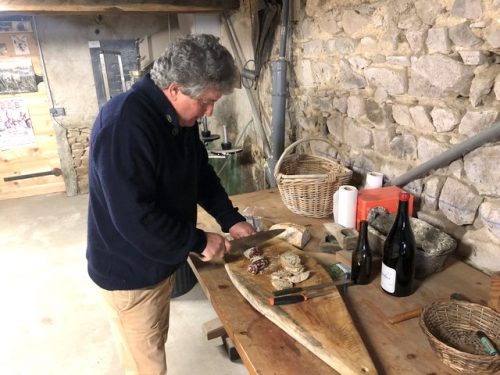
Some tasting snacks

Yvon Métras Fleurie ‘Les Printemps’ 2009
This is his young vine cuvée. From a very warm year. This is the only hot vintage that he likes because it has freshness, but in general he hates hot alcoholic wines. This has a fine, aromatic, expressive nose with some sweetness and subtle herby notes. The palate is fresh and focused with sweet raspberries and cherries. Very expressive, bright and fine. Supple raspberries and cherries. So vital, still! 94/100

UK agent: Les Caves de Pyrene

Find these wines with wine-searcher.com


from Jamie Goode’s wine blog http://www.wineanorak.com:/wineblog/france/visiting-yvon-metras-beaujolais-star

For Fine Wine Investment opportunities check out Twelve by Seventy Five: http://www.twelve-by-seventy-five.com/

from
https://twelvebyseventyfive.tumblr.com/post/173075119567

Tuesday, April 17, 2018

English wine is doing well, but three notes of caution…

It’s an exciting time for English wine, and in particular for English sparkling wine. The latest statistics from the Wine Standards Board show that in 2017 there were 1677 hectares cropping, and the total planting area is 2245 hectares. The average production over the last five years has been 5 million bottles a year. This is a small but growing industry, with another 350 hectares or so to be planted this year. But I think there are some notes of caution that need to be sounded.

  1. We need to keep a sense of perspective. These are early days indeed for English sparkling wine. Losing perspective could be very dangerous. It may seem a nice thing to surround the English wine industry with friendly voices who only say nice things, but informed, firm but fair criticism is important, and should be valued. Cheerleaders are of no use, and can even be dangerous. Some journalists say lovely things about every wine they meet: their input is just noise.
  2. It’s important that the UK wine industry doesn’t try to use Brexit to gain leverage for domestically produced wines. I’ve heard suggestions that leaving the EU might give the industry a chance to lobby for special treatment for UK wines. While the idea of a tax break sounds attractive, it is in the long-term interests of the industry that it isn’t shielded from competition. Competition is your friend! In other countries it has been interesting to see the beneficial effects of opening trade borders to allow foreign wines in. It’s almost always a prompt to improve domestic quality.
  3. I’m very excited about English sparkling wine. But it’s bonkers to say – as one leading commentator did at a conference last year in Canada – that English sparkling wine is better than Champagne. That’s just silly and unhelpful on a number of levels. Not least, it’s triumphalistic and a bit arrogant, and we should always remain humble in the face of wine. There is a lot of progress still to make. It really is much better if you leave others to praise you, rather than praise yourself.

Acid isn’t necessarily good. You need good acidity to make quality sparkling wine. But you can have too much of a good thing. The main problem with English fizz at the moment is there are many wines that have too much acid that never integrates properly. The best wines have integrated acidity. We are still very much a marginal climate for grape growing, and the margins for error in viticulture are small. A year or so ago I was chatting to a leading winemaker from Champagne. I asked him what he thought about English sparkling wine. His immediate response: they are too acidic.

I hope these points don’t seem negative. They aren’t meant to be. The industry needs to keep being collaborative and inclusive. This week I’ve been judging wine and I’ve come across quite a few flights of English sparkling wine. Some of the wines have been very good, but some have been quite poor. It would be great if those making good wine could give advice and assistance to those who are clearly struggling. Your neighbour is not your competitor, but if your neighbour is making bad wine it could affect the reputation of the industry. If English sparkling is a strong collective brand, everyone benefits. Brand equity bleeds through bad wines.


from Jamie Goode’s wine blog http://www.wineanorak.com:/wineblog/england/english-wine-is-doing-well-but-three-notes-of-caution

For Fine Wine Investment opportunities check out Twelve by Seventy Five: http://www.twelve-by-seventy-five.com/

from
https://twelvebyseventyfive.tumblr.com/post/173035872682

Monday, April 16, 2018

Video: a weekend in Beaujolais for the Bien Boire en Beaujolais

Vineyards on the slop of Mont Brouilly

I’ve just spent the weekend in Beaujolais, home to one of my favourite grape varieties, Gamay. It meant an early flight on Saturday morning, and then an early flight this morning (by early, I mean alarms going off at 0300 and 0330 respectively), but it was worth it. The excuse for the visit was the Bien Boire en Beaujolais, where growers get together to show their wines to trade and press. But we also took the chance to do some visits, and lots of great discoveries were made.

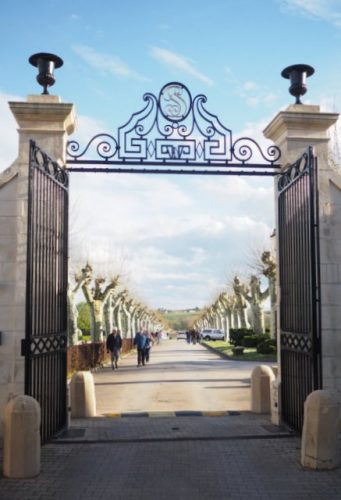
The gates at Pizay

For now, here’s a short film of the BBB. It’s held in three locations, and we chose the event at Chateau de Pizay. If you watch the film carefully you’ll spot a couple of guest wineries from other regions in France. That’s quite a nice touch.


from Jamie Goode’s wine blog http://www.wineanorak.com:/wineblog/videos/video-a-weekend-in-beaujolais-for-the-bien-boire-en-beaujolais

For Fine Wine Investment opportunities check out Twelve by Seventy Five: http://www.twelve-by-seventy-five.com/

from
https://twelvebyseventyfive.tumblr.com/post/173008766562

Sunday, April 15, 2018

Tapanappa Tiers Vineyard Chardonnay 2010 Adelaide Hills, Australia

Brian Croser is one of Australia’s most well known winemakers. Brian was a very influential consultant winemaker who started his own brand, Petaluma, back in 1976. This grew and was later purchased by Lion Nathan in 2001. After the loss of his own venture, he began a new project, Tapanappa, with its debut vintage 2003. This is the Chardonnay, made from the 4 hectare vineyard next to his home. It’s great to be able to drink a wine like this as it begins to enter its peak drinking zone, at age 7. It’s all very well trying fine wines in their infancy, but the key thing is to actually see where they go with a bit of age. And I reckon this has plenty of life in it yet.

Tapanappa Tiers Vineyard Chardonnay 2010 Piccadilly Valley, Adelaide Hills, Australia
13% alcohol. This is quite profound at age 7 and a bit. Screwcapped, which has probably helped preserve freshness. There’s some toasty depth and development, with crystalline citrus fruits and a lovely, fine lemony core. This shows great concentration as well as delicacy. There’s a strong mineral, spicy streak running under the fruit, as well as some riper pineapple and pear notes. Exquisite balance and intensity, and in a very nice place right now. Should continue to put on weight and complexity, but I like where it is right now. 95/100


from Jamie Goode’s wine blog http://www.wineanorak.com:/wineblog/australia/tapanappa-tiers-vineyard-chardonnay-2010-adelaide-hills-australia

For Fine Wine Investment opportunities check out Twelve by Seventy Five: http://www.twelve-by-seventy-five.com/

from
https://twelvebyseventyfive.tumblr.com/post/172950140367
Friday, April 13, 2018

Week one of the International Wine Challenge

Week one of the second tranche of the International Wine Challenge is complete! There’s a weekend break for the judges, and then we meet again on Monday for four more days. Once again, we have been at The Oval (one of the UK’s top cricket grounds), and today we even saw some cricket, although it must have been damp and chilly out there.

This week the job has been to sift out wines deemed not worthy of a medal. For the six of us co-chairs, this results in a week of tasting through everything the panels have rejected as ‘Out’ or awarded ‘Commended’. We’re there as back stops (this is a cricket term: a back stop is a fielding position rarely employed in club or professional cricket, where someone stands on the boundary to field any balls that have got through the wicket keeper or first slip position – it’s actually a useful fielding position in amateur cricket where the wicket keeper is incompetent); our job is to make sure that no wine is unfairly rejected.

There’s a lot of interest in the IWC! Here, Kenichi Ohashi is being interviewed by Japanese TV

The principle is that we want to judge as fairly and as consistently as possible. Of course, if the sole aim of the Wine Challenge were to be to make money, then the extra level of security (six co-chairs, moderating the results) and the two-round process would be ditched. It’s expensive. But we feel it’s worth it because the results are more robust. No competition has perfect results, but we want to be best in class. Every wine must have its chance, and this week we’ve tasted through a lot of bad wines to save a few really good ones.

Chris Ashton giving the morning briefing, and once more outing his catchphrase (in a Yorkshire accent) ‘nooooophooonezooone’

Our team of six co-chairs has worked well this week, and we finished at a sensible time each evening, a little tired, but not to the point of palate fatigue. Next week we’ll be awarding medals, and this process is so much easier when you’ve weeded out the non-winning wines.

The afternoon’s collection of faulty wines to verify

My job, as well as co-chairing, has been to monitor faults. If a panel thinks a wine is faulty, in order to get a replacement they need to get the wine signed off by a co-chair. They then get a new wine and the rejected bottle goes to the faults table. The reason for this is that in the past Sam Harrop, my predecessor, was having to wade through literally hundreds of wines that had been called as faulty, but which had no discernable wine fault. If a wine isn’t very good, it doesn’t mean it is faulty. For the purposes of collecting data on faults, it’s important that there is a strong positive diagnosis, and my job is to give some consistency to the results by verifying that a bottle marked with a fault does actually have that fault. Of course, some wines have more than one fault – in this case, we choose the primary fault. Oxidation and volatile acidity often occur together. And for Brettanomyces, we are looking for clear examples where it detracts from the quality of the wine. Some wines can have a bit and be commercially acceptable and even enjoyable, depending on the sensitivity and sensibilities of the taster. It’s not an exact science, but we want our faults data to be as good as possible. Because we are opening so many bottles, it’s a great chance to collect some good data on faults, even though the cost of chemical analysis (which would be great) is prohibitive. From the perspective of a taster, the IWC offers an amazing learning experience because of the vast numbers of wines being opened.

So, a weekend off, then back to it. But spare a thought for the crew, who will be busy reflighting all weekend!


from Jamie Goode’s wine blog http://www.wineanorak.com:/wineblog/uncategorized/week-one-of-the-international-wine-challenge

For Fine Wine Investment opportunities check out Twelve by Seventy Five: http://www.twelve-by-seventy-five.com/

from
https://twelvebyseventyfive.tumblr.com/post/172903519397